People taking care of people

A DNA Analysis of Almost 3,000 Canines Suggests That Most Dogs Have a Little Wolf in Them

50 min readSmithsonian Magazine
District of Columbia, United States
A DNA Analysis of Almost 3,000 Canines Suggests That Most Dogs Have a Little Wolf in Them
70
...
0

The two subspecies split about 20,000 years ago. But since then, they may have interbred more often than Smithsonian scientists thought

Mary Randolph - Staff Contributor

December 1, 2025 9:00 a.m.

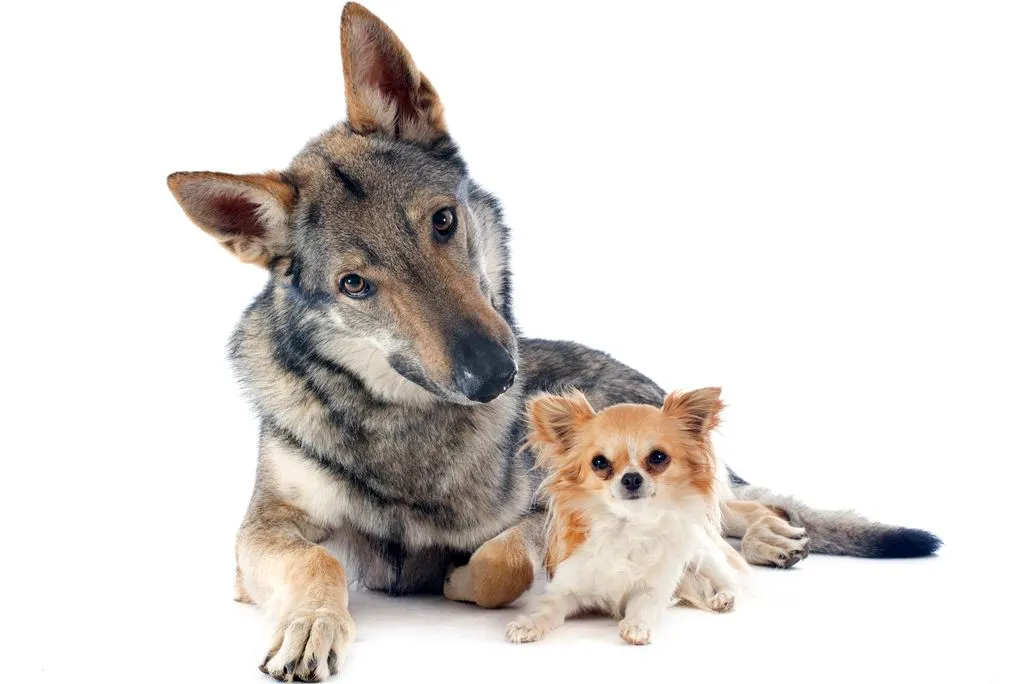
Czechoslovakian wolfdog and chihuahua

Both the Czechoslovakian wolfdog and the chihuahua have some recent wolf DNA, a new study suggests. cynoclub via Getty Images

If you’ve ever joked that your lap dog was ferocious or your furry friend has got some wolf in her, you might be right.

A genetic analysis of nearly 2,700 modern and ancient canines suggests that most domestic dogs today carry some recent wolf DNA. This finding and others documenting dog-wolf genetic entanglements were published on November 24 in the journal Proceedings of the National Academy of Sciences.

“Dogs are our buddies, but apparently wolves have been a big part of shaping them into the companions we know and love today,” Logan Kistler, a study co-author and curator archaeobotany and archaeogenomics at the Smithsonian’s National Museum of Natural History, says in a statement.

Past research suggests that the split between domestic dogs (Canis lupus familiaris) and wolves (Canis lupus) happened around 20,000 years ago, and that their common ancestor was a now-extinct type of gray wolf. Though dogs and wolves have continued to live in the same habitats and can technically breed together, little evidence suggests that they have since their ancestral breakup.

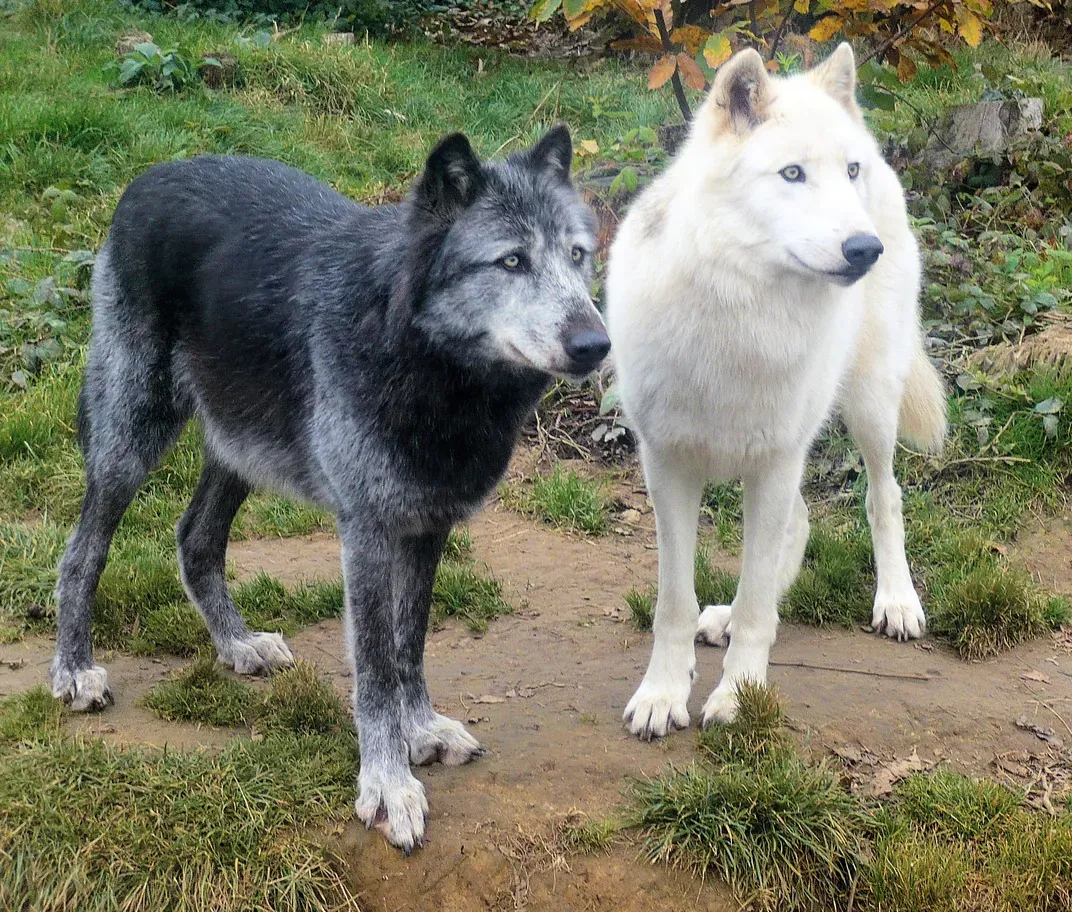
A black wolf and a white wolf

Domestic dogs and wolves are subspecies, but researchers previously thought that the animals had rarely bred together. Stéfan via Wikimedia Commons

But Kistler and his colleagues wanted to investigate whether the two subspecies truly hadn't created puppies together often, Kistler and Audrey Lin, a study co-author and computational biologist at the American Museum of Natural History, write in the Conversation.

So, the team collected publicly available genomes—complete sets of genetic instructions—from wolves, breed dogs and village dogs, animals that aren’t domesticated but live in or near human environments. The genomes came from canines that lived over roughly the past 100,000 years.

Mapping the animals’ evolutionary histories revealed that around two-thirds of the breed dogs studied—representing 264 breeds, about 80 percent of analyzed breeds—contained at least a little recent wolf DNA. Those genes came from crossbreeding that occurred, on average, nearly 1,000 generations ago, the researchers found.

Bigger dogs and dogs bred for certain activities like hunting or sledding tended to have a greater amount of recent wolf ancestry than other breeds. But that wasn’t always the case: Some large guardian dogs, including the St. Bernard, had no recent wolf ancestry, while the tiny chihuahua had some.

Additionally, all the village dogs had some wolf genes, the researchers found. And half of the wolf genomes studied contained dog DNA, which came from intermingling around 70 generations ago.

a group of dogs in the snow

Of the dogs studied, those bred for certain activities, such as pulling sleds, had the highest levels of wolf DNA. Markus Trienke via Wikimedia Commons

The study is part of a series of eight papers published in PNAS that explore dog genomics. Some of the others trace a lack of genetic diversity in German shepherds back to World War II, suggest that most dog DNA tests cannot deliver on their promise to accurately predict pet behavior, and hint that some genes that do, in fact, predict dog behavior also predict human behavior.

Scientists only began to sequence dog genomes in the early 2000s. Since then, the field has “made a ton of progress,” Greger Larson, a paleogenomicist at the University of Oxford who helped edit the new series of studies but was not involved in the research, tells the New York Times’ Emily Anthes.

“We’re now answering questions that we couldn’t even begin to think to ask 20 years ago,” he says.

Quick fact: Diversity within dogs dates way back

Scientists thought that most distinct dog breeds emerged in the 1800s, but recent research suggests that around half of today’s dog diversity existed more than 10,000 years ago

But some experts who weren’t involved in the studies are skeptical about recent wolf DNA being found in so many dogs, because researchers have considered it difficult to detect such small amounts of genetic instructions buried within the dog genome, per the Times. In the analysis, wolf DNA made up, on average, merely 0.14 percent of the genome in dogs with wolfy genes.

Still, the study authors suspect that even this small amount of DNA has contributed to the evolution of dogs as we know them today.

“Though dogs evolved as human companions, wolves have served as their genetic lifeline,” Lin and Kistler write in the Conversation. “When dogs encountered evolutionary challenges, such as how to survive harsh climates, scavenge for food in the streets or guard livestock, it appears they’ve been able to tap into wolf ancestry as part of their evolutionary survival kit.”

You Might Also Like

Brightcast Impact Score (BIS)

70/100Hopeful

This article discusses a DNA analysis of nearly 3,000 dogs that suggests dogs and wolves may have interbred more often than previously thought, providing new insights into the evolutionary relationship between the two subspecies. The findings offer a constructive scientific perspective on the shared history between dogs and wolves, which can inspire hope and appreciation for the connections between domestic and wild canines.

Hope Impact20/33

Emotional uplift and inspirational potential

Reach Scale25/33

Potential audience impact and shareability

Verification25/33

Source credibility and content accuracy

Encouraging positive news

Comments(0)

Join the conversation and share your perspective.

Sign In to Comment
Loading comments...

Get weekly positive news in your inbox

No spam. Unsubscribe anytime. Join thousands who start their week with hope.

More stories that restore faith in humanity

FedEx delivers 325K free Christmas trees to military families as part of annual 'Trees for Troops' program
Community
1 wks ago
This retired couple has raised 130+ children in foster care over the last 35 years: 'How do you say no?'
Community
2 days ago