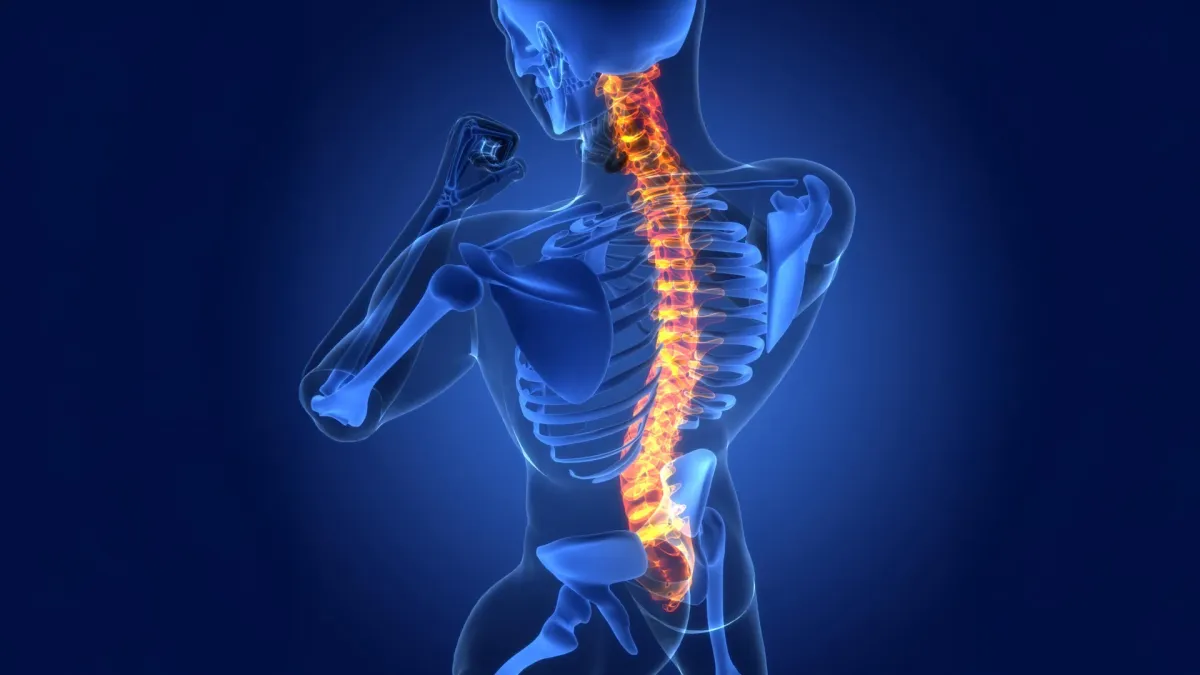
A study of over 2,000 people recovering from spinal cord injuries has uncovered something counterintuitive: your age doesn't determine how well your nerves bounce back. But it does shape how quickly you regain independence in daily life.
Researchers at the University of Pavia tracked patients for a year after their injuries, testing everything from sensation to strength to how well they could walk. They found that older and younger patients showed similar improvements in neurological function — the actual nerve recovery remained stable across the lifespan. A 75-year-old's nervous system had roughly the same capacity to heal as a 35-year-old's.
Then the picture shifted. When researchers looked at functional recovery — the ability to feed yourself, bathe, walk without help, manage bladder and bowel function — age started to matter significantly. Older participants recovered these practical abilities more slowly. For every additional decade of age, patients showed a 4.3-point drop on a functional independence scale that runs from zero to 100. People over 70 experienced the sharpest decline.
We're a new kind of news feed.
Regular news is designed to drain you. We're a non-profit built to restore you. Every story we publish is scored for impact, progress, and hope.
Start Your News DetoxThe distinction matters because it reframes what "recovery" actually means. Your spinal cord might be healing just fine. Your legs might be regaining sensation and strength at the same rate as a younger person's. But rebuilding the stamina, balance, and coordination needed to walk across a room or shower independently is a different challenge — one that compounds with age.
"People older than 70 need specific approaches to rehabilitation that take into account other conditions they may be living with, such as cardiovascular disease, diabetes, or osteoporosis," said study author Chiara Pavese, MD, PhD. The finding suggests that standard rehabilitation protocols — designed without age-specific adjustments — may miss what older patients actually need to regain daily independence.
The study, published in Neurology in 2025, involved 2,171 patients across European spinal care units, with an average age of 47. It's one of the largest long-term follow-ups of its kind. The researchers acknowledged a limitation: some participants dropped out after the first year, and the reasons why remain unclear. That gap could have shifted the results slightly, though the core finding held even when accounting for injury severity and type.
The implications are practical. As populations age and spinal cord injuries become more common in older adults, rehabilitation centers may need to rethink their approach — not because older brains and spinal cords can't heal, but because recovery needs to be measured and supported differently. The nervous system's resilience isn't the bottleneck. The challenge is rebuilding functional capacity in a body managing multiple conditions at once.