

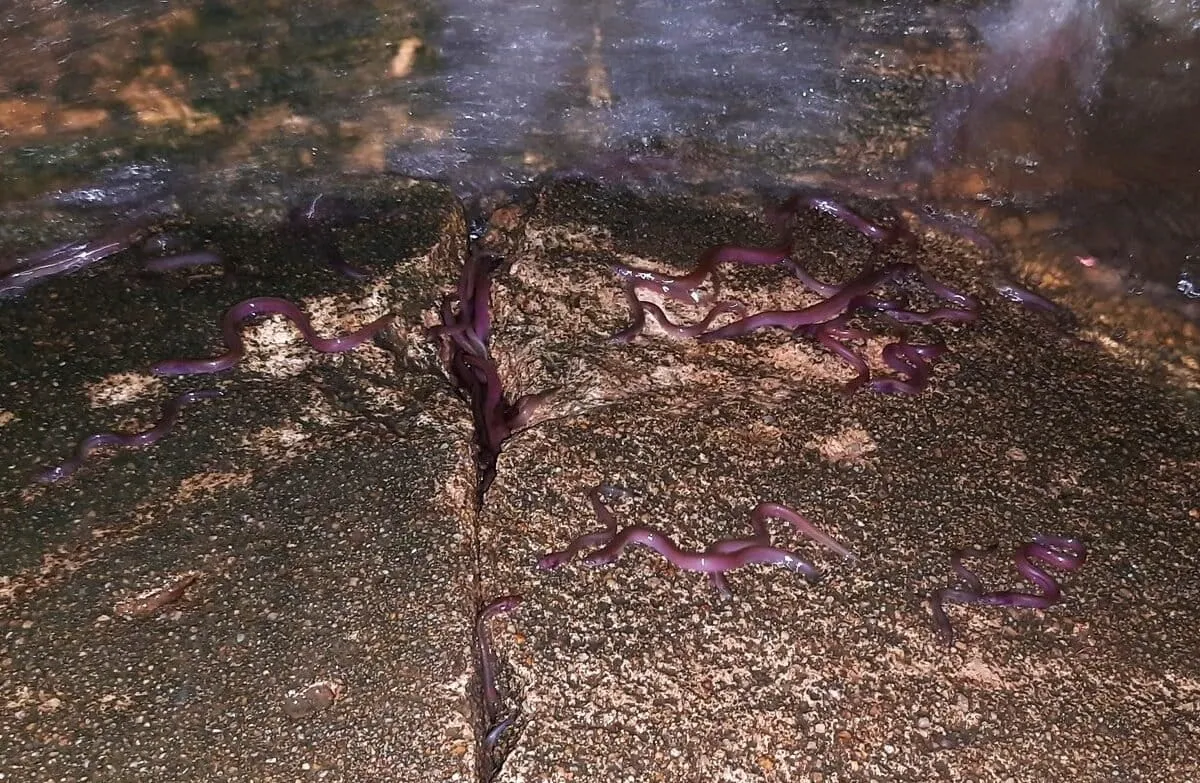
In October, residents of northern Sri Lanka found snakehead fish scattered across rain-soaked fields after a thunderstorm. The fish didn't fall from the sky—they were lifted there. Heavy rain creates waterspouts, spinning columns of air that suck fish from lakes and lagoons, carry them overland, then drop them when the vortex weakens.
It's a strange but real phenomenon. Asoka Deepananda, a fisheries biology professor at the University of Ruhuna, explains it happens most often when fish are concentrated in small water holes after long dry spells. "This can happen especially after heavy rain following a long dry spell, when fish are concentrated in small water holes and can easily be lifted in numbers," he says. His university recorded a similar incident in 2012 when fish landed on rooftops nearby. Other countries have documented frogs and aquatic species falling the same way.
But the fish rain itself is almost a symptom of something larger—and more troubling.
We're a new kind of news feed.
Regular news is designed to drain you. We're a non-profit built to restore you. Every story we publish is scored for impact, progress, and hope.
Start Your News DetoxA web of migrations, now broken
Freshwater fish in Sri Lanka follow ancient patterns. Snakeheads, mullet, and other species migrate seasonally between rivers, lakes, and coastal lagoons, timing their movements with rainfall and water levels. These journeys are wired into their biology. They need them to breed, to feed, to survive.
Then came the dams. Sri Lanka has built large dams across its river systems to manage water and generate power. Each one is a barrier. Fish that once swam freely between feeding grounds and spawning sites now find themselves trapped in isolated pockets of water. Breeding cycles collapse. Populations fragment. Some species that thrived for centuries are now at risk.
"The 'fish rain' incidents are just a visible symptom of a much deeper ecological problem caused by our reckless dam-building," says Rohan Fernando, an environmental activist. "We're destroying the natural rhythms of our waterways, with severe consequences for biodiversity and local communities who depend on these fish."
The impact ripples outward. Local fishing communities that have relied on these migrations for generations now struggle with depleted stocks. The ecological network that supports countless species—birds, crocodiles, invertebrates that depend on fish populations—destabilizes.
What comes next
Some solutions already exist. Fish ladders—structures that help migrating species bypass dams—have worked elsewhere in the world. Strategic dam placement that avoids blocking key migration routes is possible. Better management of existing dams to maintain environmental flows (the water released to sustain ecosystems) can help too.
Fernando argues that Sri Lanka's approach to water management needs to shift. "We need to start seeing these fish migrations as an integral part of the natural functioning of our waterways, not just obstacles to be blocked by dams," he says.
It's a reframing that's gaining ground globally. Countries from Norway to Brazil are now removing dams or retrofitting them specifically to restore river connectivity. The cost is real. The political will is harder. But the science is clear: rivers that flow freely support vastly more life than those broken into fragments.
If Sri Lanka moves in that direction—not dismantling dams, but redesigning how they coexist with the fish—the curious incidents of rain-soaked fields might become rare again. Not because the waterspouts stop, but because the fish have somewhere to go.





