
When monk parakeets meet strangers, they don't dive straight into grooming and bonding. Instead, they sit nearby. They watch. They wait. Only after these low-risk observations do they edge closer, and eventually—if all goes well—move to actual contact.
This isn't shyness. It's strategy. Researchers at the University of Cincinnati studied 22 wild parakeets brought together in an outdoor flight pen in Florida, tracking every interaction over 22 days. What emerged was a clear pattern: these highly social birds have learned that testing the waters before committing to new friendships dramatically reduces the chance of injury or rejection.
"The birds need to make decisions about who they are going to form relationships with and when, and that process could have important consequences for their survival and reproduction," says Claire O'Connell, a behavioral ecologist on the study. The research, published in Biology Letters, reveals something quietly profound about how social animals manage risk.
We're a new kind of news feed.
Regular news is designed to drain you. We're a non-profit built to restore you. Every story we publish is scored for impact, progress, and hope.
Start Your News DetoxMonk parakeets are genuinely gregarious creatures. In the wild, they build sprawling communal nests—massive stick structures with chambers for dozens of birds—and bonded pairs spend hours grooming each other's feathers. Social connection is central to their survival. But that intimacy only works if you choose your companions wisely.
When researchers introduced unfamiliar birds to each other, the parakeets began with what O'Connell calls "testing the waters." They approached slowly. They perched at a distance. They observed how the other bird responded. Only if those initial, low-cost gestures were welcomed did they escalate to shoulder contact, feather preening, beak touching, food sharing—and eventually mating.
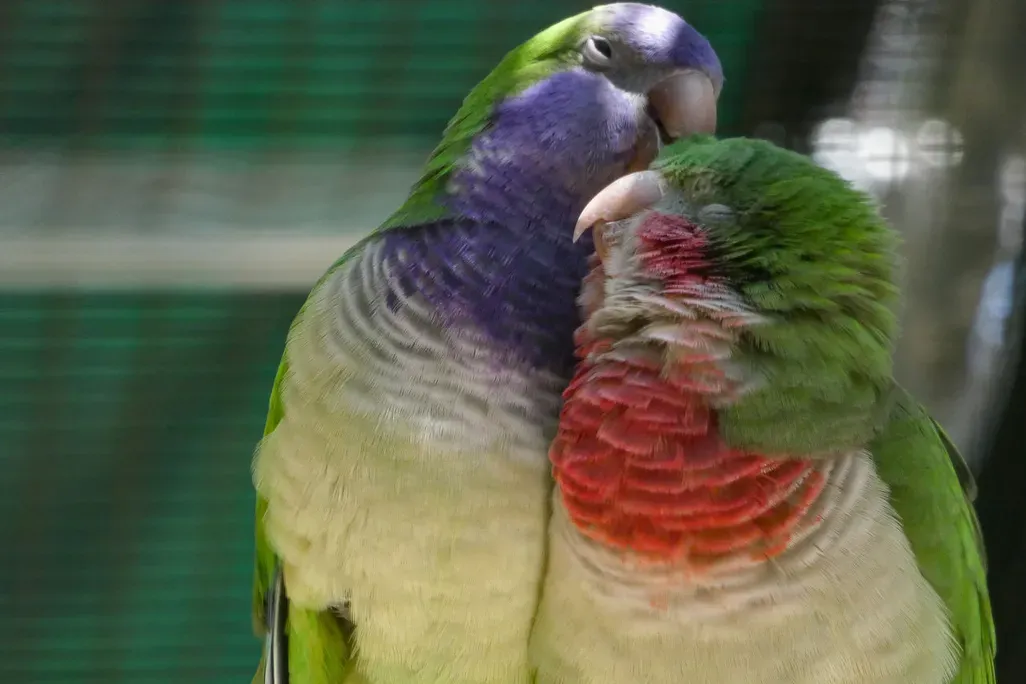
The alternative to this caution is "quarreling," a mild form of aggression that can escalate quickly. "If a bird's attempt to groom another bird's feathers is not well received, you get quarreling," O'Connell explains. One rejected grooming attempt can deter a bird from trying again.
This isn't unique to parakeets. Vampire bats, another highly social species, use the same approach with strangers. Researchers call it the "raising the stakes" strategy—a tit-for-tat dance where trust builds gradually through reciprocated small gestures before moving to riskier ones. It's risk management dressed up as friendship-building.
What's striking is how universal this pattern might be. Humans clearly use it (we can test this easily), but among animals, it's harder to study. Beyond monk parakeets and vampire bats, scientists don't yet know how widespread this strategy is. The researchers suspect it's fairly common among social species, but more work is needed to confirm.
For now, the parakeets offer a reminder: the most durable relationships aren't built on immediate intimacy. They're built on careful observation, small gestures, and the willingness to move slowly until both parties are ready.