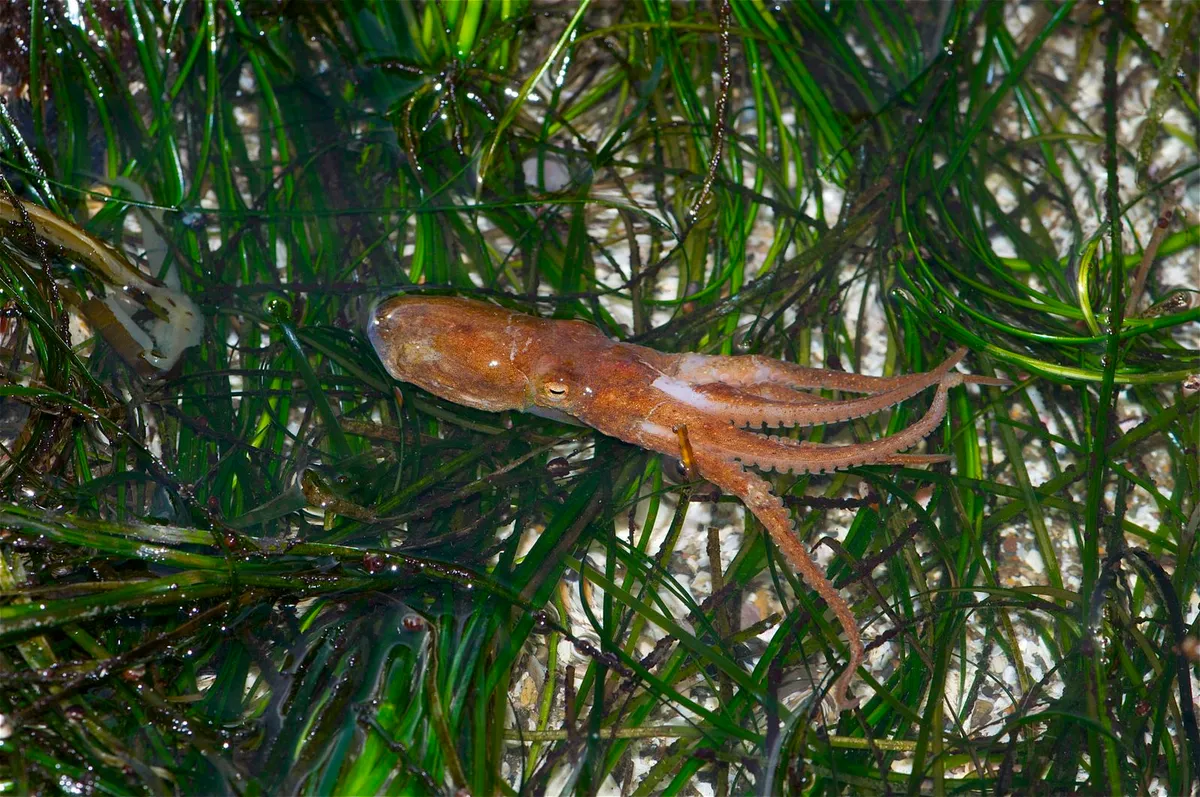
Just when you thought octopus reproduction couldn't get any more fascinatingly alien, scientists have dropped another bombshell. Apparently, male octopuses don't just use their specialized mating arm to deliver sperm; that arm can also taste a female's hormones, even in the dark.
Let that sink in. Your phone, but with legs, and it can smell your pheromones from across the room. Because, apparently, that's where we are now with cephalopod biology.
Traditionally, we knew the male octopus deploys a particular limb, the hectocotylus, to pass a sperm packet (a spermatophore, for those playing along at home) into the female's mantle cavity. She then stores it until she's ready for fertilization. Simple enough. Or so we thought.
We're a new kind of news feed.
Regular news is designed to drain you. We're a non-profit built to restore you. Every story we publish is scored for impact, progress, and hope.
Start Your News DetoxNew research, published in Science, reveals this hectocotylus is pulling double duty, acting as both a sperm delivery system and a highly sensitive chemical sensor. Pablo Villar, a Harvard biologist and co-author, dryly noted that combining sensing and reproduction in one organ is "quite rare" in the animal kingdom. No kidding.
How They Sniffed Out the Secret
The whole thing started with Villar noticing sensors on the hectocotylus that looked suspiciously like the ones on the octopus's other arms – the ones typically used for foraging and exploring. A reproductive arm usually doesn't need a built-in gourmet palate, so this was a bit of a head-scratcher.
To investigate, Villar and his team set up a romantic rendezvous in a saltwater tank with California two-spot octopuses. They separated a male and a female with a black barrier that had arm-sized openings. The male, ever the gentleman, reached through and placed his hectocotylus right into the female's mantle.
This confirmed they could recognize each other via "chemosensation" – basically, a super-powered sense of taste and smell – and mate without full body contact. The same thing happened in complete darkness. Crucially, males never tried to mate with other males, strongly suggesting the females were sending out a very specific chemical signal.
The Hormone that Hooks 'Em
Further digging revealed that female ovaries contain precursor molecules for progesterone, a sex hormone that spikes when females are ready to reproduce. When scientists offered males tubes coated in progesterone (and nothing else), the males tried to mate with them. Even an amputated hectocotylus (sorry, guys) wiggled in response to progesterone.
It turns out progesterone binds to a protein called CRT1 on the hectocotylus – a protein already known for helping octopuses detect microbes on prey. So, this protein is not only helping them find dinner but also, apparently, their date. Efficient.
Nicholas Bellono, another Harvard biologist, summed it up perfectly: it makes sense for this arm to be both a sensor and a mating organ, allowing it to quickly find the female, locate the egg passageway, and get down to business during those fleeting encounters. Heather Rhodes, a biologist not involved in the study, added that this means females likely don't need "showy" displays; the male is simply "eavesdropping on her natural hormone profile."
Which, if you think about it, is both incredibly practical and just a little bit creepy. Still, it’s a brilliant peek into the complex, often bizarre, world of octopus romance. Now, if you'll excuse us, we're going to rethink our dating strategies.