The planet got a little help

Orangutans rescued from the wildlife trade undergo intensive re-training to return to the wild

17 min readMongabay
Northern Sumatra, Indonesia
Orangutans rescued from the wildlife trade undergo intensive re-training to return to the wild
75
...
2

Why it matters: this rehabilitation program gives rescued orangutans a second chance at life in the wild, helping to conserve this endangered species and restore their natural habitat.

NORTHERN SUMATRA, Indonesia. Welcome to jungle school—where orphaned orangutans are learning the basics for survival that they will need for life in the wild. At the Orangutan Information Centre (OIC) in Northern Sumatra, vets and biologists are rehabilitating orangutans who have been confiscated from the illegal wildlife trade.

Once they have mastered the basics of climbing, building nests and finding food, the aim is that they will one day be returned to the wild. The Sumatran orangutan was once found throughout the island of Sumatra’s lowland forests. But due to decades of habitat loss, poaching and conflict killings they have experienced an estimated population decline of over 80% in the last 75 years.

Sanctuaries in Sumatra like OIC are working on the frontlines of conservation, to give these rescued orangutans a second chance at life. Mongabay’s Video Team wants to cover questions and topics that matter to you. Are there any inspiring people, urgent issues, or local stories that you’d like us to cover? We want to hear from you.

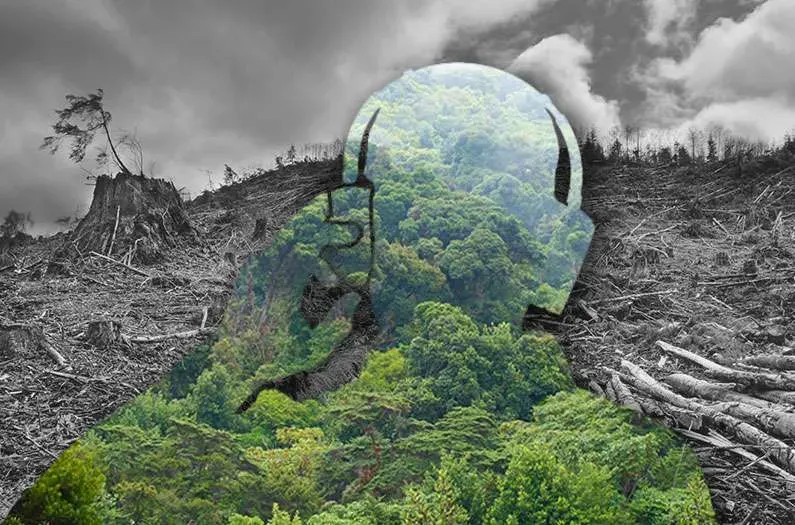
Be a part of our reporting process—get in touch with us here! Banner image: Collage featuring Izzy Sasada, Mongabay contributor, with an orangutan. Natural bridges to reconnect the last Javan gibbons TranscriptNotice: Transcripts are machine and human generated and lightly edited for accuracy. They may contain errors.So this is basically like jungle schoolbut for orangutans.

Yes.Our good students.Here in Sumatrais one of the only places in the worldwhere wild orangutans exist.But due to habitat lossand the illegal wildlife trade,many of them are ending up incenters like this one. We’re about to go and meet some of the keeperswho are looking after the orangutans who live here. So where are we on the way to now? So we’re going to collect ourorangutan babies for the jungle school.So we will teach them to survive in the wild.We’ll release them in their adult age.

Up here these are some of the orangutanswho have lost their mothers in the wild,and who are learning essential skillsthat they need to survive. So right now,they’re learning how to climb the trees.Normally, skills like thesewould be learned from their mothers.As most of them are orphansthey are learning from the keeper here.

I record the activities of the orangutanswho are in this forest school.They do many things likebuilding nests, look for food, and so on. So why is this important for the rehabilitation process?Because we need to know to what extent these orangutanscan do things just like they would in the forest later.

What about these guys? Have they improved? They have developed quite well.In the past, they couldn’t forage for themselves,couldn’t build nests,weren’t able to choose the right branches to climb.And now they have mastered almost all of those things.

They’re victims of wildlife trade,poaching, and also victims of forest loss.Forest fragmentation is very bad for orangutansbecause they need such a big forest to roam. Many, many poaching for wildlife trade ishappening in the fragmented forest.Orangutans are isolated in a small packand then easily targeted by poachers.

The main reason for the orangutans to be here is becausewe want to bring them back to the wild.They have a very important role in the ecosystemand they have the right to have a second chance at life.

Brightcast Impact Score (BIS)

75/100Groundbreaking

This article highlights the positive work being done to rehabilitate and reintroduce rescued orangutans back into the wild in Northern Sumatra, Indonesia. It focuses on the 'jungle school' program at the Orangutan Information Centre, where orphaned orangutans are trained in the essential skills needed for survival in the wild. The article emphasizes the conservation efforts to protect the endangered Sumatran orangutan population, which has declined significantly due to habitat loss and poaching. Overall, the article presents a constructive solution to a pressing environmental issue and conveys a sense of hope and progress.

Hope Impact25/33

Emotional uplift and inspirational potential

Reach Scale25/33

Potential audience impact and shareability

Verification25/33

Source credibility and content accuracy

Significant positive development

Comments(0)

Join the conversation and share your perspective.

Sign In to Comment
Loading comments...

Get weekly positive news in your inbox

No spam. Unsubscribe anytime. Join thousands who start their week with hope.

More stories that restore faith in humanity

North America's 'largest wildlife overpass' is finally complete. It's expected to reduce wildlife-vehicle crashes by 90%
Environment
1 wks ago
Solar-lit fishing nets cut sea turtle bycatch by 63%, Mexico trials show
Environment
3 wks ago