The planet got a little help

Scientists Discover Hundreds of New Species in One of Earth’s Least Explored Realms

Beneath the ocean's surface, a hidden world teeters on the edge of irreversible change as deep-sea mining trials uncover localized biodiversity loss in one of Earth's last frontiers.

50 min readSciTechDaily
Pacific Ocean
Scientists Discover Hundreds of New Species in One of Earth’s Least Explored Realms
70
...
5

Why it matters: this discovery of hundreds of new species in the deep sea highlights the importance of protecting these fragile ecosystems as humanity seeks to extract valuable resources from the ocean floor.

A Sea Spider

Deep-sea mining trials revealed significant but localized biodiversity loss in one of the planet’s least explored ecosystems.

Global demand for critical metals is rising sharply, prompting many countries to explore the possibility of extracting these valuable resources from the ocean floor. A new international study that uncovered large numbers of previously unknown species at depths of 4,000 meters suggests that seabed mining may cause less overall environmental damage than once feared. Even so, the researchers found that species diversity dropped by about one-third in areas directly affected by mining equipment.

As part of a large collaborative effort, marine biologists from multiple countries set out to document life in one of the most remote and least studied regions on the planet, the deep-sea floor of the Pacific Ocean.

The research, published in Nature Ecology and Evolution, was closely tied to growing commercial and geopolitical interest in deep-sea resources, which made such an extensive investigation possible.

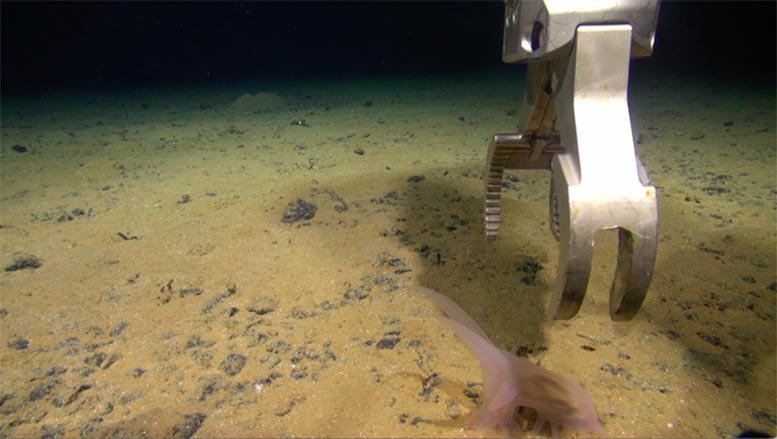
Collection of a Sea Pig Crawling Along the Sea Floor

Collection of a sea pig crawling across the nodule-covered seafloor in the Clarion–Clipperton Zone. Credit: ROV Isis/SMARTEX

“Critical metals are needed for our green transition, and they are in short supply. Several of these metals are found in large quantities on the deep-sea floor, but until now, no one has shown how they can be extracted or what environmental impact this would have,” says marine biologist Thomas Dahlgren, that together with Helena Wiklund, also at the University of Gothenburg, have participated in the research project.

160 days at sea

The work followed the International Seabed Authority’s (ISA) guidelines for baseline studies and environmental impact assessments.

Over five years, the research team surveyed deep-sea ecosystems and evaluated the effects of mining activity in the Clarion-Clipperton Zone, a vast region of the Pacific located between Mexico and Hawaii. Their results showed that the total number of animals declined by 37 percent in mined areas, while species diversity fell by 32 percent along the tracks left by the mining machinery.

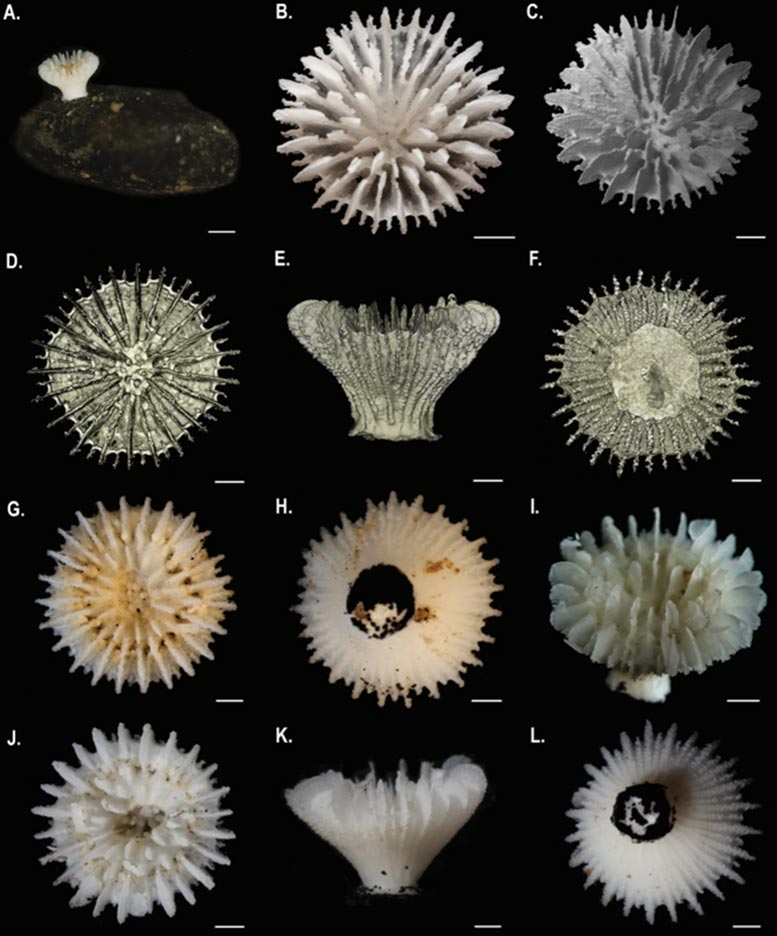
Labeled Specimens of New Solitary Coral

The researcher identified a new solitaire coral attached to polymetallic nodules. It was named Deltocyathus zoemetallicus. Credit: Natural History Museum, London & Göteborgs university

“The research required 160 days at sea and five years of work. Our study will be important for the International Seabed Authority (ISA), which regulates mineral mining in international waters,” says Thomas Dahlgren.

788 species

The examined deep-sea floor is 4,000 meters below the water surface, no sunlight reaches there, and this means that it is an extremely nutrient-poor environment where the sediment layer grows by one thousandth of a millimeter per year. A bottom sample from, for example, the North Sea can contain 20,000 animals. A corresponding sample from the deep-sea floor yields the same number of species but only 200 specimens.

The researchers have collected 4,350 animals larger than 0.3 mm that live in, and sometimes on, the sea floor. 788 species were identified. The animals found were mainly marine bristle worms, crustaceans, and mollusks such as snails and mussels.

But there is also a new solitaire coral that is described in another study.

Species distribution unknown

“I have been working in the Clarion-Clipperton Zone for over 13 years, and this is by far the largest study that has been conducted. In Gothenburg, we led the identification of marine polychaete worms. Since most species have not been described previously, molecular (DNA) data were crucial in facilitating studies of biodiversity and ecology on the seabed, says Thomas Dahlgren.

During the inventory, the researchers observed that the seabed communities changed naturally over time, probably due to changes in the amount of food reaching the seabed. Exactly how widespread the different species are across the deep-sea floors of the Pacific Ocean is unknown.

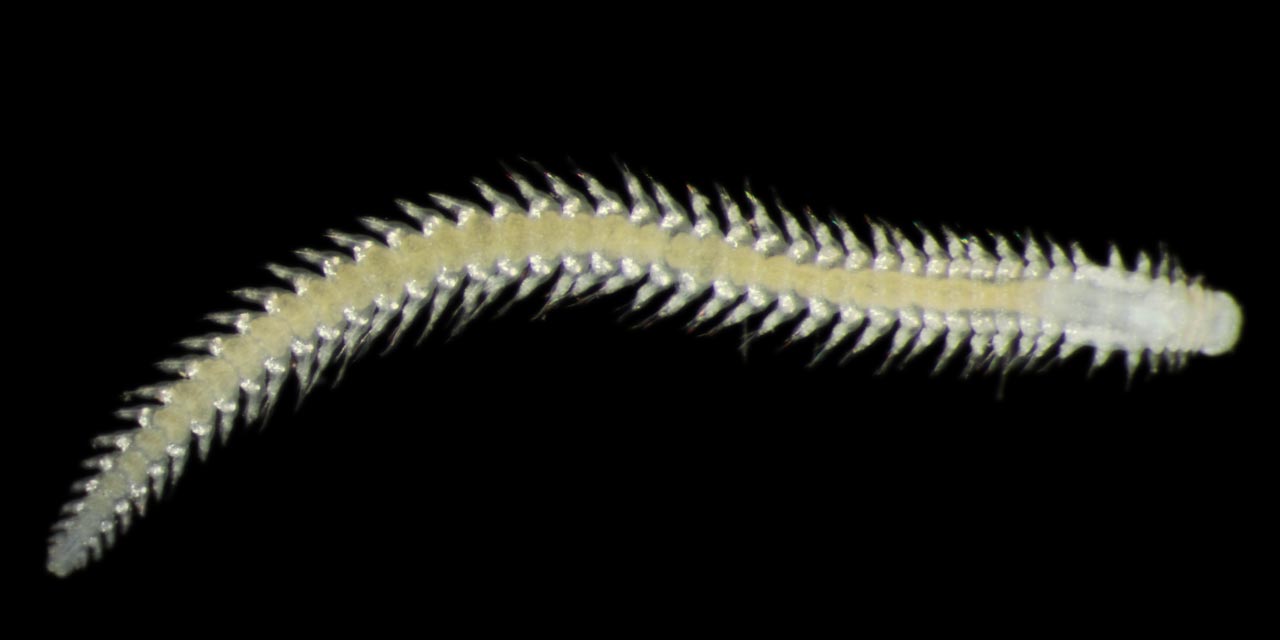
A Small Marine Bristle Worm

A small marine bristle worm. The group from the University of Gothenburg has been working with this species. It is one of the few species that is slightly more common in this area. The animal is about 1-2 mm long. Credit: Natural History Museum, London & Göteborgs university

“It is now important to try to predict the risk of biodiversity loss as a result of mining. This requires us to investigate the biodiversity of the 30 percent of the Clarion-Clipperton Zone that has been protected. At present, we have virtually no idea what lives there,” says Adrian Glover, senior author from the Natural History Museum of London.

Reference: “Impacts of an industrial deep-sea mining trial on macrofaunal biodiversity” by Eva C. D. Stewart, Helena Wiklund, Lenka Neal, Guadalupe Bribiesca-Contreras, Regan Drennan, Corie M. B. Boolukos, Lucas D. King, Muriel Rabone, Georgina Valls Domedel, Amanda Serpell-Stevens, Maria B. Arias, Thomas G. Dahlgren, Tammy Horton and Adrian G. Glover, 5 December 2025, Nature Ecology & Evolution.

DOI: 10.1038/s41559-025-02911-4

Support from the NHMUK Consultancy team (H. Rousham, R. Fryer and J. Herrington). E.C.D.S. was supported through funding from NERC (grant no. NE/S007210/1).

Never miss a breakthrough: Join the SciTechDaily newsletter.

Follow us on Google and Google News.

Brightcast Impact Score (BIS)

70/100Hopeful

This article highlights the discovery of hundreds of new species in one of the least explored realms on Earth, the deep sea. While it acknowledges the potential environmental impact of deep-sea mining, it suggests that the overall damage may be less than previously feared. The discovery of these new species represents a positive scientific advancement that expands our knowledge of the natural world and the biodiversity of our planet.

Hope Impact20/33

Emotional uplift and inspirational potential

Reach Scale25/33

Potential audience impact and shareability

Verification25/33

Source credibility and content accuracy

Encouraging positive news

Comments(0)

Join the conversation and share your perspective.

Sign In to Comment
Loading comments...

Get weekly positive news in your inbox

No spam. Unsubscribe anytime. Join thousands who start their week with hope.

More stories that restore faith in humanity

North America's 'largest wildlife overpass' is finally complete. It's expected to reduce wildlife-vehicle crashes by 90%
Environment
1 wks ago
Solar-lit fishing nets cut sea turtle bycatch by 63%, Mexico trials show
Environment
3 wks ago