

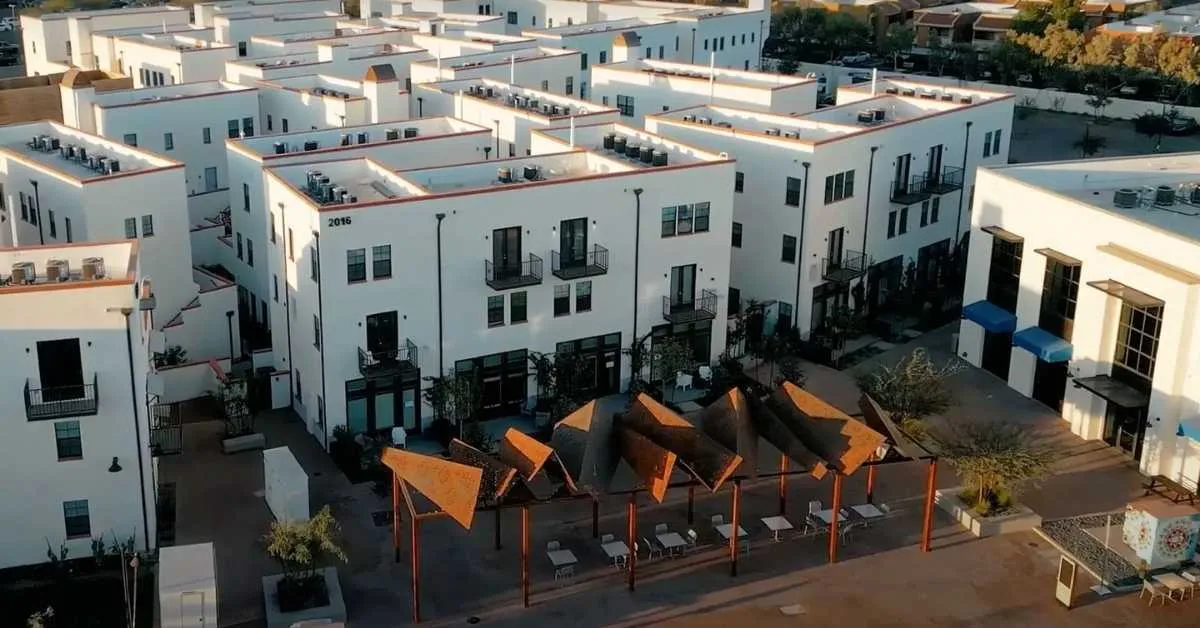
Ryan Johnson spent years traveling through European cities, watching how people moved through space without needing a car. He noticed something America had largely forgotten: that neighborhoods could be designed around walking, not parking lots. In 2018, he co-founded Culdesac, a real estate developer with a specific mission — build walkable places in the United States. In 2023, that vision became concrete. Culdesac Tempe opened its first phase: 17 acres in Arizona with shops, homes, and gathering spaces designed so residents could live without owning a car.
The real obstacle isn't that people don't want this. It's that American cities have spent decades making it illegal. Zoning laws and parking mandates have spread neighborhoods so far apart that a car became essential. Johnson describes it as a chicken-and-egg problem: sprawl makes it hard to build walkable neighborhoods, and without walkable neighborhoods, sprawl continues.
Tempe became the test ground because the city was willing to actually work with Culdesac to untangle the regulatory knots. That meant engaging everyone — community groups, city departments, skeptical neighbors. Not one stakeholder, but all of them. Getting approval required showing that car-free living wasn't a fringe experiment but a viable way to live.
We're a new kind of news feed.
Regular news is designed to drain you. We're a non-profit built to restore you. Every story we publish is scored for impact, progress, and hope.
Start Your News DetoxBuilding the Money Side
Funding something this different was harder than building it. Banks and investors didn't have a template for car-free developments. But Johnson noticed the market shifting. Investors began recognizing what structured parking actually costs — land, construction, maintenance, forever. The math started working differently.
Johnson sees autonomous ride-hailing services like Waymo as part of the answer, though not the whole one. The real portfolio includes walking, biking, public transit, and occasional ride-hail. As people experience the convenience of not owning a car, demand for neighborhoods designed that way will grow. It's not about replacing cars with technology. It's about making cars optional.
What's happening in Tempe matters because it cracks open a question developers have stopped asking: what if we designed neighborhoods for people first, parking second. Johnson believes a reckoning is coming — when the real estate industry fully accounts for the long-term costs of car-dependent sprawl, walkable design will stop feeling radical. Culdesac Tempe is the first phase. Other cities are already watching.





