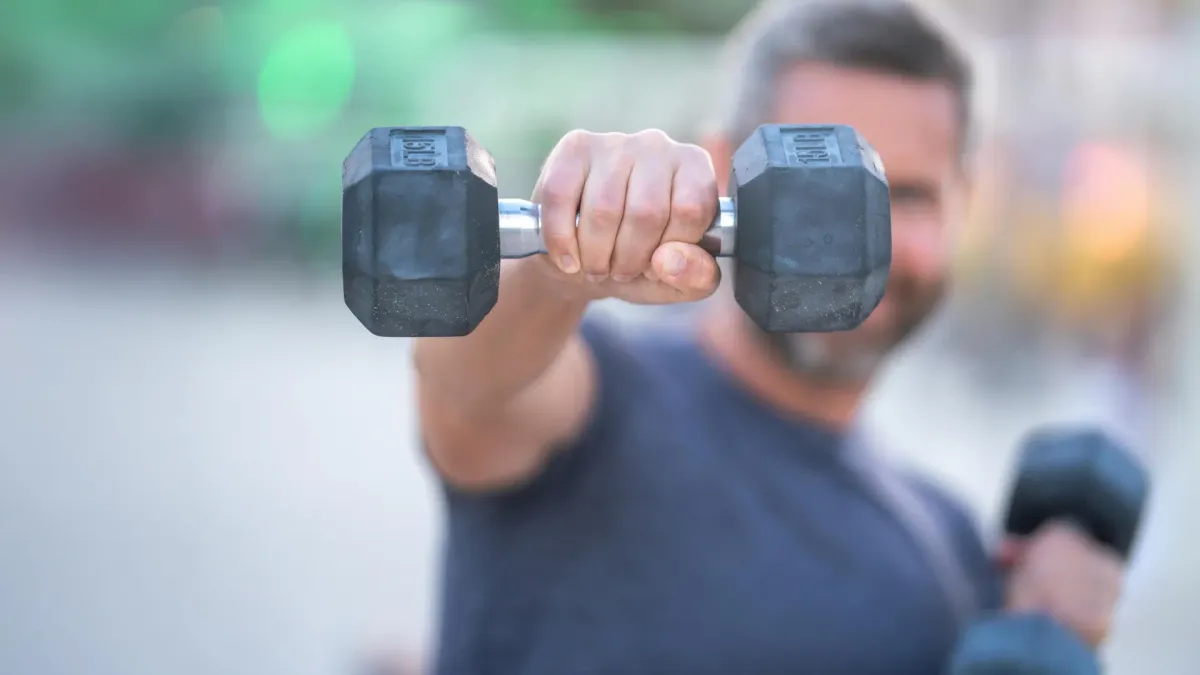
A new Swedish study tracked people for nearly 50 years. It found that fitness, strength, and muscle endurance start to decline around age 35. This decline then speeds up over time.
However, there's good news. Adults who became active later in life still improved their physical performance by up to 10 percent.
Long-Term Fitness Insights
Researchers at Karolinska Institutet conducted this study. It's part of the Swedish Physical Activity and Fitness (SPAF) project. They followed hundreds of men and women in Sweden from ages 16 to 63. They measured their fitness and strength repeatedly over 47 years.
We're a new kind of news feed.
Regular news is designed to drain you. We're a non-profit built to restore you. Every story we publish is scored for impact, progress, and hope.
Start Your News DetoxMost past studies on aging and physical performance compared different age groups. The SPAF project, however, tested the same people over decades. This makes it one of the few long-running studies of its kind.
By tracking the same individuals, researchers got a clearer picture of how the body changes as people age. The study was published in the Journal of Cachexia, Sarcopenia and Muscle.
When Physical Decline Begins
The study showed that physical ability starts to decrease as early as age 35. This happens even for people with different training backgrounds. After 35, the decline continues gradually and becomes more noticeable with age.
Researchers looked at changes in fitness, muscle strength, and endurance. All these areas showed a similar downward trend over time.
Despite this, the study also found that exercise is very helpful at any age. Participants who became physically active as adults improved their physical capacity by 5 to 10 percent.
Maria Westerståhl, a lecturer at the Department of Laboratory Medicine and lead author, noted that it is never too late to start moving. She explained that physical activity can slow the decline in performance, even if it can't stop it completely.
The researchers plan to keep following the participants. They will be tested again when they reach 68 years old. Scientists hope this ongoing work will show how lifestyle, health, and biology affect physical performance throughout life.
Deep Dive & References
Rise and Fall of Physical Capacity in a General Population: A 47‐Year Longitudinal Study - Journal of Cachexia, Sarcopenia and Muscle, 2025