A discovery that matters

“Bones Almost on Top of Each Other” – Extraordinary Dinosaur Fossil Site Discovered in the Hațeg Basin

50 min readSciTechDaily
Transylvania, Romania
“Bones Almost on Top of Each Other” – Extraordinary Dinosaur Fossil Site Discovered in the Hațeg Basin
75
...
4

Why it matters: this extraordinary fossil site provides a rare window into the final days of the dinosaurs, offering insights that benefit paleontologists and the public's understanding of prehistoric life.

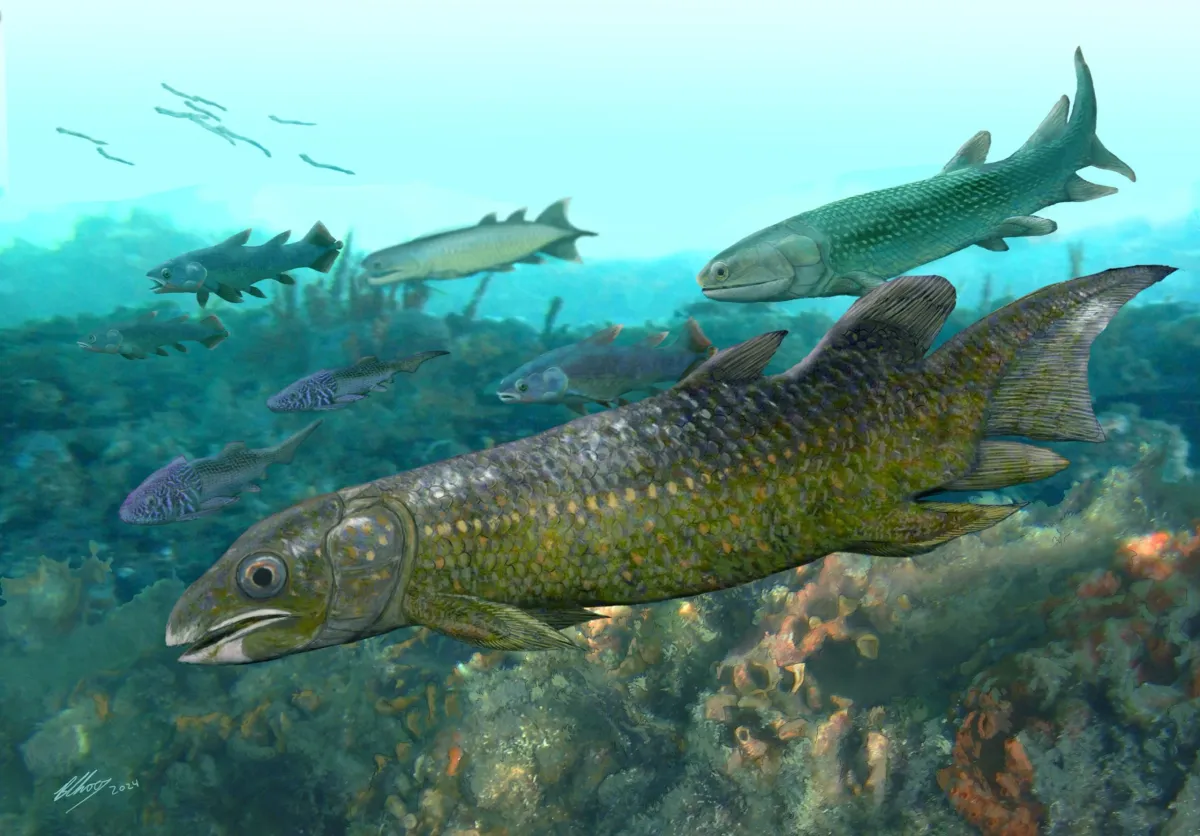
Reconstructed Late Cretaceous Hațeg Ecosystem

The ancient environment and its fauna. Credit: Tibor Pecsics

Researchers at the newly discovered site reported finding more than one hundred vertebrate fossils per square meter, making it one of the densest fossil deposits known.

The Hațeg Basin in Transylvania has long attracted global attention for its dinosaur fossils, which have been recovered from dozens of locations over the last hundred years.

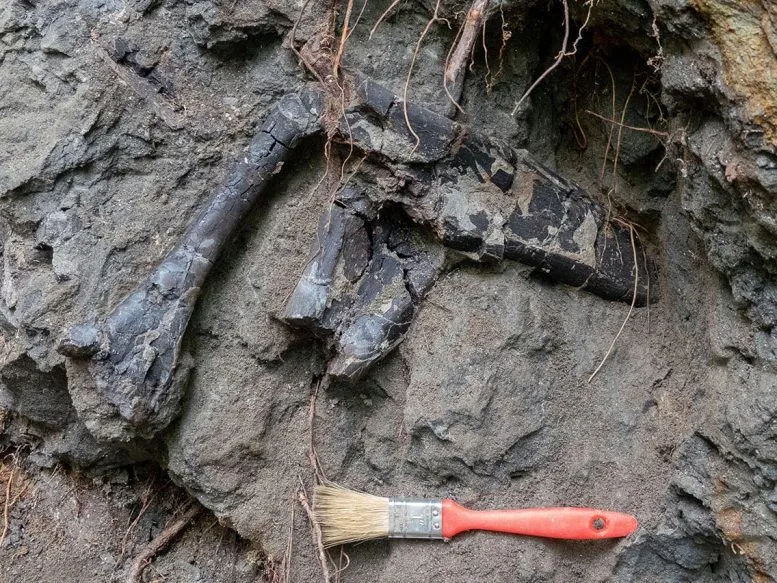
Even so, individual dinosaur remains are usually scarce at any single site. That pattern makes the newly identified locality highly unusual, as researchers documented more than one hundred vertebrate fossils packed into each square meter, with large dinosaur bones lying almost on top of each other.

Research context and fieldwork in the Hațeg Basin

For more than five years, the Valiora Dinosaur Research Group, a collaboration between Hungarian and Romanian paleontologists, has carried out systematic fieldwork in the western Hațeg Basin, a region renowned for its fossil record. The team focuses on Upper Cretaceous continental sediments that capture the final few million years before the dinosaurs disappeared.

Overlapping Dinosaur Bones in Sediment Layer

The bones were lying almost on top of each other in the layer. Credit: ELTE Eötvös Loránd University

Their excavations have produced collections containing thousands of vertebrate remains, ranging from amphibians and turtles to crocodiles, dinosaurs, pterosaurs, and mammals. Within this broader effort, the K2 site has proven to be especially remarkable, yielding over 800 vertebrate fossils from an area smaller than five square meters. The full scientific analysis of this site has now been published in the journal PLOS ONE.

“In 2019, during our first field survey in the Hațeg Basin, we almost immediately came across the K2 site. It was a defining moment for us — we instantly noticed dozens of large, exceptionally well-preserved black dinosaur bones gleaming in the grey clay layers exposed in the streambed.

We immediately began our work, and through several years of excavation we collected an extraordinarily rich vertebrate assemblage from the site,” explained Gábor Botfalvai, assistant professor at the Department of Paleontology, Eötvös Loránd University, and leader of the research group.

Ancient environment and fossil accumulation process

Approximately 72 million years ago, the Hațeg Basin looked very different from today. The landscape was shaped by short-lived rivers flowing through a subtropical environment, carrying water from higher ground down into the basin. During periods of intense rainfall, these rivers regularly overflowed their banks. As floodwaters spread across the lowlands, they swept up animal carcasses and remains from the surrounding terrain, transporting both dead and living organisms along their course.

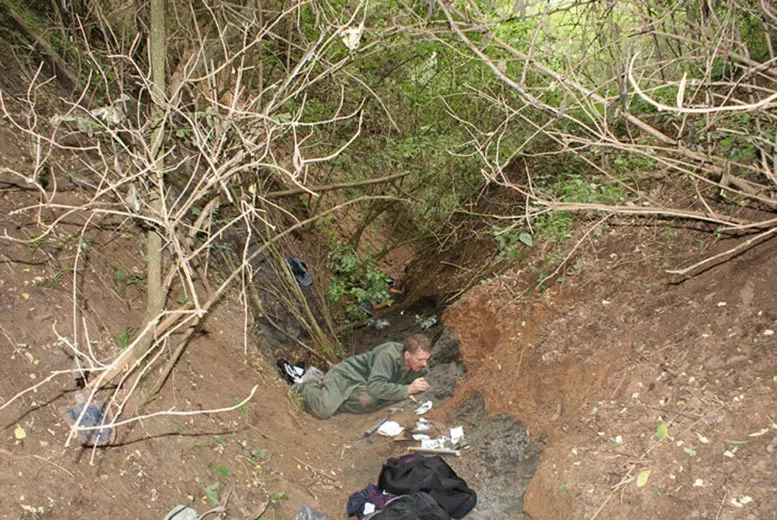
Dinosaur Fossil Excavation in Hațeg Basin

The Hațeg Basin in Transylvania is world-famous for its dinosaur remains, which have been unearthed from dozens of sites over the past century. Despite the high number of fossil localities, dinosaur finds are generally considered rare in the area. An exception is the newly discovered site, where researchers found more than a hundred vertebrate fossils per square meter — with the large dinosaur bones lying almost on top of each other. Credit: ELTE Eötvös Loránd University

“Detailed study of the rocks at the K2 site indicates that a small lake once existed here, which was periodically fed by flash floods carrying animal carcasses. As the flow of the rivers slowed rapidly upon entering the lake, the transported bodies accumulated in the deltaic environment along the shore, producing this exceptionally high bone concentration,” said Soma Budai, researcher at the University of Pavia and co-author of the publication.

Discovery of rare and well-preserved dinosaur skeletons

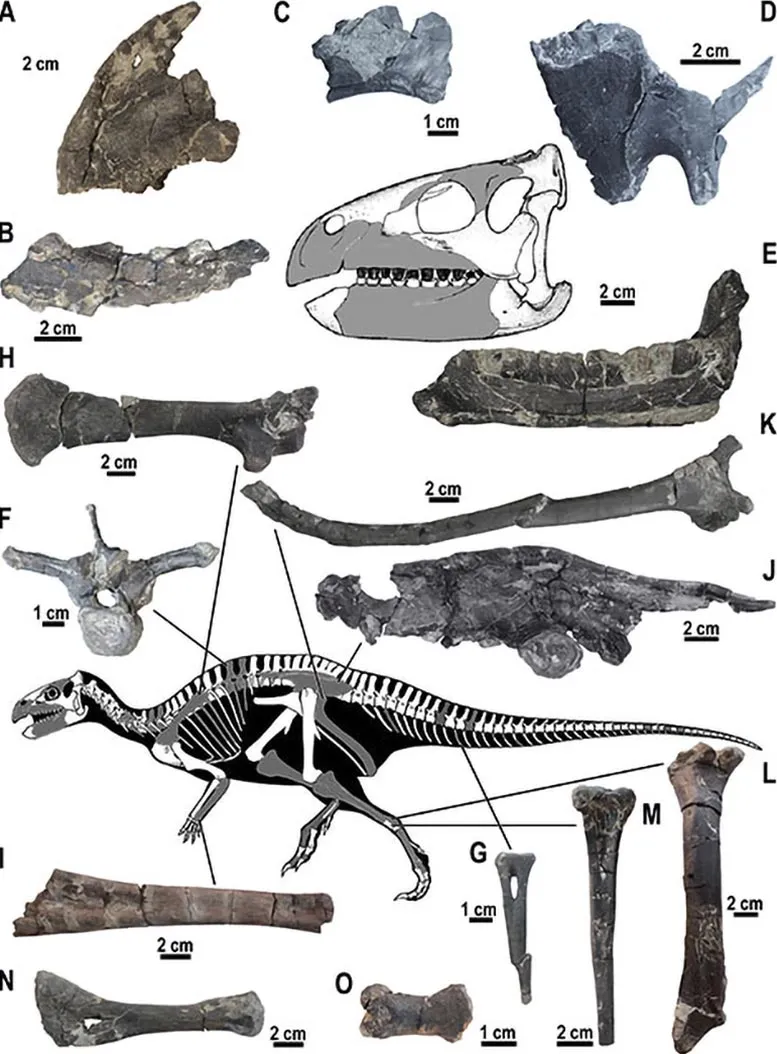
The site yielded not only isolated bones but also several partial, associated dinosaur skeletons. These represent the remains of two different herbivorous dinosaur species. Some of the skeletons belong to a roughly two-meter-long, predominantly bipedal herbivore of the Rhabdodontidae family — one of the most common dinosaurs in the Hațeg Basin.

The other type of skeleton, however, represents a major discovery: they belong to a titanosaurian sauropod dinosaur, of which no such well-preserved skeletons had previously been found in Transylvania. The study of these new fossils will provide valuable insights into the taxonomy of this long-necked dinosaur.

Associated Partial Dinosaur Skeleton Elements

Several associated partial dinosaur skeletons were also recovered from the site. Credit: ELTE Eötvös Loránd University

“Besides the remarkably high bone concentration, another key significance of this newly described site is that it represents the oldest known vertebrate accumulation in the Hațeg Basin. Studying this fossil assemblage allows us to look into the earliest composition of the Hațeg dinosaur fauna and trace the evolutionary directions and processes leading toward the dinosaurs known from younger Transylvanian sites — revealing how these Late Cretaceous ecosystems were similar or different from one another,” added Zoltán Csiki-Sava, associate professor at the University of Bucharest and Romanian leader of the research team.

The fossil assemblage described in this publication, along with other finds from ongoing excavations in the Hațeg Basin, will help scientists gain a more precise understanding of the evolutionary and ecological processes that shaped the composition of (Eastern) European dinosaur faunas during the Late Cretaceous.

Reference: “Paleontological and paleoecological significance of the oldest highly productive Upper Cretaceous (lowermost Maastrichtian) bonebed of Haţeg Basin (western Romania; Densuş-Ciula Formation)” by Gábor Botfalvai, Zoltán Csiki-Sava, János Magyar, Barna Páll-Gergely, Levente Koczó, Daniel Ţabără, Gergő Konecsni and Soma Budai, 10 November 2025, PLOS ONE.

DOI: 10.1371/journal.pone.0335893

The research was supported by the National Research, Development and Innovation Office of Hungary (NKFIH), the Supervisory Authority for Regulatory Affairs of Hungary, the Romanian Ministry of Research, Innovation and Digitalization, and the University of Bucharest.

Never miss a breakthrough: Join the SciTechDaily newsletter.

Follow us on Google and Google News.

Brightcast Impact Score (BIS)

75/100Groundbreaking

This article describes the discovery of an extraordinary dinosaur fossil site in the Hațeg Basin in Transylvania, where researchers found an unusually high density of vertebrate fossils, with large dinosaur bones lying almost on top of each other. This represents a significant scientific discovery that could provide valuable insights into the ancient ecosystem and the evolution of dinosaurs. The article focuses on the positive aspects of the discovery, highlighting the potential for new knowledge and understanding, without dwelling on any negative or harmful elements. Overall, this story aligns well with Brightcast's mission to highlight constructive solutions, measurable progress, and real hope.

Hope Impact25/33

Emotional uplift and inspirational potential

Reach Scale25/33

Potential audience impact and shareability

Verification25/33

Source credibility and content accuracy

Significant positive development

Comments(0)

Join the conversation and share your perspective.

Sign In to Comment
Loading comments...

Get weekly positive news in your inbox

No spam. Unsubscribe anytime. Join thousands who start their week with hope.

More stories that restore faith in humanity