Two NASA missions have just been named among the 25 most influential inventions of the past 25 years by TIME magazine — the James Webb Space Telescope and the Curiosity rover. It's the kind of recognition that feels both obvious and quietly profound: these aren't inventions in the traditional sense, but they're tools that fundamentally changed what we know about the universe.
Webb: A window a million miles away
The James Webb Space Telescope took decades to build and now sits a million miles from Earth, functioning as humanity's most powerful eye on the cosmos. It's shown us newborn stars in detail we'd never imagined, distant galaxies from the early universe, and planets orbiting other stars. But here's what makes it interesting beyond the raw capability: the innovations developed for Webb have spun back down to Earth. The advanced optics, thermal control systems, and precision engineering that let it see the infrared universe are now improving high-end cameras, contact lenses, and how we inspect aircraft. A tool built to look outward ended up making everyday things work better.
Curiosity: Rewriting Mars
On Mars, meanwhile, Curiosity has been doing its job for over a decade — quietly collecting evidence that the Red Planet once had conditions suitable for life. That's not small. It fundamentally shifted how we think about Mars, from a dead rock to a place with a habitable past. The rover's Radiation Assessment Detector has also mapped the Martian radiation environment, giving NASA and other space agencies crucial data for planning human missions. And its landing method — a robotic jetpack lowering it to the surface — was innovative enough that it's become the template for heavier spacecraft touching down on Mars.
We're a new kind of news feed.
Regular news is designed to drain you. We're a non-profit built to restore you. Every story we publish is scored for impact, progress, and hope.
Start Your News Detox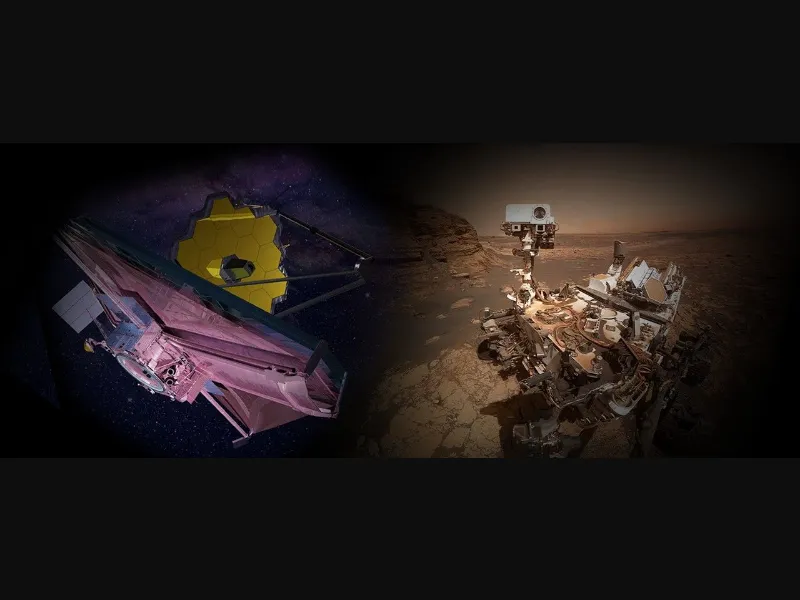 Image: NASA/JPL-Caltech/MSSS
What's worth sitting with is that these aren't one-off achievements. Webb keeps discovering new things about the universe's origins. Curiosity is still operating, still finding new evidence about Mars. They're not finished rewriting what we know — they're in the middle of doing it.