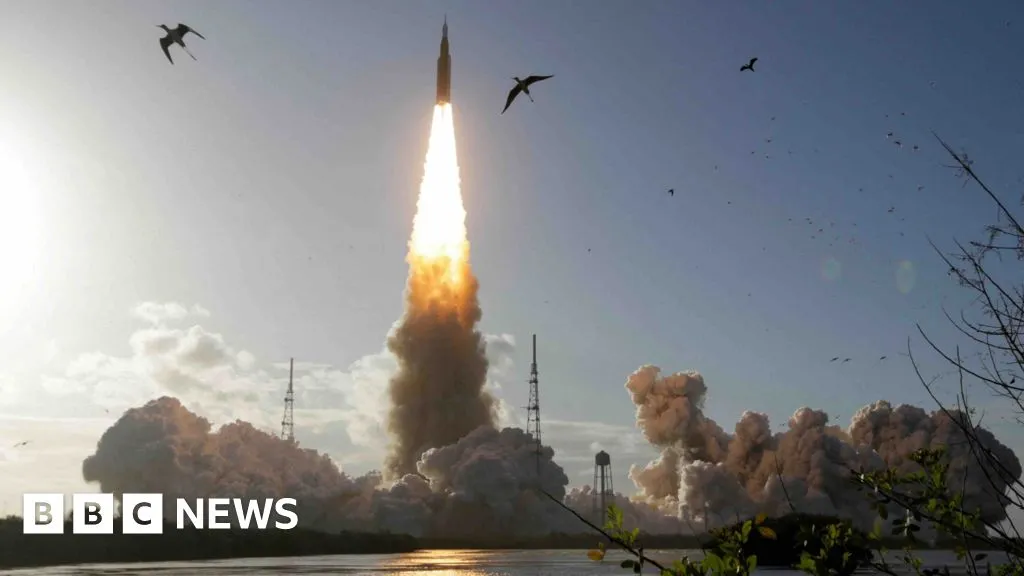
Fifty years. That's how long it's been since humanity sent a crewed mission beyond Earth orbit. But that half-century drought is officially over. NASA's Artemis II mission just blasted off, sending four astronauts on a highly anticipated, and slightly overdue, trip around the Moon.
Because apparently, that's where we're headed now. Back to the Moon, and eventually, to Mars.
The SLS (Space Launch System) rocket, a tower of ambition and precisely calibrated fire, launched from Kennedy Space Center in Florida. It happened on Wednesday, April 1, 2026, at 6:35 p.m. EDT. Aboard the Orion spacecraft, the crew of four began a ten-day test flight that will loop them around our celestial neighbor and bring them safely back home.
We're a new kind of news feed.
Regular news is designed to drain you. We're a non-profit built to restore you. Every story we publish is scored for impact, progress, and hope.
Start Your News DetoxNASA Administrator Jared Isaacman called it a "defining moment," which, if you think about it, is both impressive and slightly terrifying. This isn't just a joyride; it's a test run for humanity's long-term lunar ambitions, setting the stage for a permanent presence on the Moon and, eventually, that red planet everyone keeps talking about.
Meet the Crew, Test the Tech
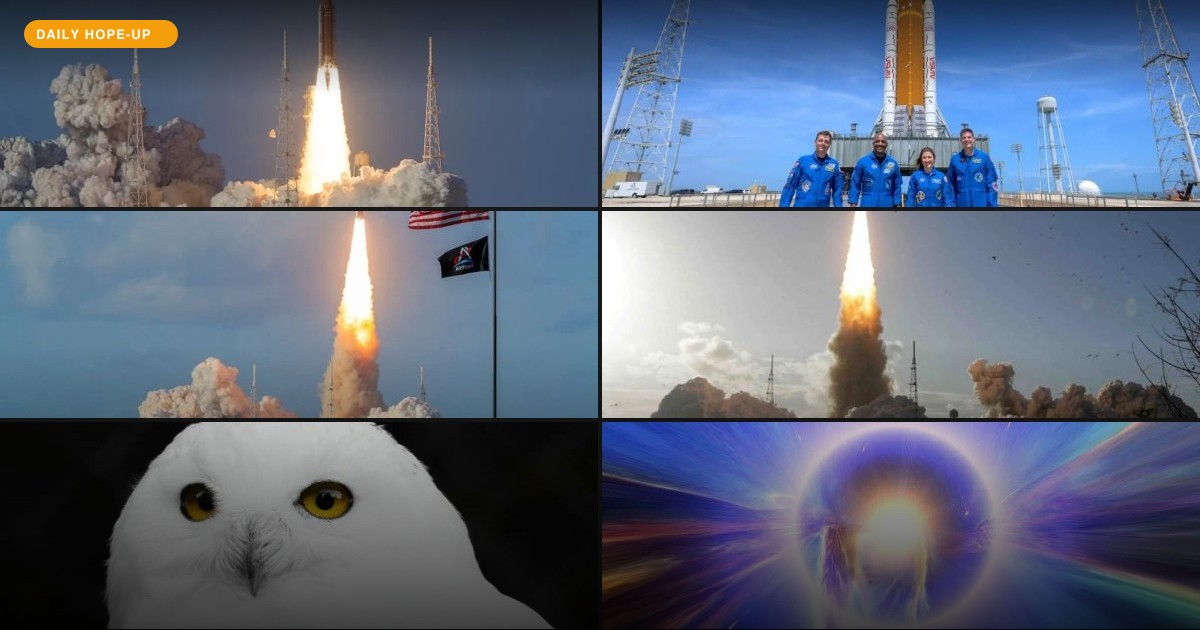
The mission's stellar quartet includes NASA's Reid Wiseman, Victor Glover, and Christina Koch, alongside CSA (Canadian Space Agency) astronaut Jeremy Hansen. They're the first crew to test the critical systems of NASA's Artemis program, ensuring everything from the life support to the manual controls is up to snuff for future Moon-landing missions.
Once Orion deployed its solar array wings (looking like some kind of cosmic butterfly), the real work began. The crew and ground teams immediately started checking critical onboard systems, because when you're 200,000 miles from home, you want to be sure everything's working.
NASA Associate Administrator Amit Kshatriya put it plainly: Artemis II is a test flight. These astronauts are essentially the ultimate beta testers, pushing Orion to its limits so future crews can confidently land on the lunar surface. No pressure.
The Journey: From Earth Orbit to Lunar Flyby
About 49 minutes after launch, the rocket's upper stage gave Orion a gentle shove, placing it into an elliptical orbit around Earth. A second, more powerful burn will then propel the spacecraft, aptly named "Integrity," to a mind-boggling 46,000 miles above our planet. After that, Orion detaches, a lone wolf on its journey.
Hours later, the upper stage will release four tiny CubeSats from international partners like Argentina and Germany. These little guys will conduct their own scientific studies and tech demos. Because apparently, even the smallest satellites get to go to space now.
The spacecraft will hang out in high Earth orbit for about a day, giving the astronauts a chance to manually control Orion and test its handling. Think of it as a cosmic driving lesson, but with slightly higher stakes.
If all goes according to plan, Orion's service module will execute a six-minute translunar injection burn on Thursday, April 2. This will sling the spacecraft toward the Moon, using its gravity like a cosmic slingshot to guide the crew back to Earth.
During the lunar flyby on Monday, April 6, the astronauts will get a front-row seat to the Moon, snapping photos and becoming the first humans to directly see parts of its far side. They'll observe features like ridges and crater edges, beautifully highlighted by long shadows that are usually swallowed by full sunlight. It's like seeing the Moon's wrinkles for the first time.
After a few scientific studies—including human health research that sounds like it belongs in a sci-fi movie—Orion will make its way back, splashing down in the Pacific Ocean. Let's hope someone has a cold drink ready.
Artemis II is more than just a trip around the Moon; it's an early, audacious step in a new era of human exploration. NASA isn't just aiming for the Moon anymore; they're planning to stay there, using it as a stepping stone for the ultimate road trip to Mars. Because why stop at one celestial body when you can have two?