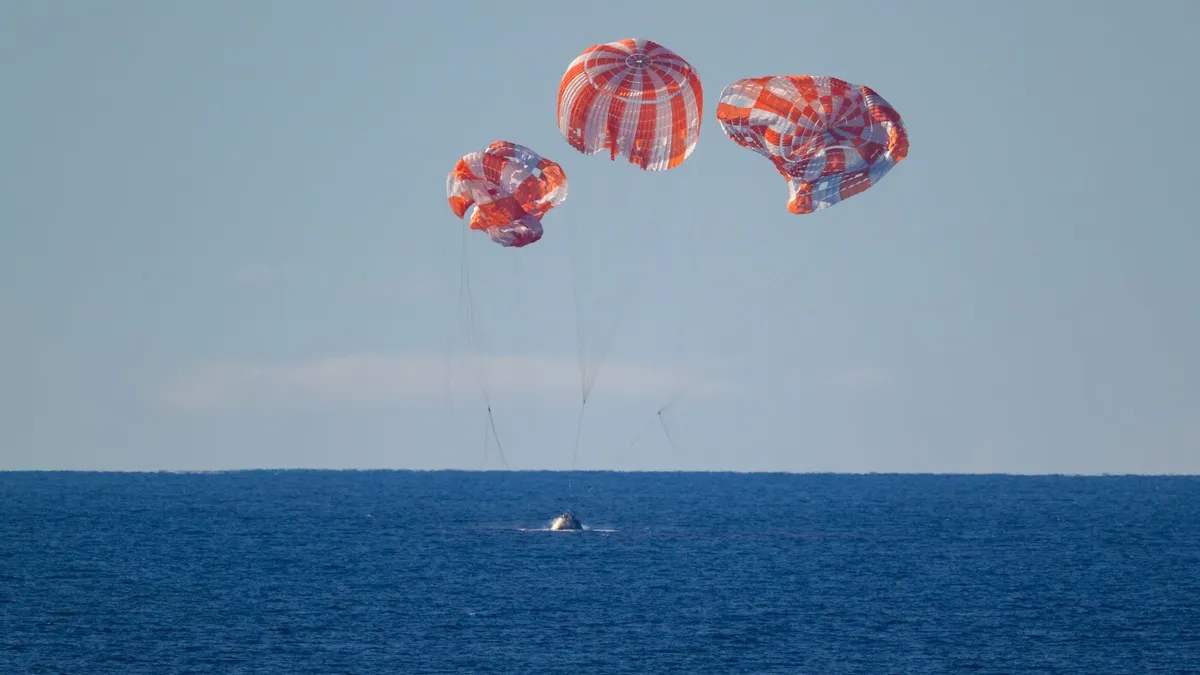
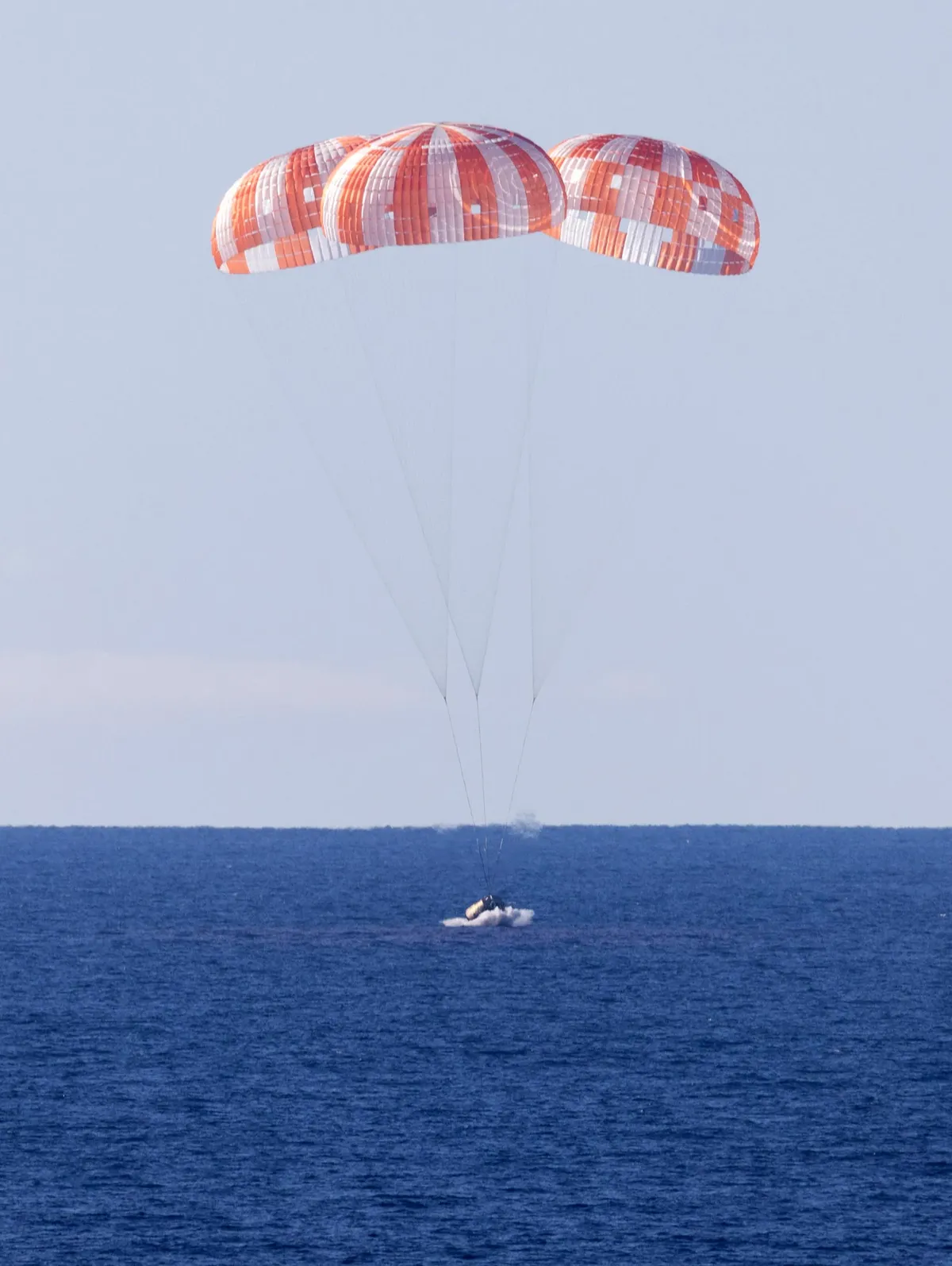
NASA’s Artemis 2 mission recently completed a historic ten-day journey around the moon. Four astronauts splashed down safely in the Pacific Ocean on April 10. This flight marks the first time humans have traveled near the moon in over 50 years.
The mission sets the stage for future Artemis missions, which aim to return people to the moon's surface.
A Historic Crew and Record-Breaking Journey
NASA astronauts Reid Wiseman, Victor Glover, and Christina Koch, along with Canadian Space Agency astronaut Jeremy Hansen, were on board. After splashdown, Wiseman reported that all four crewmembers were doing well.
We're a new kind of news feed.
Regular news is designed to drain you. We're a non-profit built to restore you. Every story we publish is scored for impact, progress, and hope.
Start Your News DetoxThe Orion spacecraft's living area is about 330 cubic feet, roughly the size of two minivans. This mission was the first crewed test flight for Orion and the Space Launch System rocket.
Victor Glover became the first Black person to reach the moon's vicinity. Christina Koch became the first woman, and Jeremy Hansen the first Canadian.
The journey had a few minor issues, including problems with the spacecraft's toilet system. Astronaut Christina Koch fixed an initial issue with insufficient water. Later, frozen urine in a vent line caused a clog. Mission control directed the crew to reposition the spacecraft to use the sun's heat to melt the clog. The astronauts also reported a burning smell from the toilet.
Despite these inconveniences, the crew completed their objectives. On April 6, they reached the moon's vicinity. They then broke the record for the farthest distance traveled from Earth by humans. Orion traveled 252,756 miles from Earth, surpassing Apollo 13's 1970 record by 4,111 miles.
Lunar Observations and Safe Return
During the lunar flyby, the astronauts saw the moon's far side, which always faces away from Earth. They observed 30 lunar surface targets, including the Orientale and Hertzsprung basins. Comparing these two craters will help scientists understand how lunar features change over time.
The Artemis 2 crew are the only people to have seen the entire Orientale basin with their own eyes. This basin is only partially visible from Earth.
The crew also suggested names for two unnamed craters: Integrity, after their spacecraft, and Carroll, honoring Wiseman’s late wife. These names will be submitted to the International Astronomical Union.
Returning to Earth was a critical part of the mission. The Artemis 2 launch was delayed after the uncrewed Artemis 1 mission in 2022 showed unexpected damage to its heat shield. This damage occurred because the spacecraft hit Earth's atmosphere at about 25,000 miles per hour, creating temperatures of nearly 5,000 degrees Fahrenheit.
For Artemis 2, a steeper, more direct re-entry route was used. This reduced the temperatures the Orion capsule was exposed to. As the spacecraft neared Earth, parachutes deployed, slowing its speed to about 19 miles per hour before it splashed down in the Pacific.
NASA Administrator Jared Isaacman praised the team's hard work. The next mission, Artemis 3, is planned for 2027. It will practice Orion's ability to dock with commercially built lunar landers. NASA then expects to attempt putting people on the moon's surface in 2028.
Isaacman noted that this is just the beginning. The goal is to send missions to the moon frequently, leading to a lunar landing in 2028 and the start of building a base.