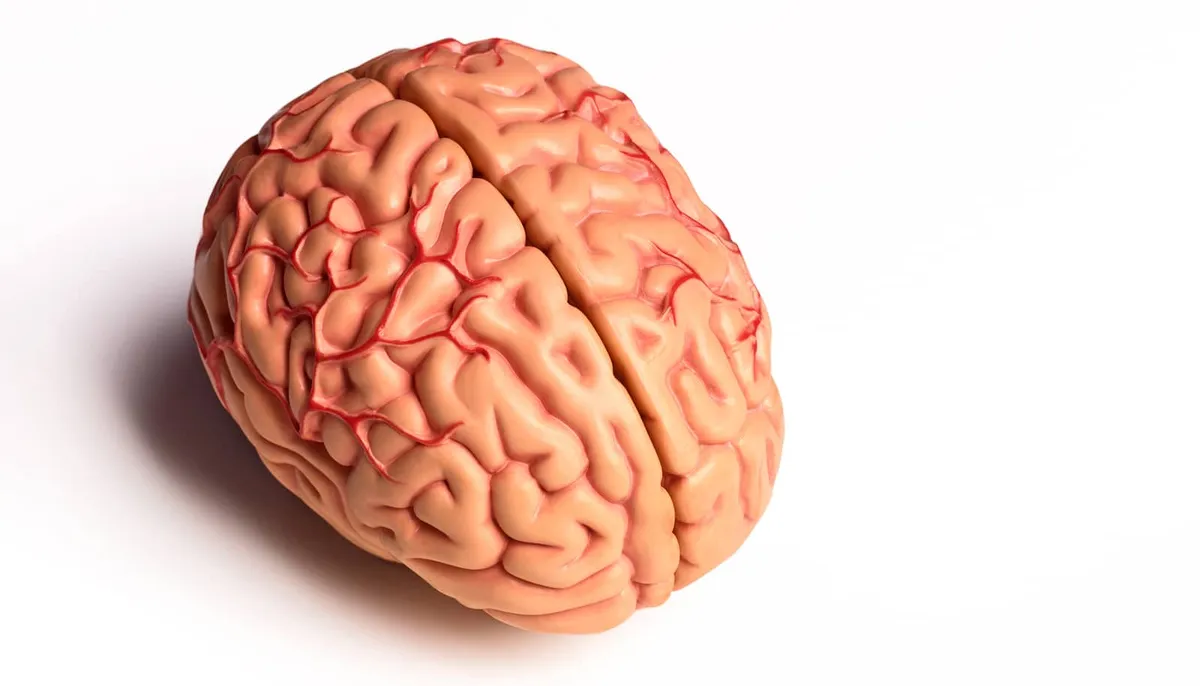
Ever feel like your brain's stuck on a loop, trying to solve a new problem with an old, clearly broken strategy? Like trying to use a flip phone in 2024? That's your cognitive flexibility taking a coffee break. It's that crucial ability to ditch what’s not working and adapt—a kind of mental agility that's key to, well, pretty much everything.
Turns out, when this mental gear-shifting goes sideways, it's linked to a whole host of conditions, from ADHD to Alzheimer's. So, it’s not just annoying; it’s a big deal.
The Brain's Master Switch
Good news for our stuck-in-the-mud brains: researchers at the University of California, Riverside, have pinpointed a tiny brain circuit that acts like a mental clutch. Their study, published in eLife, highlights a minuscule structure in the brainstem called the locus coeruleus (LC).
We're a new kind of news feed.
Regular news is designed to drain you. We're a non-profit built to restore you. Every story we publish is scored for impact, progress, and hope.
Start Your News DetoxThink of the LC as the brain's main traffic cop, constantly directing how we navigate new situations. It helps the brain pivot smoothly between different behaviors and rules, according to Hongdian Yang, a senior author of the study. This little guy might be small, but it pulls a lot of weight.
The LC is the primary source of norepinephrine, a chemical that’s basically the brain’s multi-tool for attention, alertness, learning, stress, and decision-making. Scientists suspected the LC was involved in our ability to adapt, but the exact how remained a bit of a mystery.
To crack the code, the team put some mice through a mental obstacle course. First, the mice learned to find food using a specific texture. Then, without so much as a memo, the rules changed: now they had to sniff out their snacks. This is basically the mouse version of suddenly having to use a new operating system without any warning.
When the researchers gently quieted the LC in some mice, those little guys struggled. They kept trying the old strategy, needing far more attempts to grasp the new rules. It seems the LC is crucial for helping the brain's prefrontal cortex (our planning and decision-making hub) reorganize itself, letting go of the old and embracing the new.
Funnily enough, quieting the LC didn't just reduce activity. It actually made the prefrontal cortex noisier, with more neurons firing and responding to a chaotic mix of information. Yang described it as the network becoming “noisier and less selective.” So, the LC isn't just a booster; it’s a conductor, keeping the brain's orchestra in tune during complex decisions.
Why This Matters Beyond Mice
These findings suggest that many brain disorders might not just be about too much or too little activity, but rather about the brain’s inability to gracefully shift its neural networks when circumstances change. The researchers even observed that normally, the brain shifts through different "modes" of activity while learning. Without the LC, these patterns got fuzzy, and the brain couldn't quite get into the right learning groove.
Using machine learning, the scientists confirmed that without the LC, the brain activity no longer clearly indicated what the mice were learning or what they might do next. It was like the prefrontal cortex lost its sticky notes for the current rules.
This is a big deal for understanding aging and Alzheimer's, where the LC is one of the first areas to show wear and tear. This study offers tantalizing new targets for treatments that could help us all keep those mental gears shifting smoothly. Because who doesn't want to avoid thinking like their ex, especially when it comes to solving new problems?