Imagine a quantum computer that hums like a guitar. No, really. Scientists at ETH Zurich have built a tiny chip, no bigger than your fingernail, that stores quantum information as microscopic vibrations. It's a breakthrough that could completely change how these notoriously finicky machines are built.
Most quantum systems are a bit of a chaotic mess when it comes to memory and processing. Everything's jumbled together, making it tough to scale up without adding more bulky hardware. But physicist Yiwen Chu and her team decided to borrow a trick from your everyday laptop: separate the CPU from the RAM.
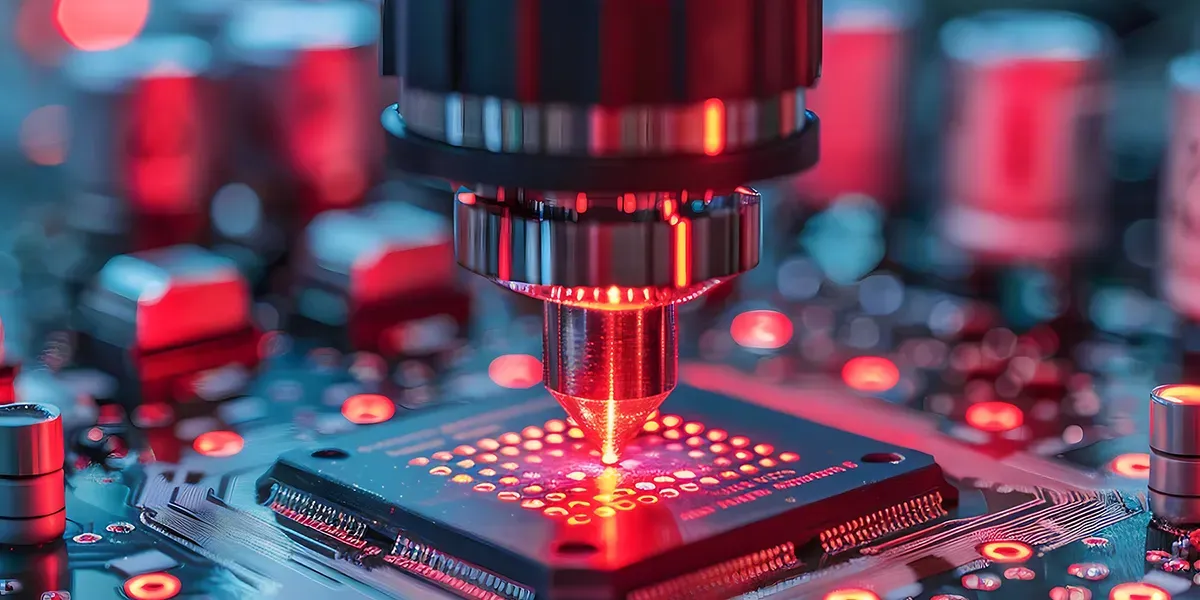
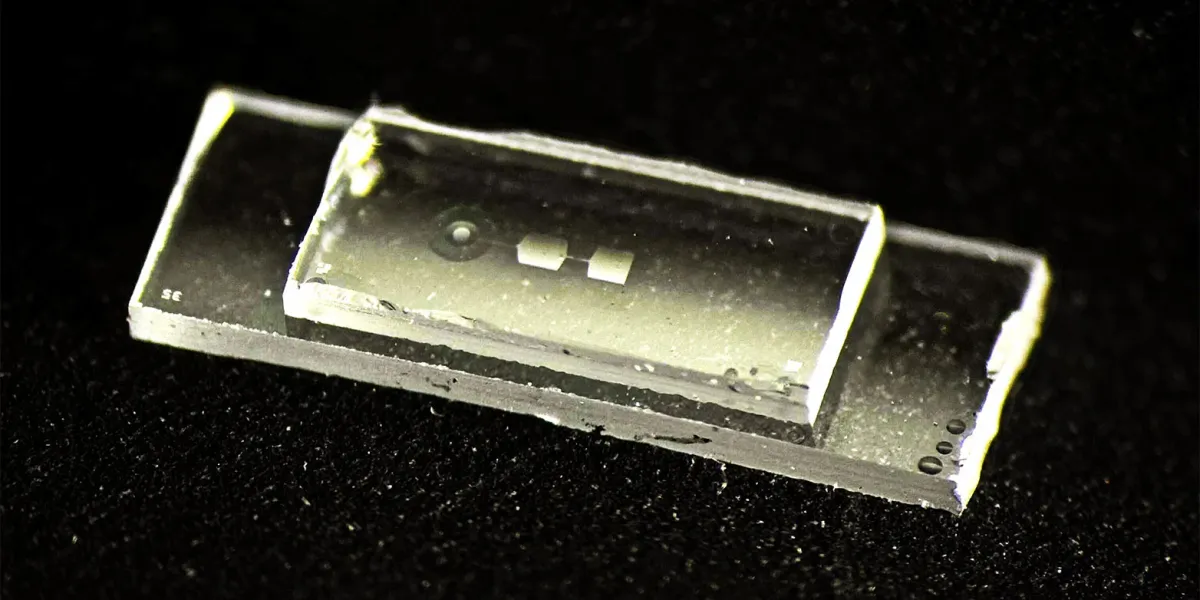
Their experimental chip, a mere 7.5 by 2.5 millimeters, uses a superconducting qubit as the brain, doing all the heavy lifting of calculations. The memory? That's where the guitar comes in. Tiny mechanical resonators vibrate, and packets of vibrational energy, called phonons, carry the quantum information. Think of them as ultra-high-pitched notes you can't hear, but which hold incredibly delicate quantum states.
We're a new kind of news feed.
Regular news is designed to drain you. We're a non-profit built to restore you. Every story we publish is scored for impact, progress, and hope.
Start Your News DetoxThe Brains and the Beats
This division of labor is key. Superconducting qubits are fast and can perform the mind-bending quantum logic, but they're not great at holding onto information for long. Mechanical resonators, on the other hand, are small, can support many distinct vibration patterns (each a separate memory slot!), and are excellent at preserving those fragile quantum states.
Instead of needing a separate electromagnetic device for each memory spot, these mechanical resonators can pack a whole orchestra of information into a tiny space. It's like having one guitar that can play a dozen different songs simultaneously, each note a data point.
To prove their concept wasn't just a fancy hum, the researchers put their system through its paces. They performed the quantum Fourier transform – a fundamental step for many quantum algorithms – and quantum period finding, which is crucial for uncovering hidden patterns in data. Both tests worked, showing the chip could prepare, store, connect, and precisely control quantum states without losing its quantum cool.
This isn't to say your laptop is about to be replaced by a vibrating fingernail. This is a proof of concept, a whisper of what's possible. The next challenge is scaling it up, adding more memory, more processing power, and keeping those error rates low. But for now, the idea that a quantum computer might just need to learn a tune or two? That's a pretty sweet note to end on.