You know that old saying, "nature abhors a vacuum"? Well, scientists just found a way to make a vacuum really productive. Researchers have figured out how to use what we perceive as "empty space" to actually strengthen superconductivity in a material.
Think about that for a second. The void. The nothing. It's now a tool. This isn't just a party trick; it's a new way to nudge quantum materials without actually touching them, which, if you think about it, is both impressive and slightly terrifying.
The team, led by Changgan Zeng and Guanghui Cheng from the University of Science and Technology of China, along with collaborators from Shanghai Jiao Tong University and MIT, published their findings in Nature. Because of course they did.
We're a new kind of news feed.
Regular news is designed to drain you. We're a non-profit built to restore you. Every story we publish is scored for impact, progress, and hope.
Start Your News DetoxThe Not-So-Empty Void
Here’s the thing about a vacuum: it’s not actually empty. On a quantum level, it's a bustling marketplace of "virtual particles" constantly popping into existence and disappearing. These tiny, fleeting quantum fluctuations are usually too weak to bother with, but they're a fundamental part of how the universe works.
Zeng and Cheng had been poking at these vacuum fluctuations for a while. They'd even figured out how to control the Casimir force (a tiny force between objects caused by these fluctuations) with a magnetic field. Naturally, this led them to wonder: could these subtle wiggles in the void influence bigger quantum states?
Enter the concept of "vacuumronics" from Qingdong Jiang's team. This theory suggested that if you build the right kind of vacuum environment, you could actually control how electrons and light behave. Which sounds like something out of a sci-fi novel, but here we are.
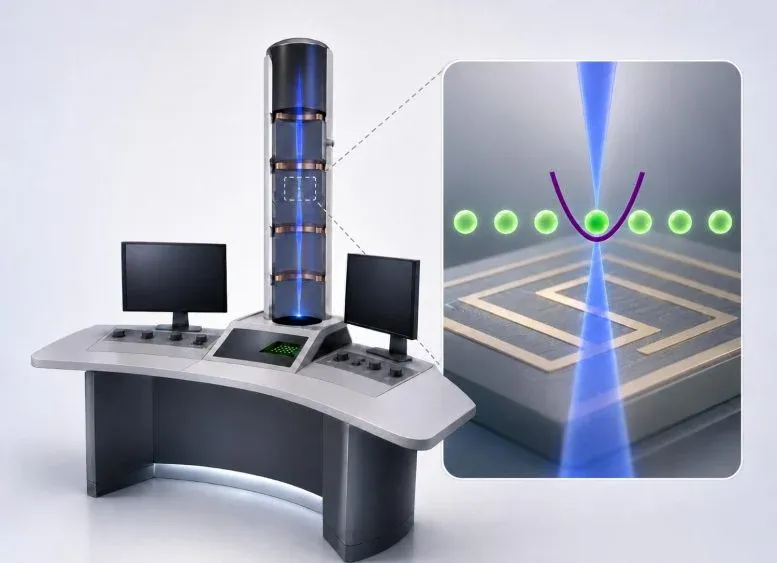
To make the vacuum fluctuations strong enough to matter, the researchers used something called a "terahertz split-ring resonator." Basically, a fancy dark cavity designed to amplify these normally faint whispers of quantum activity. Because apparently, even the void needs a megaphone sometimes.
Superconductivity Gets a Boost
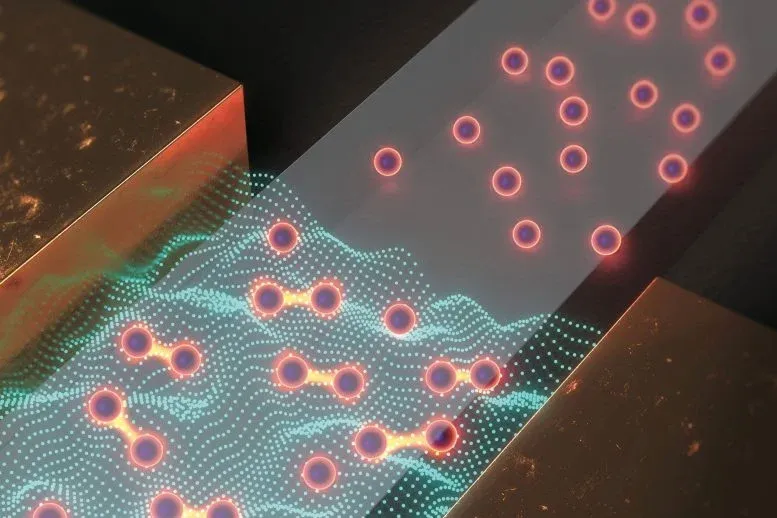
To put their theory to the test, Zeng and Cheng’s team slipped a superconducting material, NbSe2, into this terahertz dark cavity. Then they did the scientific equivalent of a taste test: comparing the material inside the cavity to the same material outside it.
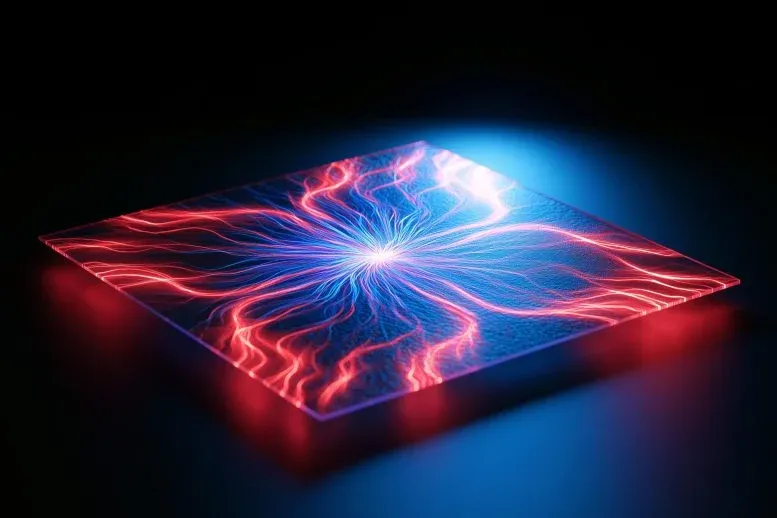
The results? The NbSe2 inside the cavity showed a noticeable bump in its critical temperature — the point at which it becomes superconducting. Professor Cheng noted that this critical temperature increased by up to 5.4% in a six-layer device. The critical current and magnetic field also improved. This was the first time anyone had seen vacuum fluctuations actually enhance superconductivity. Let that satisfying number sink in.
Further tests ruled out other mundane explanations like strain or damage. The enhancement, they found, peaked at a very specific frequency of the dark cavity. This suggested a direct, resonant link between the superconducting state and the tweaked vacuum environment.
Jiang's team and MIT's Frank Wilczek developed a model explaining that the superconducting state was essentially exchanging virtual photons with the dark cavity. This interaction lowered the energy of the superconducting state, making it more robust. So, the vacuum isn't just there; it's actively participating in the process.
This means scientists can now use the vacuum itself as a non-contact, non-invasive way to manipulate quantum materials. Professor Zeng believes that with better cavity designs, we could see even more significant control over quantum states. Which is a polite way of saying: the void just got a promotion, and it's ready to work.