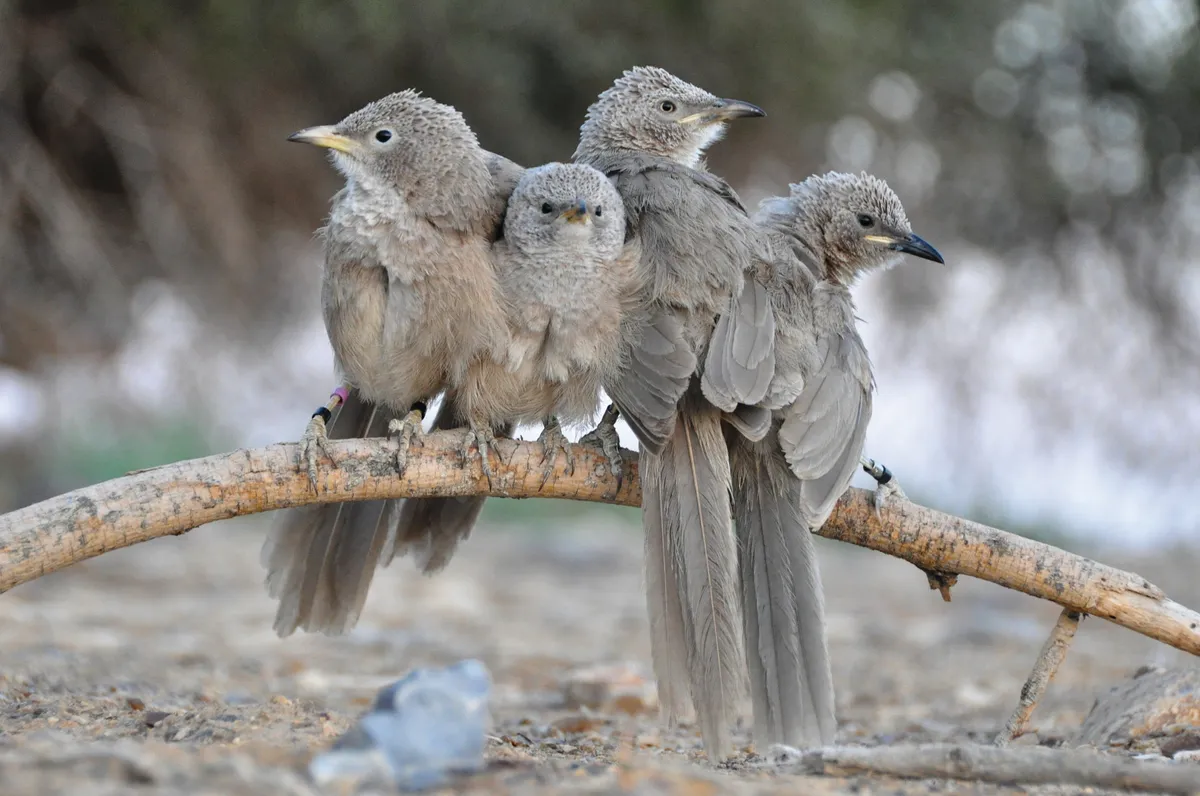
For decades, the animal kingdom’s most social ladies—those living in groups where everyone helps with the kids—got a bit of a bad rap. The prevailing wisdom was that in these “cooperatively breeding” species, only one queen bee got to have babies. All the other sexually mature females just… helped. Selflessly. Because apparently, that’s just what good subordinate females do.
Except, a new study suggests that might be a load of peacock feathers.
Researchers from the University of Konstanz and elsewhere took a long, hard look at the data. What they found was less about fierce reproductive monopolies and more about shared nurseries and surprisingly collaborative co-parenting. The study, published in Proceedings of the Royal Society B, is part of a larger project called Co-BreeD (Cooperative-Breeding Database), which sounds like a very serious government initiative for adorable baby animals.
Lead author Dr. Yitzchak Ben Mocha noticed a pattern: many past studies had painted cooperative breeding with too broad a brush, missing crucial details about group dynamics. They’d claim, for instance, that species like Western bluebirds and superb fairywrens showed extreme “female reproductive skew”—meaning only one female bred, and the others just helped out.
We're a new kind of news feed.
Regular news is designed to drain you. We're a non-profit built to restore you. Every story we publish is scored for impact, progress, and hope.
Start Your News DetoxBut here’s the kicker: Ben Mocha and his team reviewed the actual data for these species and found that almost all their nests had no female helpers at all. Zero. Which, if you think about it, makes it pretty hard to have reproductive skew, let alone alloparental care (that’s when non-parents help raise young). Basically, those species weren't exactly stellar examples of female cooperation.
The Great Data Deep Dive
Frustrated by these fuzzy classifications, Ben Mocha’s team decided to get granular. They meticulously reviewed observations from 73 cooperatively breeding bird and mammal species. Their mission? To figure out if sexually mature females living together were actually sharing the breeding load and helping each other’s young, or if one really was hogging all the baby-making glory while the others just fetched snacks.
What they discovered upended the old narrative. In most cases, when “helpers” were present, they were either males or sexually immature females. Meaning, the mature ladies weren't actually sacrificing their own chances at motherhood. When multiple sexually mature females did live in the same group, they often bred together and helped raise each other's offspring. No suppression, no forced abstinence—just good old-fashioned teamwork.
This isn't just academic hair-splitting. It highlights how misleading it can be to ignore the nitty-gritty social makeup of animal groups when trying to understand their behavior. The Co-BreeD project, started by Ben Mocha and Michael Griesser, aims to be the definitive, open-source record for cooperative breeding research, pulling data from scientific papers on wild populations and getting it expert-reviewed for accuracy.
A More Cooperative Future?
The team’s findings suggest a fundamental shift in how we view female social dynamics. It turns out, in the bird and mammal groups studied, sexually mature females in the same group usually shared breeding and co-parented more often than one female dominated. This could reshape our understanding of evolution, social structures, and frankly, just how much drama there isn't in some animal communities.
Ben Mocha thinks the next big question isn't if females cooperate, but why some groups have many sexually mature females in the first place, and what social or environmental factors allow that cooperation to flourish. Because apparently, the natural world is far more collaborative than we gave it credit for.
He hopes his work will inspire other zoologists to scrutinize their data more carefully. Because, as he dryly notes, a huge number of species can't make up for inaccurate data for each individual one. The first version of the Co-BreeD database is online, ready for anyone to explore, and a bigger, better version is already in the works.
Which, if you think about it, is a pretty cooperative endeavor itself.