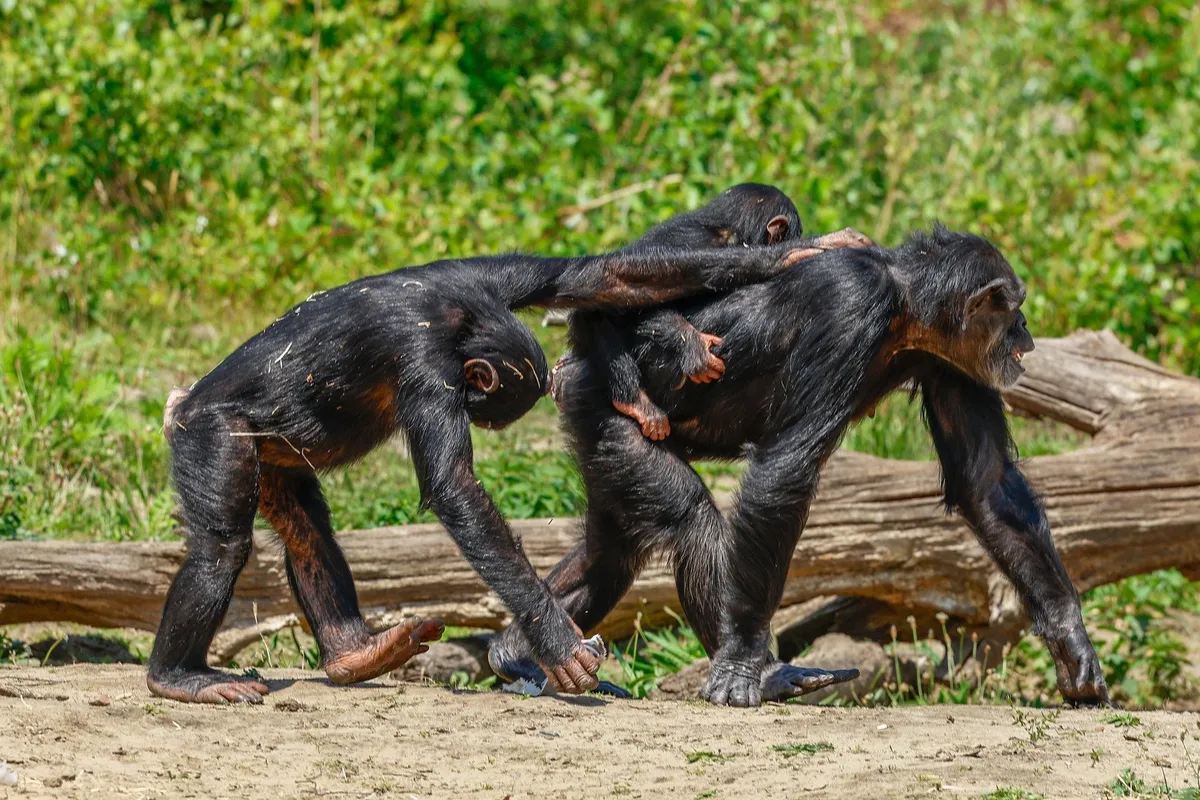
For decades, we’ve known that chimpanzees are pretty handy with a stick. Now, new research reveals they're not just using tools; they're actively teaching their kids how to, well, tool. Think of it as a masterclass in ant-fishing, complete with a starter kit.
Turns out, adult chimps in Senegal are deliberately passing tools to their youngsters, helping them crack the code on complex foraging skills. And yes, much like with humans, Mom is often the primary instructor, probably because she’s tired of hearing, “But how do I get the ants out?!”
The Original Tool-Sharing Economy
Andreu Sánchez-Megías, a Ph.D. candidate, led a camera trap study from 2017 to 2025 (yes, you read that right — eight years of chimp surveillance) on wild western chimpanzees in Senegal. The cameras were strategically placed at 14 spots where chimps were busy with their various DIY projects: fishing for algae, army ants, and termites. Because apparently, those are all delicious.
We're a new kind of news feed.
Regular news is designed to drain you. We're a non-profit built to restore you. Every story we publish is scored for impact, progress, and hope.
Start Your News DetoxThey also caught chimps lugging baobab fruits to stone "anvils" for a good pounding. While ant and termite fishing are fairly widespread, algae fishing and baobab pounding are niche skills, unique to western chimps in Senegal, Mali, and Guinea. Talk about regional specialties.
The study documented 33 instances of tool transfers and four of fruit transfers. Most of these handouts (58%) happened during ant dipping, followed by algae fishing (30%) and termite fishing (12%). The adults, particularly the females, were the generous benefactors, with infants being the main recipients (42%). Because someone has to show the kids how it's done.
Most transfers were between relatives, with mothers gifting tools to their offspring 30% of the time. Almost all voluntary transfers were initiated by the recipient asking for the tool. Because even in the wild, sometimes you just have to ask. Though occasionally, a tool or fruit was swiped, leading to some chimp-on-chimp retaliation. Apparently, some things never change.
Learning by Doing (and Watching Mom)
The study even captured video evidence of these "technological transfers." One clip from 2018 shows a mother named Soukki, expertly dipping a stick into an ant colony. She then, quite deliberately, led her baby daughter, Saïsaï, to the stick. Saïsaï pulled it out, and voilà: ant snack. A truly hands-on — or rather, paws-on — learning experience.
Another video, from 2021, features a mother, Féré, with three fruits. An unidentified young male picked up a fruit, pounded it on a rock, and then guided Fotti's hand to the fruit. Fotti, ever the diligent student, watched intently before trying it herself and eventually succeeding. Which, if you think about it, is both impressive and slightly terrifying. Imagine if our parents had to teach us how to open a bag of chips with a rock.
Sánchez-Megías points out that this teaching is crucial for passing on complex skills that would be tough to pick up solo. Professor R. Adriana Hernandez-Aguilar, a senior author, is now pondering how much teaching influences these technological behaviors in great apes. Also, she wonders if more complicated tasks require more teaching, and if the star pupils eventually become the next generation of patient instructors. The circle of life, but with more ants.