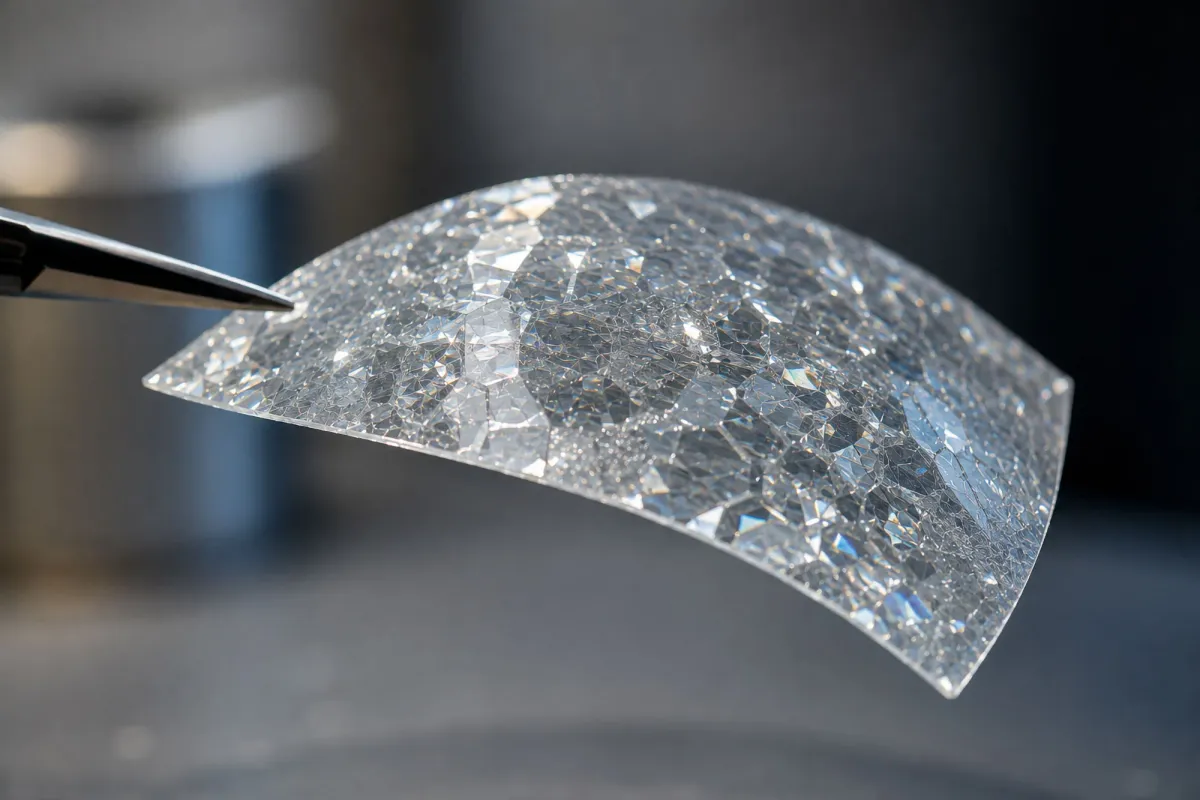
A new metal alloy, a cobalt aluminum nanolaminate, is up to ten times stronger than structural steel. It also remains flexible, solving a common problem where strong materials become too brittle.
This breakthrough comes from engineers at Purdue University. They found a way to make cobalt aluminum (CoAl) both strong and able to deform at room temperature. This could lead to better materials for jet engines and other high-performance machines.
The Challenge of Strong Materials
Jet engines need materials that can handle extreme heat and force without breaking. Intermetallic compounds, like CoAl, are very strong, have high melting points, and resist slow deformation. This makes them ideal for parts in jet engines, gas turbines, and car components.
We're a new kind of news feed.
Regular news is designed to drain you. We're a non-profit built to restore you. Every story we publish is scored for impact, progress, and hope.
Start Your News DetoxHowever, these materials often have a major flaw: they are brittle. Their ordered atomic structure makes them strong but also prevents them from bending easily. Instead, they tend to fracture, especially at room temperature. CoAl, for example, is strong enough for turbine parts but too brittle to be shaped or to handle sudden stress.
Xinghang Zhang, a professor at Purdue, explained that stronger, more flexible CoAl alloys could allow engines to spin faster and handle more force, boosting performance.
Engineering Strength and Flexibility
The Purdue team tackled this problem by adding imperfections, called dislocations, into the material. Dislocations are tiny disruptions in a crystal's atomic pattern. While often seen as weaknesses, they can help metals change shape by allowing atomic layers to move instead of breaking.
CoAl usually doesn't have enough mobile dislocations to deform much at room temperature. Previous attempts to improve its flexibility by changing its makeup or combining it with other materials had limited success.
The researchers built dislocations directly into the CoAl as it formed. They also created a network of amorphous interfaces. These are thin boundaries where atoms are not arranged in an ordered crystal pattern.
Ke Xu, a postdoctoral researcher at Purdue and the study's lead author, noted that this new approach significantly improves CoAl's ability to deform plastically at room temperature.
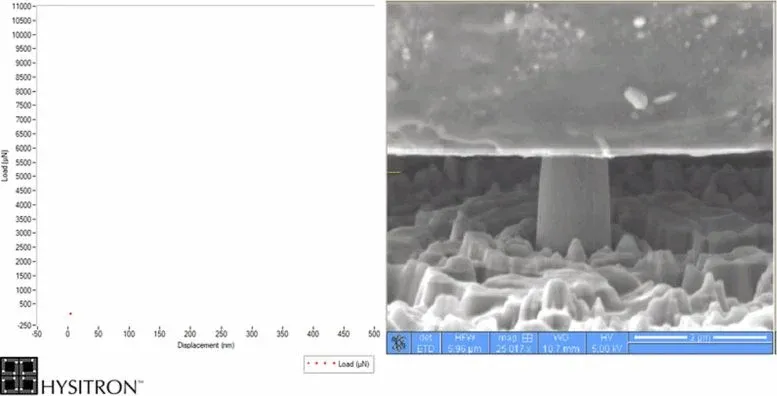
These flexible internal boundaries do more than just separate layers. When the material deforms, parts of these interfaces crystallize. This process helps create more dislocations, giving the CoAl layers more ways to absorb force.
Zhang explained that they introduced dislocations during the sputtering deposition process. They also designed a "framework of amorphous interfaces" (FAIs), which are flexible boundaries that partially crystallize during deformation. This promotes the creation of dislocations in the CoAl intermetallics.
A New Standard for Materials
The resulting nanolaminate achieved a yield strength of 6 gigapascals (GPa). This is about six to ten times stronger than high-strength structural steel. Yield strength measures how much stress a material can handle before it permanently deforms.
Despite its extreme strength, the material could sustain 15% plastic strain under compression at room temperature. This means it could deform significantly without immediately breaking. Xu called this combination of ultra-high strength and outstanding flexibility one of the best intermetallic systems reported so far.
The team made the material using magnetron sputtering deposition. This process forms a thin film directly from alloy vapor, unlike traditional casting. This unconventional method helped trap many dislocations inside the CoAl and create the amorphous aluminum-cobalt interfaces.
Zhang noted that this "non-equilibrium fabrication approach" allowed them to create materials from alloy vapor to a solid. This introduced many dislocations in CoAl, achieving strength and flexibility not possible with traditional casting.
Looking Ahead
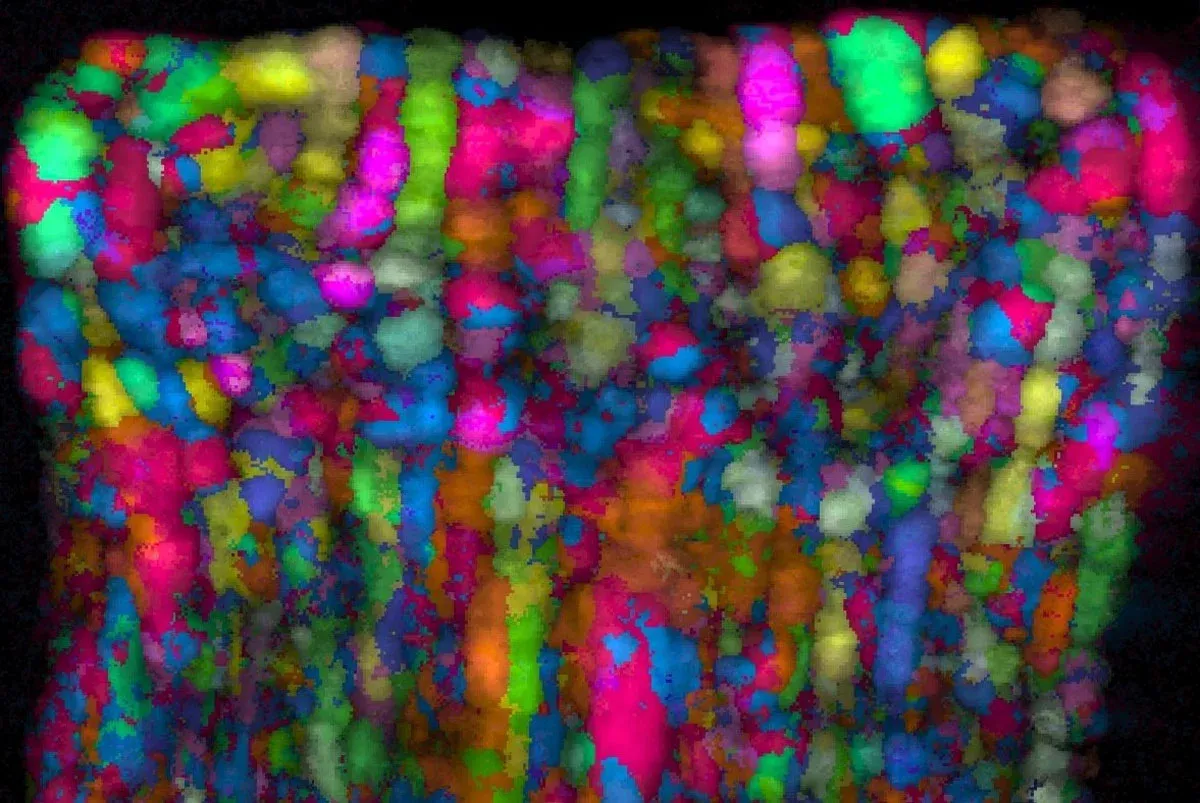
The researchers watched the material deform under a scanning electron microscope. This allowed them to see how the microscopic structure changed. University of Houston professor Yashashree Kulkarni and PhD student Anand Mathew also used computer simulations to study the process at an atomic level. Their models showed the amorphous interfaces crystallizing under pressure and releasing dislocations into nearby CoAl layers.
These findings suggest that the interfaces actively contribute to plastic deformation. They help the material respond to stress without losing its strength.
Currently, this material is a nanoscale layered system made through thin-film deposition. The next step is to apply this concept to larger CoAl nanocomposites that can be manufactured on an industrial scale for turbine components.
Xu said they will also test this concept with other intermetallics. The goal is to see if FAIs can generally improve flexibility in this class of metals. If successful, this approach could offer engineers a new way to design materials for demanding environments. It could allow them to achieve both strength and deformability by controlling how defects form and how internal boundaries react to force.
Zhang believes that ductile intermetallics will greatly improve capabilities for designing advanced materials for aerospace, energy, and defense.