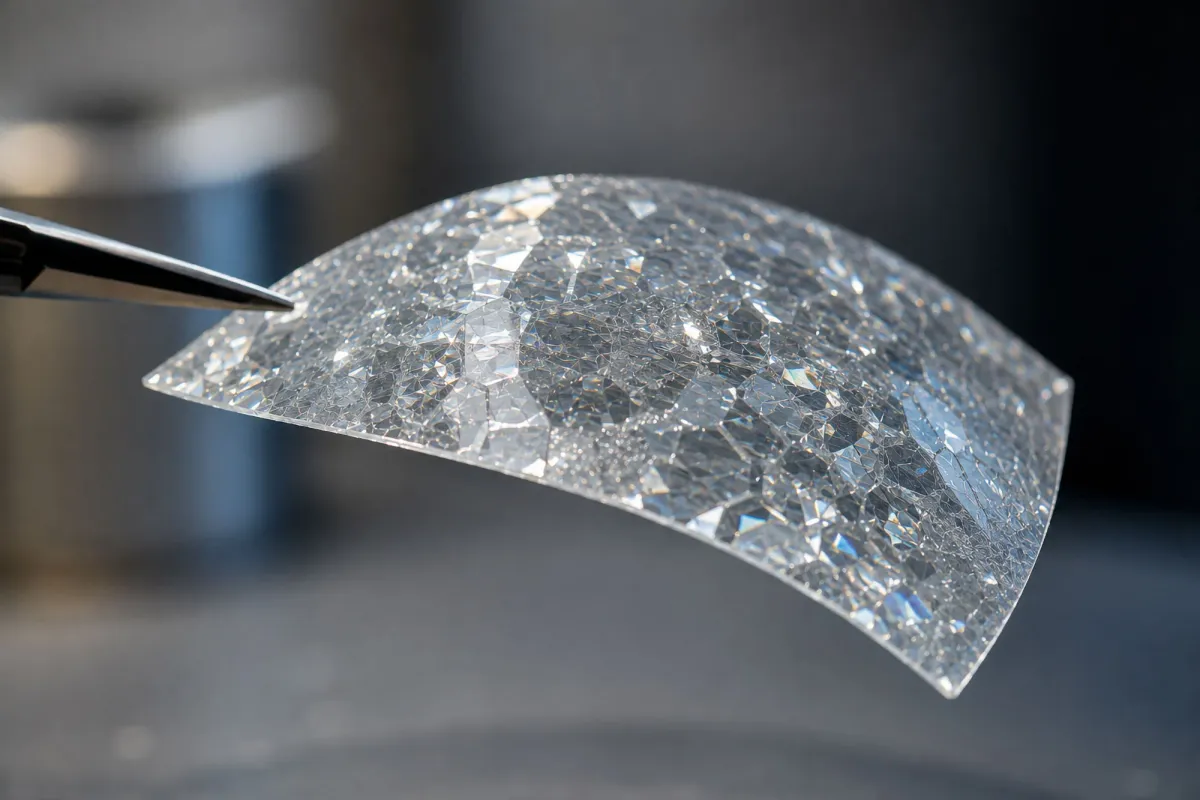
Researchers have found an unexpected electrical property in ultrathin diamond membranes. This discovery challenges a belief about diamond that has stood for over 100 years.
Diamond is known for being extremely tough. It resists pressure, heat, chemicals, and wear. However, scientists have now shown that if diamond is made thin enough, it can create electricity when bent. An ultrathin diamond membrane produced steady voltage signals when put under mechanical stress. This overturns the long-held idea that diamond cannot be piezoelectric.
This work was led by Professor Zhiqin Chu and Professor Yuan Lin at the University of Hong Kong (HKU).
We're a new kind of news feed.
Regular news is designed to drain you. We're a non-profit built to restore you. Every story we publish is scored for impact, progress, and hope.
Start Your News DetoxFor more than a century, diamond was not considered a material that could turn mechanical force into electrical charge. Its amazing hardness, strength, and other properties made it useful in advanced devices. But it was usually just a strong base for other materials that were piezoelectric.
Because of this, the idea of making electricity directly from diamond was thought to be impossible.
Flexible Diamond Membranes
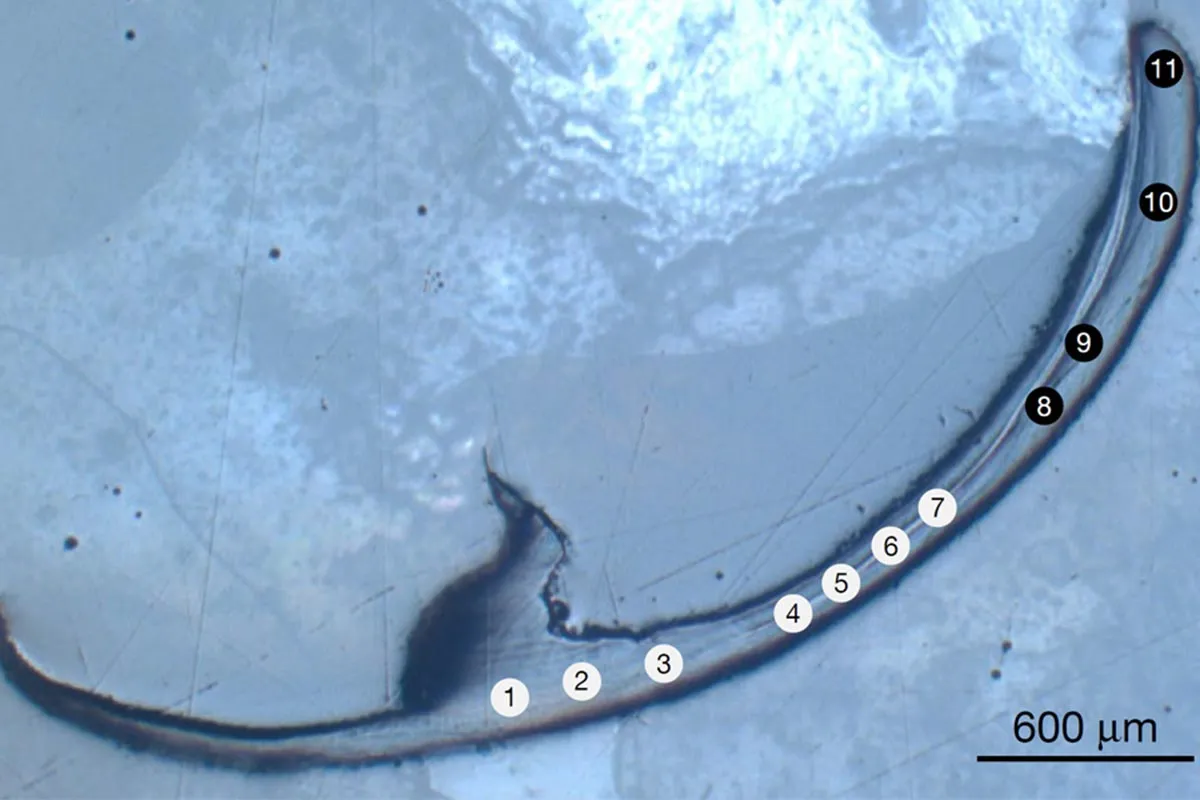
The HKU researchers used a new method to create an ultrathin, flexible diamond membrane. Making the diamond this thin allowed it to bend significantly. This bending consistently produced measurable voltage signals.
To make sure these signals were real and not from outside interference, the researchers bent the membrane many times under controlled conditions. The stable and repeatable electrical output confirmed that the diamond membrane showed a piezoelectric response.
 The interdisciplinary research team led by Professor Zhiqin Chu (second from left) and Professor Yuan Lin (third from the left). Credit: The University of Hong Kong
How the Voltage is Generated
Calculations showed that the electrical effect mainly comes from asymmetrical grain boundaries. These are the places where individual diamond crystals meet within the membrane. As the membrane bent, electrical charge built up along these boundaries. This created a voltage difference between the top and bottom surfaces of the membrane.
Diamond is safe for the body, chemically stable, and non-toxic. This makes this discovery potentially useful in medical and energy technologies. For example, future implantable devices could use piezoelectric diamond membranes as sensors for movement or as power sources that generate their own electricity.
These findings expand how diamond can be used beyond just a strong support material. They could also help develop reliable miniature energy systems and sensing devices that do not need an external power supply.
Deep Dive & References
Uncovering piezoelectric effect in polycrystalline diamond membranes - Science Advances, 2026