Imagine a tiny, silent flying carpet, perpetually hovering without a single wire or power source. That's essentially what researchers at Kyoto University have achieved with graphite particles, and it's not just a parlor trick. This breakthrough could unlock a whole new world of super-sensitive detection.
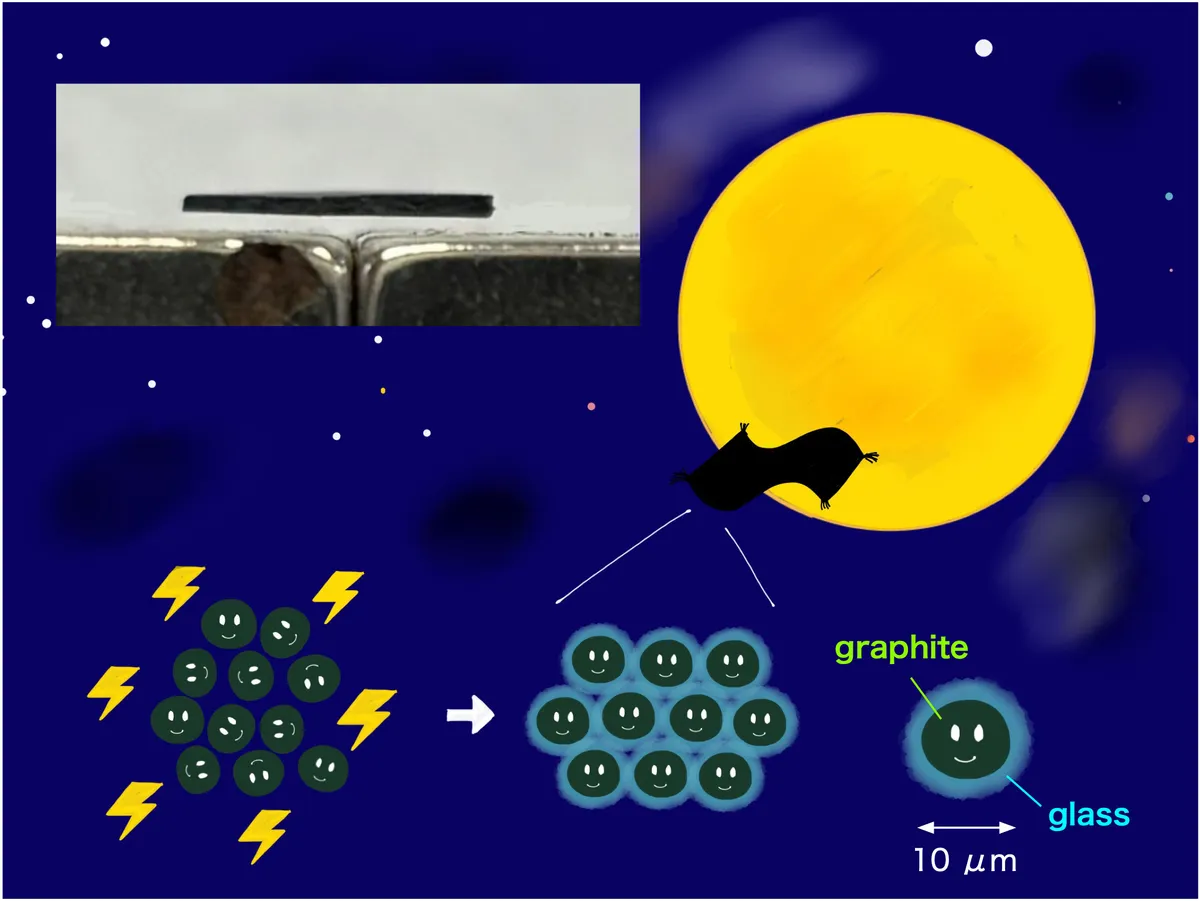
Graphite, the stuff in your pencil, is a diamagnetic material. This means that instead of being attracted to magnets, it's ever-so-slightly repelled. Strong enough magnets can actually push it away from gravity, making it float. The problem? Graphite's electrical conductivity used to mess with the levitation, causing it to wobble and eventually fall. Previous attempts to fix this involved coating it in glass, which worked great for insulation but made the particles point every which way, weakening the lift.
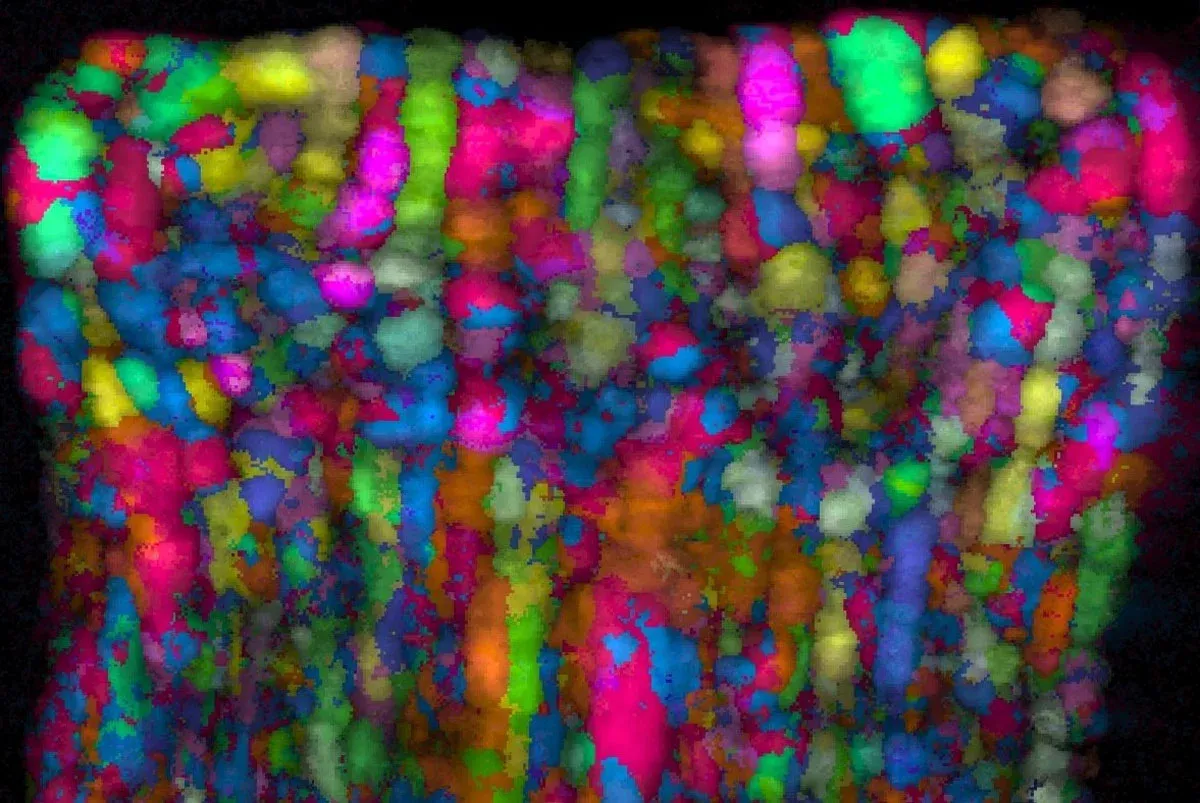
Enter the Kyoto team, who'd already mastered the art of aligning tiny crystals into larger, uniform structures. They realized this same trick could be applied to graphite. Lead author Kazuyuki Takeda, who apparently just enjoys watching things float silently, helped figure out how to coax these finicky particles into formation.
We're a new kind of news feed.
Regular news is designed to drain you. We're a non-profit built to restore you. Every story we publish is scored for impact, progress, and hope.
Start Your News DetoxFirst, they gave each graphite particle a thin glass jacket. Then, they mixed these insulated particles into a thick, watery slurry. This goo was poured into a mold, which was then placed inside a powerful superconducting magnet. As the dish rotated at a very specific speed, the magnetic field and the water's thickness worked together like a microscopic drill sergeant, forcing every single particle to snap into alignment.
Once dried, they had a solid plate of perfectly aligned, insulated graphite. When placed above permanent magnets, it floated. Stably. Like a tiny, quiet hovercraft that just… floats. Because the electrical interference was suppressed, it could gently bob up and down for extended periods, a genuinely mesmerizing sight.
And then, Mother Nature decided to join the experiment. While recording the plate's motion, an actual earthquake hit. The levitating graphite, sensitive to the slightest tremor, registered a massive impulse. "This became our first 'quake-sensing' event by accident," Takeda noted, probably with a raised eyebrow and a hint of satisfaction.
This isn't just about cool party tricks or accidental seismology. The team believes this stable levitation could be a game-changer for nuclear magnetic resonance and MRI technologies, offering new ways to detect incredibly subtle changes in environments. Because apparently, sometimes the best sensors are just quietly floating around, waiting for the ground to literally move beneath them.