A new study suggests that the human brain's amazing abilities come not just from its many neurons, but also from how powerful each individual brain cell is.
Scientists used to think that a single neuron mainly decided whether to send a signal or not. Now, new research shows that one human brain cell can do complex calculations, much like an advanced artificial intelligence network.
This idea changes how scientists might look for the roots of human traits like language, math, imagination, and invention. It suggests that intelligence might depend on what each brain cell can do, not just the brain's overall size and connections.
We're a new kind of news feed.
Regular news is designed to drain you. We're a non-profit built to restore you. Every story we publish is scored for impact, progress, and hope.
Start Your News DetoxFor a long time, researchers thought the brain's power came from its size and how its nearly 100 billion neurons were connected. But a study in Proceedings of the National Academy of Sciences (PNAS) points to something else: the sophisticated processing happening inside individual neurons.
Intelligence Starts Inside Single Neurons
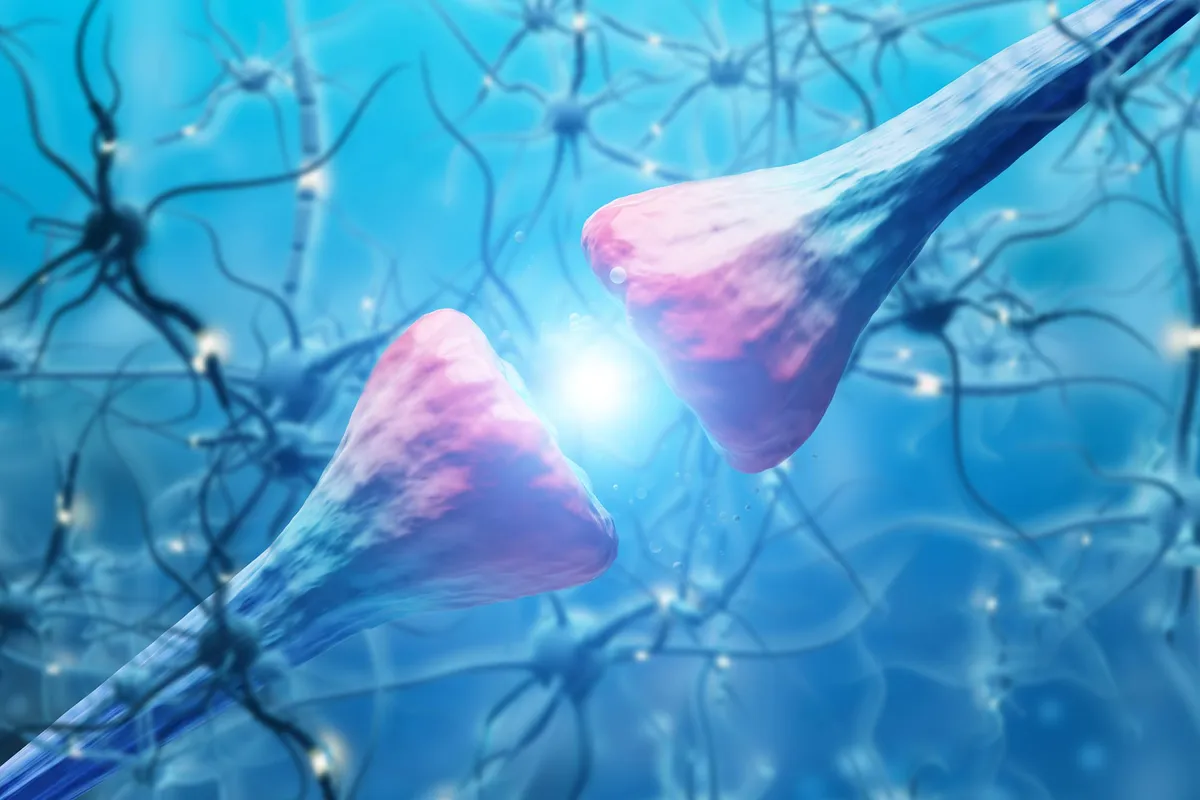
Neurons in the human cortex, the brain's outer layer responsible for advanced thought, seem to work like very complex information processors. Instead of just gathering signals and giving a simple answer, they can combine incoming information through detailed internal steps.
This could help explain why the human cortex supports thinking abilities that are better than those of other mammals. If each cell does more computing, the brain gets extra processing power even before information moves through its larger network.
Hebrew University Professors Idan Segev and Mickey London led this research. PhD students Ido Aizenbud and Daniela Yoeli at the Edmond and Lily Safra Center for Brain Sciences (ELSC) also worked on it, along with Professor Chris de Kock from the Free University, Amsterdam.
Segev explained that people often think of a neuron as a simple switch that is either on or off. He noted that this study shows a single human neuron is an incredibly complex computing device.
AI Reveals Each Neuron's Computing Power
To compare the computing abilities of neurons from different mammals, the researchers needed a consistent method. Just looking at a cell's size or shape wouldn't show how much information it could process.

They created a digital copy for each neuron. Using computer modeling and artificial intelligence (AI), they tested how hard it was for an artificial neural network (ANN) to learn the link between signals entering a biological neuron and the response coming out.
A simple neuron could be copied by a small artificial model. But a more capable biological cell needed a deeper, more complex network for the artificial version to accurately copy its behavior.
This imitation test gave researchers a way to measure how complex a neuron was. The harder a neuron was to copy, the more computing power it seemed to have.
Human Neurons Outperform Other Mammals
Human cortical neurons consistently needed more complex artificial networks to copy their behavior than neurons from other mammals. Their advantage seems to come partly from their richly branched dendritic trees, which are structures that receive signals from nearby cells, and from their unique electrical features.
These features let a neuron analyze combinations of incoming signals instead of just adding them up. This could help with tough distinctions in sensory information, like telling the difference between images of cats and dogs.
The findings show that a human cortical neuron is much more than an "on-off" switch. One cell can work as a layered computing system, similar to a deep artificial neural network.

This challenges the old idea that human intelligence mainly depends on the number of neurons and connections. The complexity built into individual neurons may also have helped human thinking evolve.
Smarter Artificial Neurons Could Change AI
The researchers also created a general way to link a neuron's physical traits with the calculations it can do. This could help scientists study how cell structure helps with learning, thought, and other types of thinking.
These findings might also affect how brain-inspired AI is designed. Most current AI systems are made from very simple artificial units, even if the networks have many layers.
Future models could instead use artificial parts with more processing ability inside each unit. Such systems would be more like biological neurons and could offer a new way to develop advanced machine-learning technology.
Deep Dive & References
Dendritic morphology and synaptic nonlinearities enhance functional complexity in human cortical neurons - Proceedings of the National Academy of Sciences, 2026