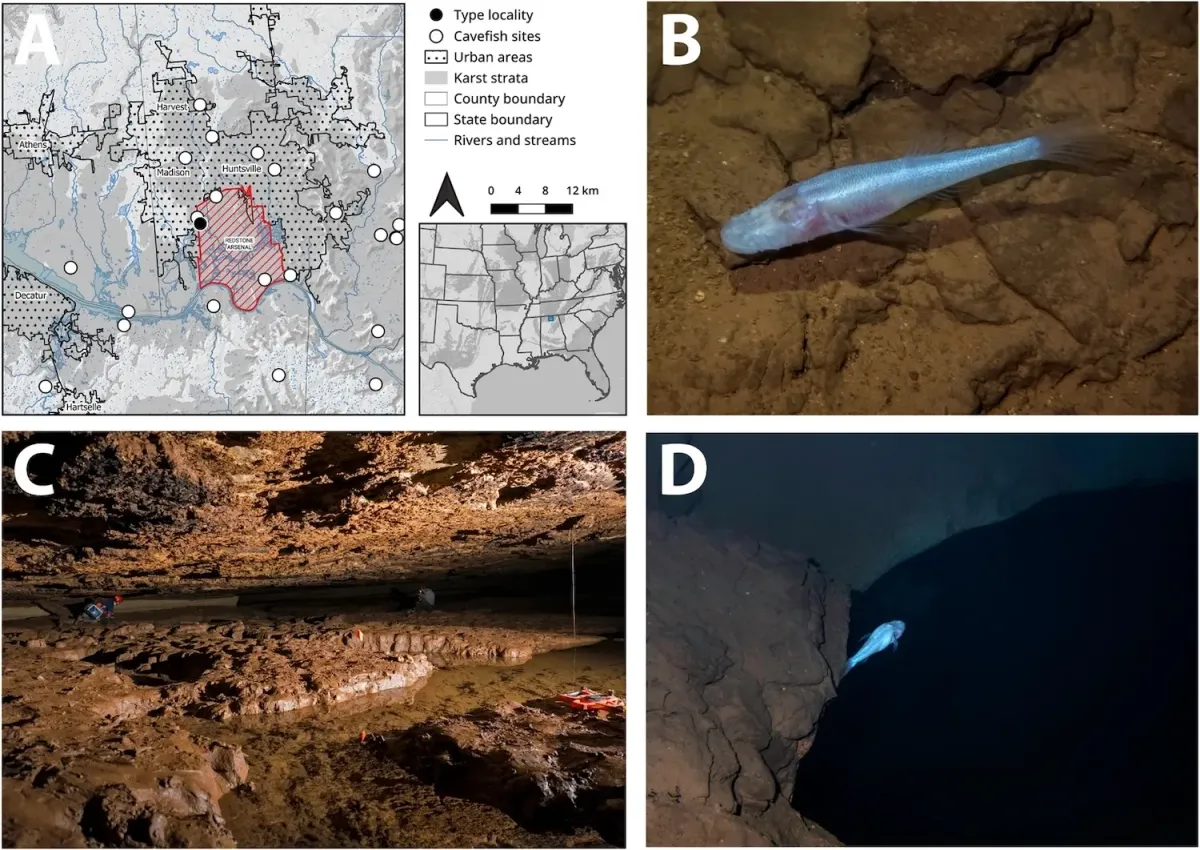
Bobcat Cave in Huntsville, Alabama, sounds like a place where you'd expect to find, well, bobcats. Instead, it's a nearly 1,500-foot network of limestone, low-slung tunnels, and muddy crawlways that's been home to a tiny, endangered Alabama cave shrimp for decades. Think of it as a subterranean, freshwater, crustacean-only resort.
Researchers have been keeping tabs on these rare shrimp for almost 40 years. They're only found in a few cave systems in Alabama and Tennessee, making them pretty exclusive residents.
The Uninvited Guest
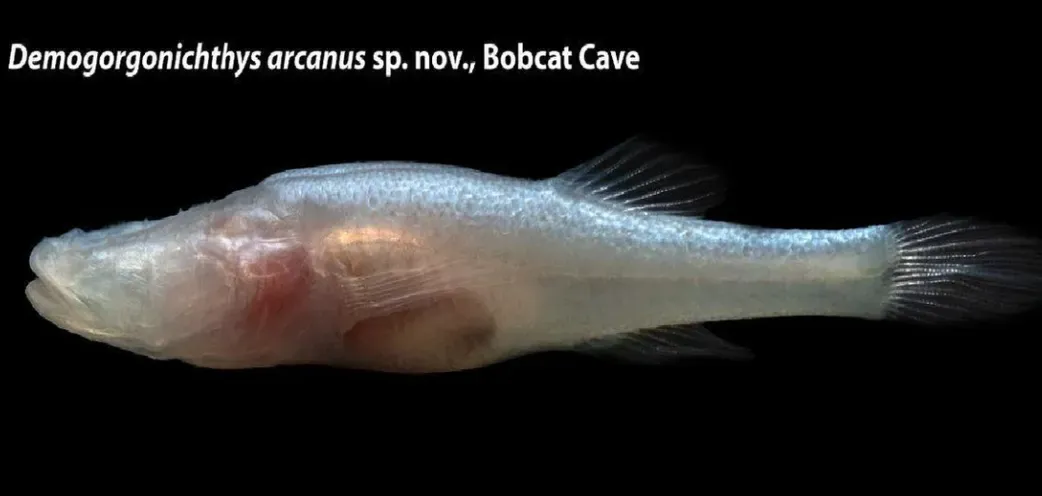
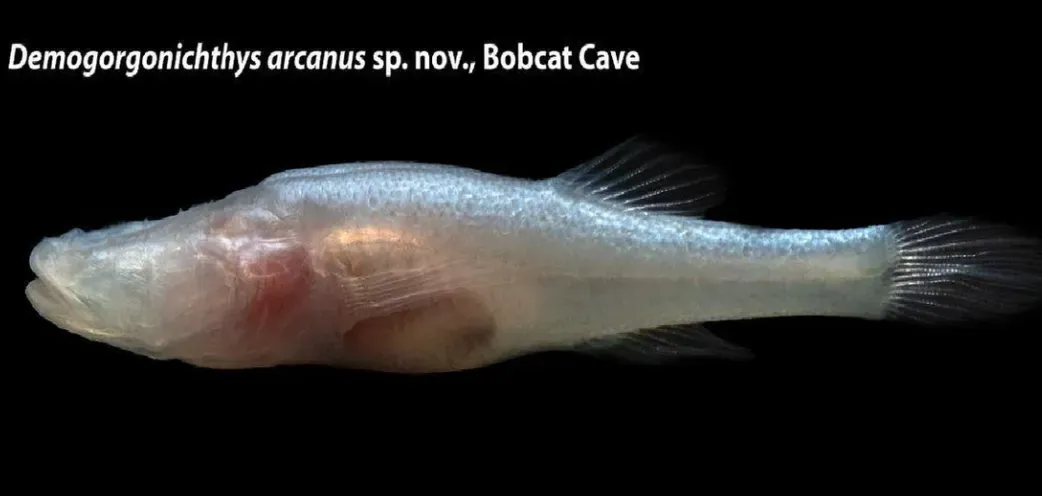
During a recent visit, biologists from Auburn University got a surprise. Sharing the shrimp's exclusive real estate was a new, pale, eyeless fish, less than two inches long. Because apparently that's where we are now: finding fish that look like they've been sculpted from a ghost's imagination.
We're a new kind of news feed.
Regular news is designed to drain you. We're a non-profit built to restore you. Every story we publish is scored for impact, progress, and hope.
Start Your News DetoxThey've officially named this new species Demogorgonichthys arcanus, or the demon cavefish. And if that name makes you think of a certain Netflix monster, you're not wrong, but its origins are actually much older, stemming from ancient Greek mythology (and a bit of John Milton's Paradise Lost). The "arcanus" part? That's Latin for "hidden" or "secret," which is just chef's kiss.
This fish is so genetically unique, it earned its own genus. Jonathan Armbruster, a study co-author, noted that finding a completely new species that isn't just a variation of something known is incredibly rare. It's like discovering a whole new branch on the evolutionary tree, rather than just a slightly different leaf.
Blind Ambition (or Lack Thereof)
The demon cavefish is related to other cavefish but stands out with its distinct snout, body shape, and complete lack of color. It also has a missing piece of a gene linked to light sensitivity, meaning it's genuinely unfazed by bright lights. Unlike its cousins, which might flinch, this fish just… doesn't care. It's got bigger, darker things to worry about, presumably.
Researchers have only ever spotted about 20 of these fish at a time. This scarcity, combined with its unique genetics, makes it potentially one of the rarest fish on the planet. Armbruster speculates it might have recently moved into the cave from an aquifer, or it's just been really, really good at hiding.
This discovery, much like the Alabama cave shrimp, serves as a stark reminder that even in the darkest, most hidden corners of our world, there's still a vibrant, delicate ecosystem waiting to be protected. And perhaps, occasionally, to scare us with its mythological naming conventions.