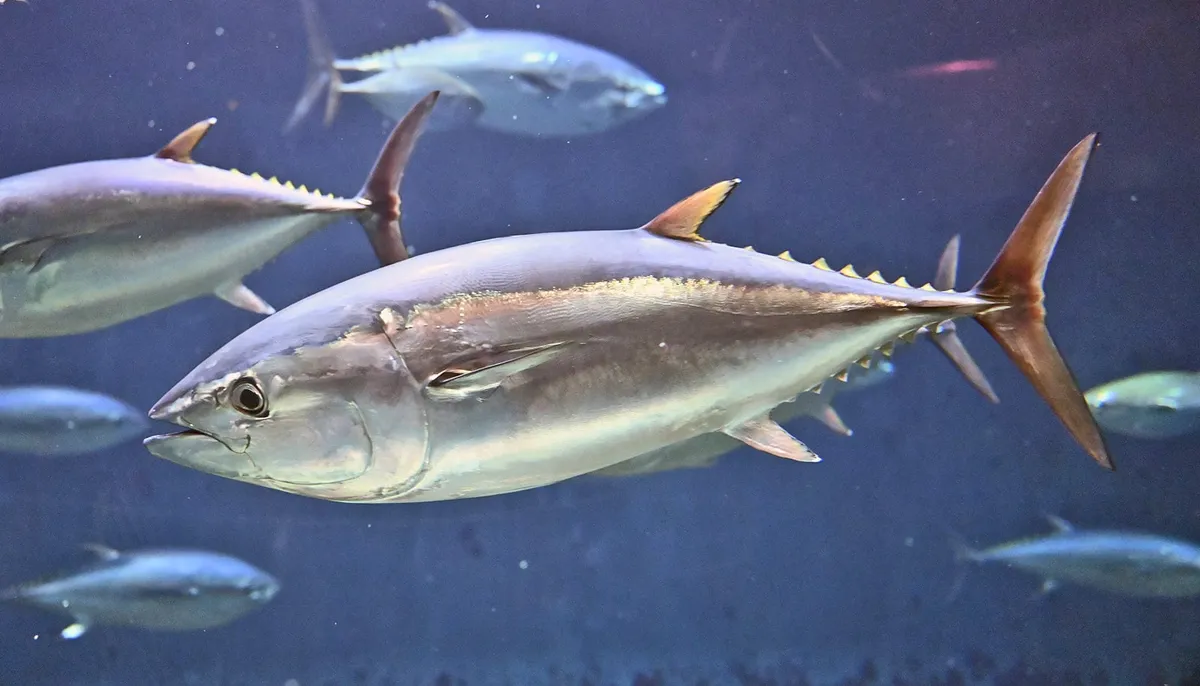
For decades, scientists had a pretty neat story about how tuna got so big, so fast, and so… warm-blooded. You know, the kind of fish that makes other fish look like they're just floating aimlessly. The prevailing wisdom? Blame the asteroid.
Yes, that asteroid. The one that wiped out the dinosaurs 66 million years ago. The theory went that with all the big, scary marine predators gone, tuna basically had an open ocean to evolve into apex hunters, much like mammals took over on land. A clean slate, a rapid evolutionary sprint, and boom: super-tuna.
Except, a new study out of Yale just walked into that neat little narrative and politely shredded it. Turns out, tuna didn't get their impressive size, speed, and internal heating system in a post-apocalyptic rush. They took their sweet, sweet time.
We're a new kind of news feed.
Regular news is designed to drain you. We're a non-profit built to restore you. Every story we publish is scored for impact, progress, and hope.
Start Your News DetoxTuna Took Their Time
Researchers combined genetic data with fossil records to build the most comprehensive family tree for Scombridae—the group that includes tunas and mackerels, and about half of all warm-blooded, ray-finned fish. Their findings suggest that while Scombridae did show up around the time of the asteroid strike, the really cool stuff—the large bodies and the warm-bloodedness (endothermy)—happened millions of years later.
Chase Brownstein, the lead author and a Yale graduate student, put it rather plainly: the asteroid didn't cause this. These impressive body plans developed over tens of millions of years. And here's the kicker: becoming warm-blooded wasn't even linked to growing large. Two separate evolutionary paths, apparently.
In fact, different types of endothermy evolved three separate times within Scombridae, with at least two of those instances occurring a good 10 to 15 million years after the asteroid dust settled. So, instead of a dramatic, single evolutionary leap, we're looking at a slow, deliberate, almost artisanal approach to becoming a top predator.
Thomas Near, a Yale professor and senior author, points out that understanding this gradual evolution isn't just for bragging rights at a science conference. It's crucial for conservation efforts, especially for species like the Atlantic bluefin tuna, which has seen its populations plummet thanks to overfishing. Knowing how they got here might just help us figure out how to keep them here.
And if that's not enough, Near even suggests this research could shed light on human health. Because apparently, studying how a fish learned to keep itself toasty in cold water might offer clues about our own metabolism, obesity, and diabetes. So, the next time you're enjoying a tuna sandwich, remember: you're eating a creature that defied evolutionary expectations, took its sweet time, and might just hold the secret to your blood sugar. Which, if you think about it, is both impressive and slightly terrifying.