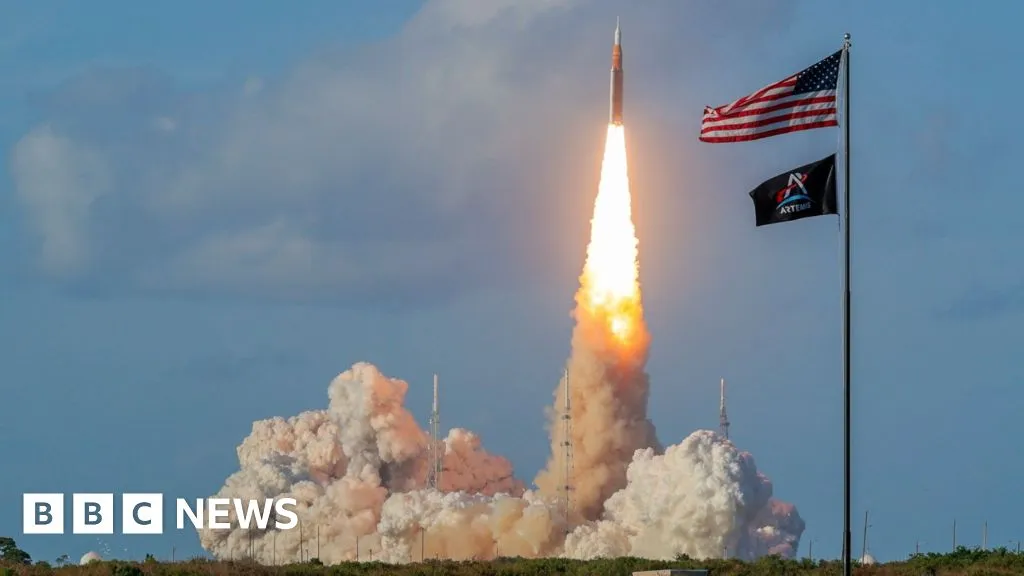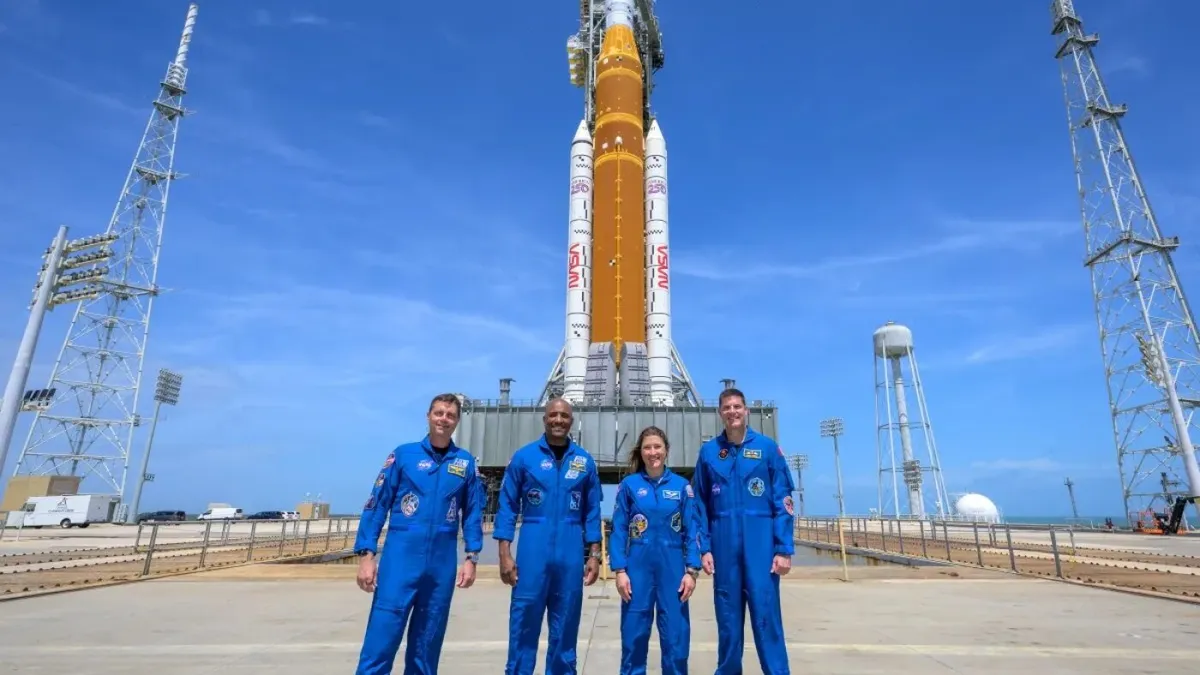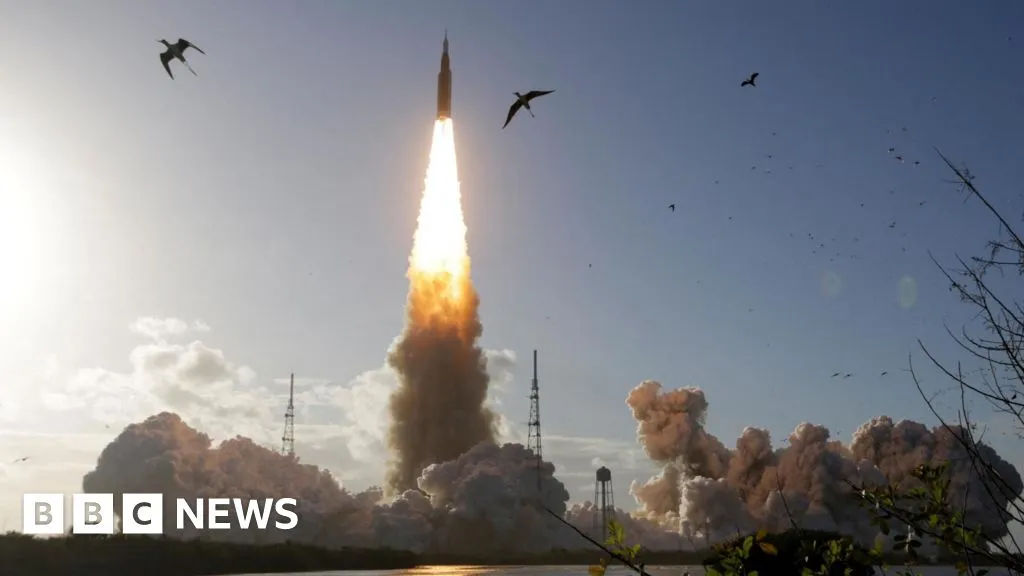
The Artemis II rocket recently launched, sending astronauts toward the moon for the first time in over 50 years. This four-person crew is on a 10-day, 230,000-mile trip around the moon. This mission is a key test for the Orion spacecraft. NASA hopes it will lead to astronauts landing on the moon by 2028, and eventually Mars.
The last time humans visited the moon was during the Apollo 17 mission in December 1972.
The Last Moon Mission
The Apollo 17 mission included three astronauts. Command module pilot Ronald Evans stayed in orbit. Eugene Cernan and Harrison "Jack" Schmitt, a geologist, landed in the moon's Taurus-Littrow valley.
We're a new kind of news feed.
Regular news is designed to drain you. We're a non-profit built to restore you. Every story we publish is scored for impact, progress, and hope.
Start Your News DetoxThey spent just over three days on the moon's surface. They collected about 250 pounds of moon rock and soil. They set records for the longest stay on the moon (75 hours) and the most lunar samples collected. Their mission lasted 12 days and 14 hours.
The crew knew they would be the last to visit the moon for a while. NASA had decided two years earlier to cancel future Apollo missions, mainly due to budget cuts.
Cernan became the last person to walk on the moon on December 14, 1972. He spoke about the moment's importance as he left the lunar surface. He seemed to echo Neil Armstrong's famous words from the 1969 moon landing.
Cernan said, "As we leave the moon and Taurus-Littrow, we leave as we came — and God willing as we shall return: with peace, and in hope, for all mankind." Cernan passed away in 2023.
A lot has changed in the 53 years since. Here's what life was like when astronauts last went to the moon.
A Look Back at 1972
The year 1972 was a significant one for world events, pop culture, and technology. It saw major geopolitical shifts and cultural milestones.
In 1972, the Watergate scandal began to unfold. There was "Bloody Sunday" in Northern Ireland and the "Munich massacre" at the Olympics. North Vietnam launched its "Easter Offensive" during the Vietnam War, leading to many anti-war protests.
President Nixon announced that no more draftees would be sent to Vietnam. He also made a historic visit to China, a first for a U.S. president.
The Volkswagen Beetle became the world's most popular car, surpassing the Ford Model T. A gallon of regular gasoline cost 36 cents, which is about $2.53 today.
Caption: Herbie, the anthropomorphic Volkswagen Beetle featured in the 1969 Disney film The Love Bug, terrorizes a young woman at a car show in Berlin in June 1972. Image: Keystone/Getty Images/Hulton Archive
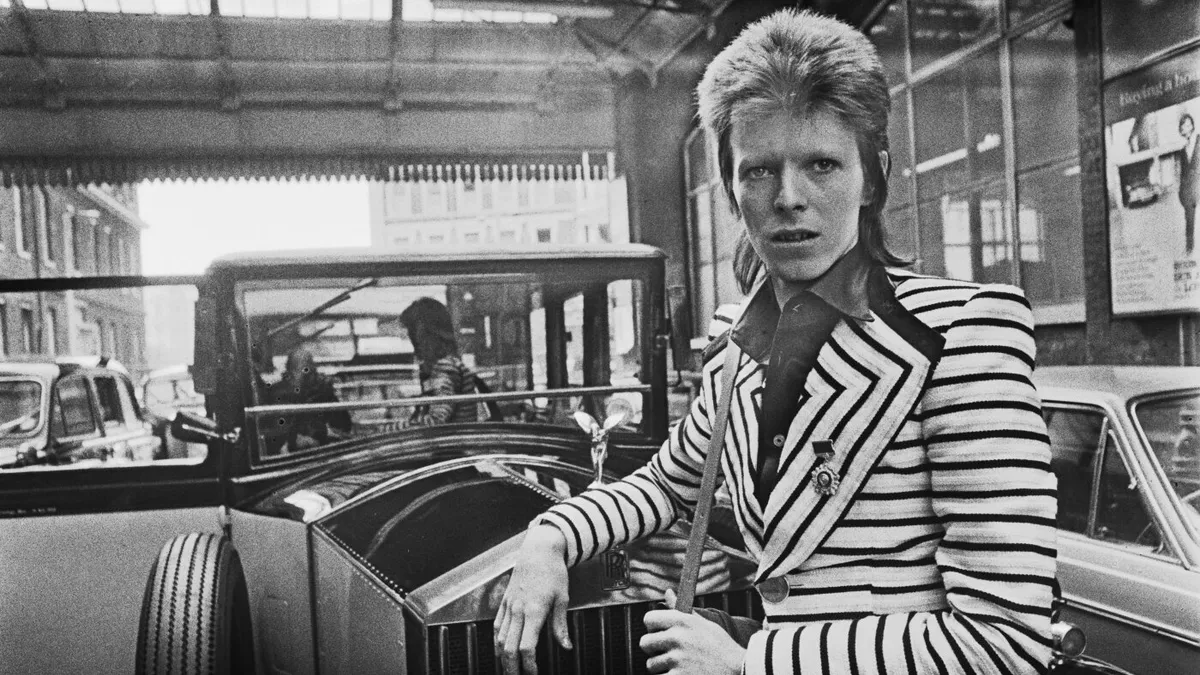
Culturally, 1972 was a big year. David Bowie introduced his alter ego, Ziggy Stardust. The band ABBA formed, and Grease opened on Broadway. Neil Young's Harvest was the top-selling album, and The Godfather was the biggest movie hit.
Fashion featured bold colors and patterns, bell-bottoms, shawls, platform shoes, and synthetic fabrics. This era was known as "the Polyester Decade." Style icons included Bianca Jagger, Jane Birkin, and Diana Ross.
News consumption was different then. About 95% of U.S. households had televisions, with ABC, CBS, and NBC dominating the airwaves. Newspaper circulation reached a record 62.5 million before it started to decline.
Innovation was also happening. The digital watch made its debut. Atari released "Pong," the first successful arcade video game. Other inventions from 1972 included the floppy disk, the HP-35 handheld scientific calculator, and the Hacky Sack.
McDonald's Egg McMuffin began testing in markets. Shrinky Dinks were also about to be created.
Many words were first recorded in print in 1972. These include animatronic, beer pong, bird flu, habanero, garage band, glam rock, lowrider, page-turner, sound bite, spaghetti strap, veggie burger, women's studies, and yard sale.
Deep Dive & References: Why did we stop going to the Moon? - Royal Museums Greenwich Why Did We Stop Going to the Moon? - Smithsonian National Air and Space Museum