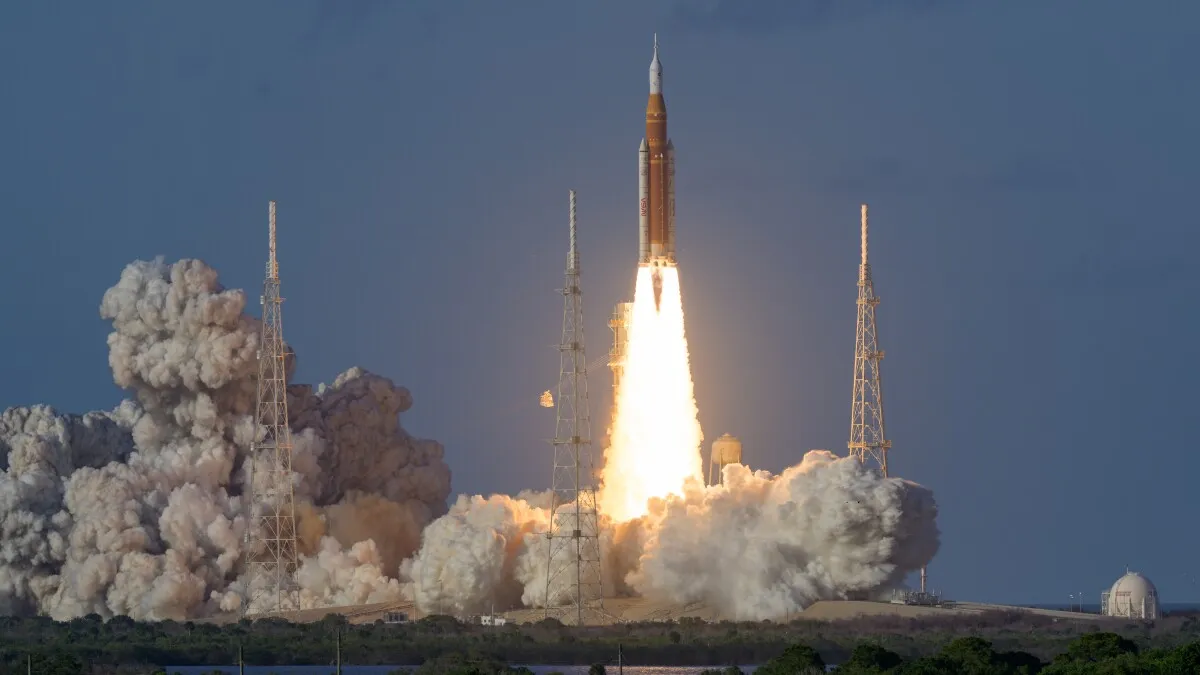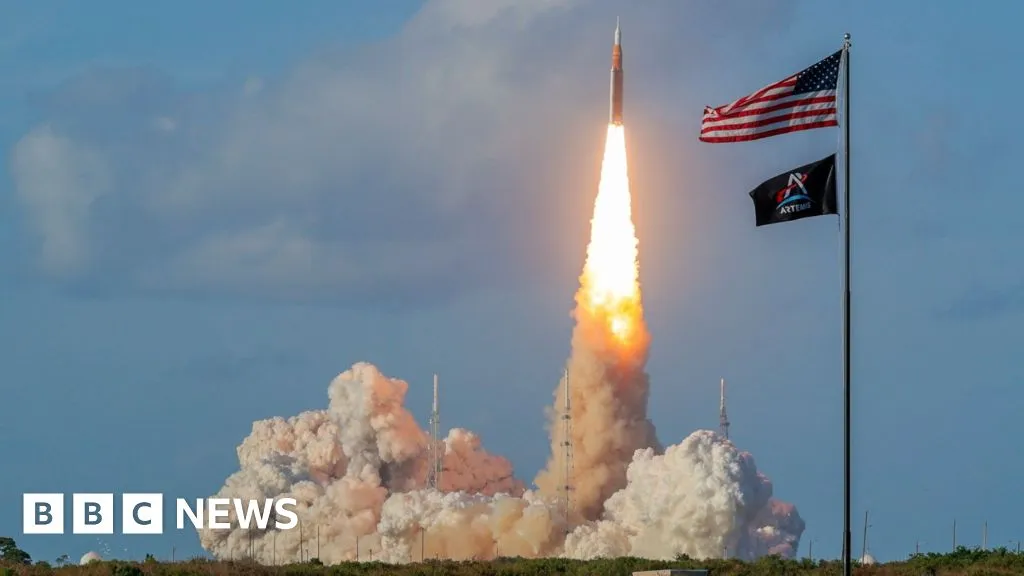
For the first time in over 50 years, humans are actually headed to the moon. Not just talking about it, but going. The Artemis II crew just launched on a Wednesday, leaving a dramatic vapor trail across a perfectly clear Florida sky. Because apparently, that's where we are now.
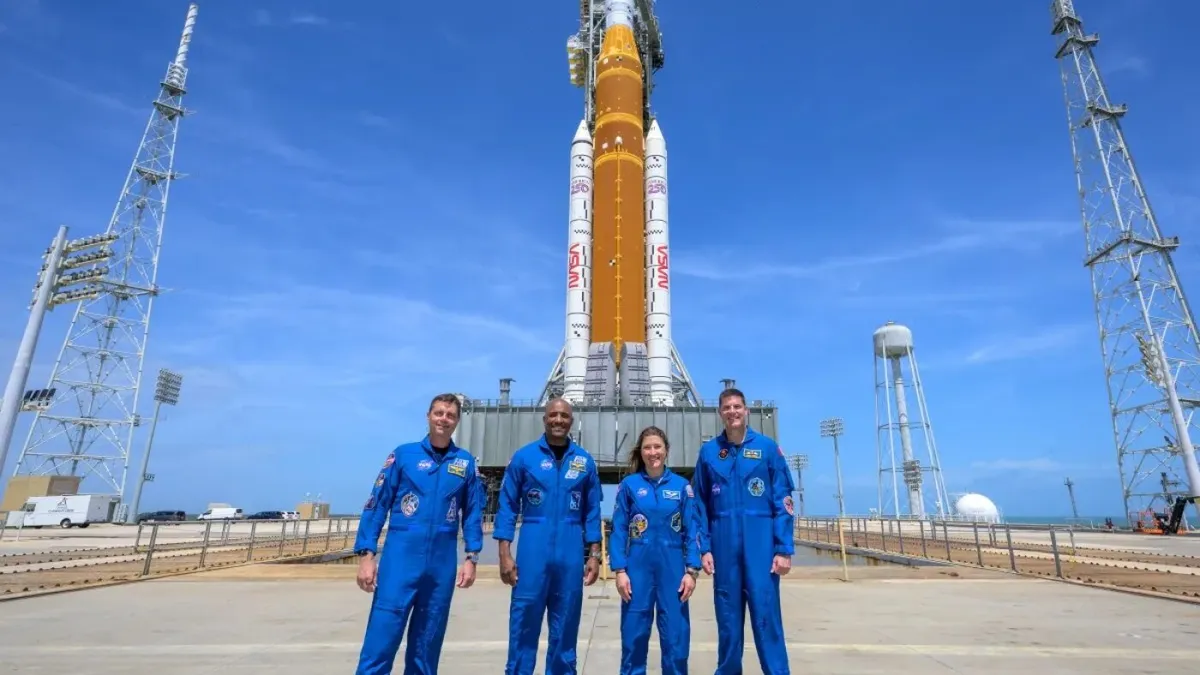
Four astronauts — NASA's Reid Wiseman, Victor Glover, Christina Koch, and Canadian Space Agency astronaut Jeremy Hansen — are tucked inside an Orion capsule, perched atop an SLS rocket. Their destination? A 230,000-mile loop around the moon and back. This isn't just a scenic detour; it's a critical test flight for the Orion spacecraft.
Over the next 10 days, this mission will put Orion's life-support systems and steering capabilities through their paces. It's also collecting some serious science data, all in preparation for future deep-space missions that aim to actually land on the lunar surface. No pressure.
We're a new kind of news feed.
Regular news is designed to drain you. We're a non-profit built to restore you. Every story we publish is scored for impact, progress, and hope.
Start Your News DetoxThe Scenic Route (with Science)
Their journey follows what's called a "free return trajectory." Think of it as a giant slingshot around the moon that uses Earth's gravity to pull them back, saving fuel and upping the safety factor. A day after launch, a "translunar injection" (which sounds far more dramatic than just firing an engine) will send them properly on their way.
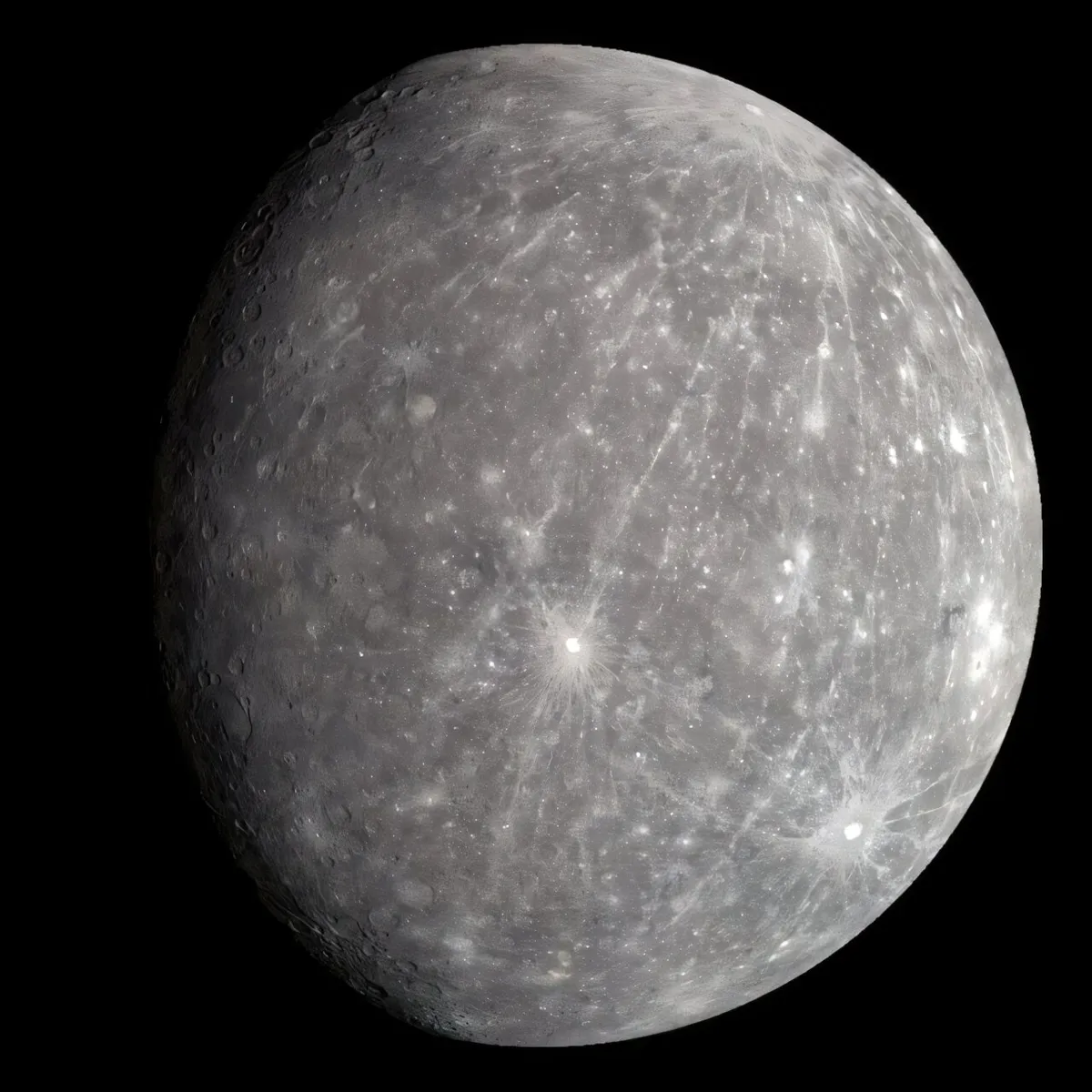
They'll get within about 5,000 miles of the moon's surface. Which, for context, is a bit farther out than the Apollo missions, which either orbited under 100 miles or, you know, landed. Artemis II mission scientist Barbara Cohen perfectly summed up the view: "When they pass by the far side of the moon, it'll look like a basketball held at arm's length." Which is both impressive and slightly terrifying.
Before they even properly aimed for the moon, the crew did some fancy footwork closer to home. Hours after reaching high-Earth orbit, they manually took the controls of Orion for a "proximity operations test." As pilot Victor Glover explained before launch, it was all about making sure the vehicle "flies the way that we think it does, that we designed it to do."
This manual control is crucial for future missions that will need to dock with lunar landers. While that will likely be automated, NASA wants to know how it handles if astronauts have to take the wheel. Glover noted they'd be giving "qualitative and quantitative feedback" to the ground team. Essentially, telling them what it feels like to hear and feel those thrusters. Near the end of the maneuver, Glover gave the vehicle a solid review: "Overall guys, this flies very nicely."
The Human Experiment
Beyond just testing the tech, the astronauts themselves are part of the science. Traveling farther into deep space than any human has gone before offers a unique chance to study the effects on the human body. Researchers will collect data on physical changes and radiation exposure. Even the astronauts' cells are on tiny chips throughout the capsule, offering granular data.
The crew will also be moon-gazing for geology. They're flying around the far side of the moon, a place no human has ever seen up close. "They'll be able to see places on the moon that, actually, no human eyes have ever seen before," Cohen said. Geologists on Earth trained the crew to spot unique features and snap photos, continuing a tradition from the Apollo era. This will help scientists map that mysterious far side and plan for future landings.
Cohen compared their high-altitude view to seeing a strip of land from an airplane, versus the whole globe. The Artemis II astronauts get the whole globe. The mission is also ferrying several tiny CubeSats from Germany, South Korea, Saudi Arabia, and Argentina, which will study everything from space radiation to space weather.
The Fiery Return
Coming home, the capsule will hit Earth's atmosphere at a blistering 25,000 miles per hour. The friction will heat Orion to nearly 3,000 degrees Fahrenheit. A heat shield protects the crew, but after an uncrewed test flight in 2022 revealed unexpected damage, this time the capsule will re-enter at a much steeper angle, limiting its time in those harsh conditions.
Once past the inferno, eight parachutes will slow them down for a splashdown in the Pacific Ocean off California. Airbags will deploy to keep the capsule upright, and a crew at sea will scoop them up. Mission accomplished.
What's learned here is foundational. NASA administrator Jared Isaacman recently announced plans for more frequent moon launches and even a permanent lunar base. This mission is the first step. As mission specialist Christina Koch put it, "It is our strong hope that this mission is the start of an era where everyone, every person on Earth, can look at the moon and think of it as also a destination."