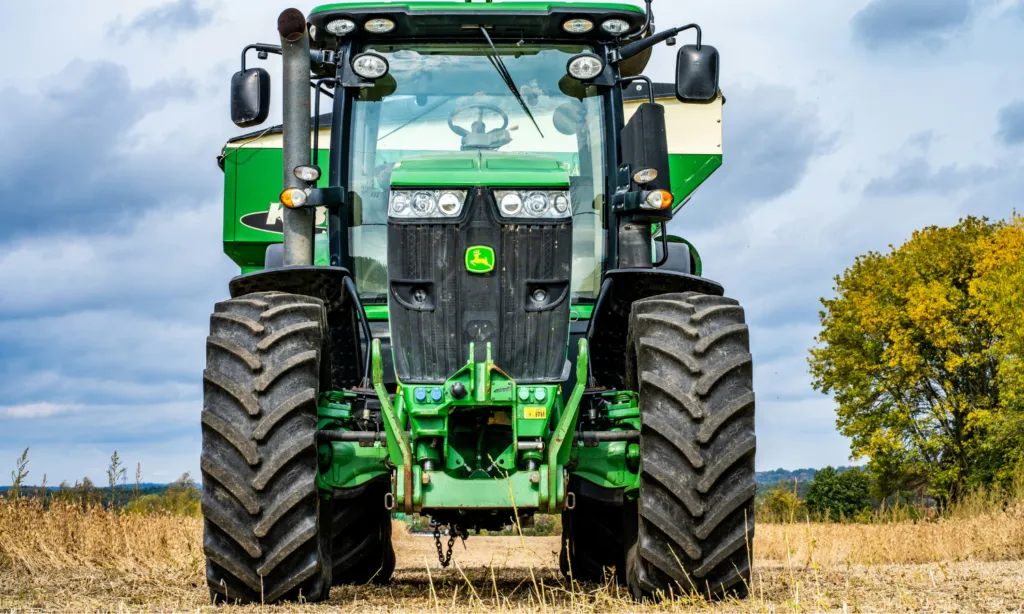
John Deere, the titan of agricultural machinery, recently announced a couple of shiny new facilities in the U.S. and even started rehiring some folks. Which sounds great, until you realize these new positions barely make a dent in the thousands of jobs the company has shed in recent years. Meanwhile, their global footprint just keeps getting bigger.
Earlier this year, the news broke: Deere would open a distribution center in Indiana and a manufacturing site in North Carolina. We're talking a cool $125 million investment for a 1.2 million-square-foot warehouse in Indiana, and another $70 million to expand the North Carolina plant. That North Carolina facility is now set to take over excavator production previously handled in Japan. Because apparently, that's where we are now.

Each new site is projected to create about 150 jobs. John May, Deere's Chairman and CEO, touted this as a commitment to U.S. innovation. They're also bringing back 146 workers in Waterloo, 24 in Dubuque, and 75 in Davenport. Let that satisfying, relatively small number sink in.
We're a new kind of news feed.
Regular news is designed to drain you. We're a non-profit built to restore you. Every story we publish is scored for impact, progress, and hope.
Start Your News DetoxThe Bigger Picture: Less 'Made in America'
These new hires are a bit like putting a band-aid on a gushing wound. Since October 2023, Deere has been on a layoff spree, starting with 225 production employees in East Moline, Illinois. Then came 2024, which saw 2,167 jobs vanish across key facilities, including nearly 1,000 in Waterloo alone. Layoffs continued into 2025, with over 500 workers in Iowa getting the news. The company claims 80% of its U.S. equipment is made domestically, but its international operations are clearly where the action is.
Nearly half of Deere's total sales come from international markets. Out of 75,000 employees worldwide, a staggering 45,000 are not in the U.S. They're making backhoes in Brazil, tractor engines in Argentina, and cotton harvesters in China. And they're still expanding, moving manufacturing for skid steer and track loaders from Dubuque, Iowa, to a new facility in Ramos, Mexico. They're also building a $55 million plant in Nuevo León, Mexico, for mini track loaders.

While politicians were quick to claim the new U.S. facilities as a win, the plans for these projects actually started under the previous administration. Deere has stated its long-term strategy will continue "regardless" of U.S. political changes. Though, those changes are proving costly, with tariff-related expenses expected to hit $1.2 billion this year.
The equipment manufacturing sector as a whole is struggling. Output and employment have been dropping since 2022. As Kip Eideberg of the Association of Equipment Manufacturers put it, "The path that we are on is leading us to less manufacturing in the United States." Which, if you think about it, is both impressive and slightly terrifying.
So, while a few hundred workers are getting their jobs back, hundreds of families are still left wondering how they'll pay the bills. It seems the global tractor giant is more interested in global than local, leaving a lot of communities to pick up the pieces.