Filmmaker Mike Leigh finishes a shoot and his team immediately asks when the next one starts. He doesn't answer. Instead, he disappears into museums, reads, wanders alone. "It's so important to have time to do nothing," he says. "You need time alone just to look, listen and sense: what's going on, where are we right now?"
After 16 feature films, Leigh could hardly be called unproductive. Yet his films have an uncanny way of capturing exactly what a moment needs—almost like magic. Except it isn't magic. It's what happens when someone stops rushing and starts paying attention.
Anthropologist James Clifford calls this "deep hanging out": spending time in overlooked places with no agenda except noticing. Wandering. Listening. Being present. It sounds like the opposite of work, but it's actually how creative thinking happens. When you wander without a plan, you gather something richer than data—you gather instinct, pattern, texture. A well-stocked mind.
We're a new kind of news feed.
Regular news is designed to drain you. We're a non-profit built to restore you. Every story we publish is scored for impact, progress, and hope.
Start Your News DetoxAndy Haldane, who served as chief economist at the Bank of England, discovered this the hard way. Data and models couldn't tell him what he needed to know. So he walked the streets of London, talked to community workers and faith leaders, sat in conversations that would never happen in a boardroom. "Trying to make sense of what I saw and heard, I found myself relying more on stories than statistics," he says.
Those walks changed how he thought. He started bringing unexpected voices into the Bank—Tamara Rojo from the English National Ballet, artist Grayson Perry, campaigner Doreen Lawrence, composer Stephen Hough. When someone asked what he'd say to these visitors, he was honest: "I've no idea—that's why they're coming. I want to live with the uncertainty."
The talks became wildly popular. People discovered that starting a meeting without knowing where it would go, and leaving with your mind on fire with new ways of thinking, is emboldening. It gives you permission to embrace an idea even when you can't see the endpoint. That's where innovation begins—when curiosity produces enough confidence to explore uncertainty instead of being paralyzed by it.
Writers know this instinctively. Lee Child and Haruki Murakami both start novels without plots, discovering the story as they write. Nobel laureate Olga Tokarczuk began Drive Your Plow Over the Bones of the Dead not knowing who the killer was—and was genuinely surprised when she found out two-thirds through.
These habits—the willingness to wander, the discipline to keep noticing—are what the World Economic Forum now lists as essential for business. We can't predict the future, but these practices help us invent it. Yet they're rarely taken seriously because they don't look like work. They look like nothing. But as Leigh says: "Nothing happening is something happening. And it's what the next movie springs from."
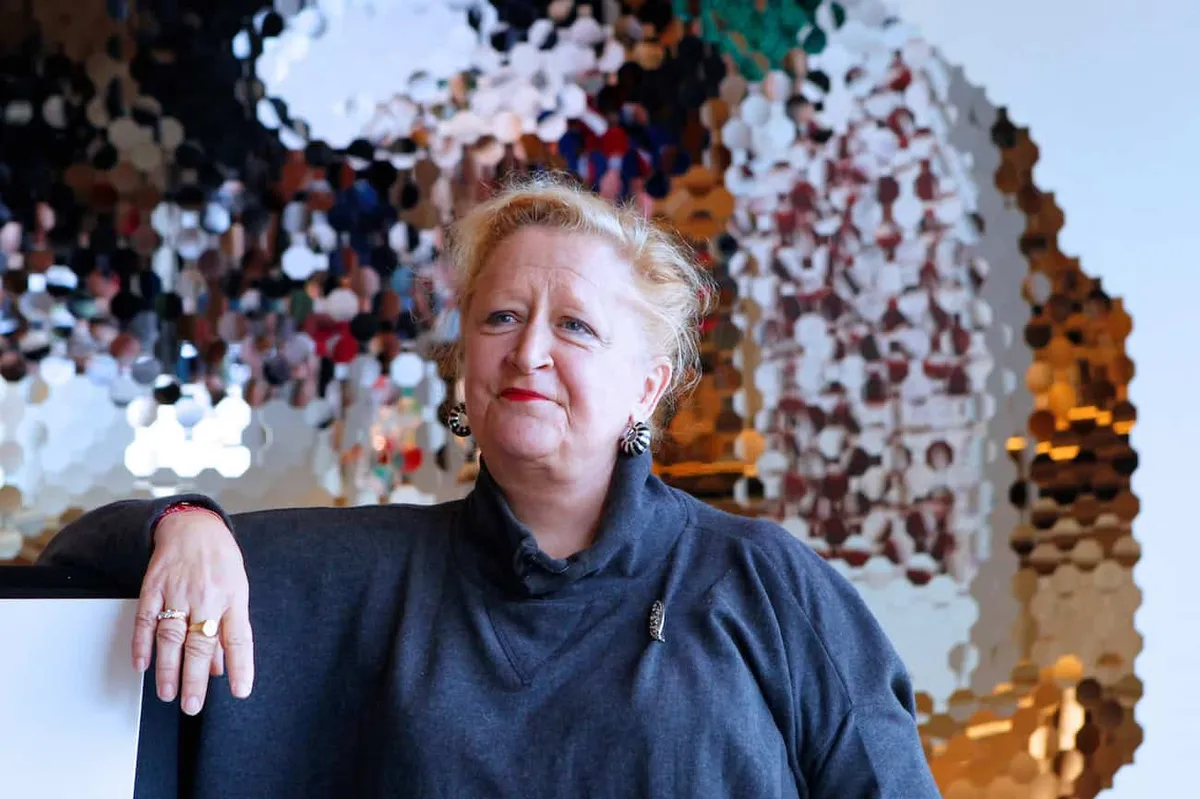
Margaret Heffernan explores this in her new book Embracing Uncertainty: How Writers, Musicians and Artists Thrive in an Unpredictable World.