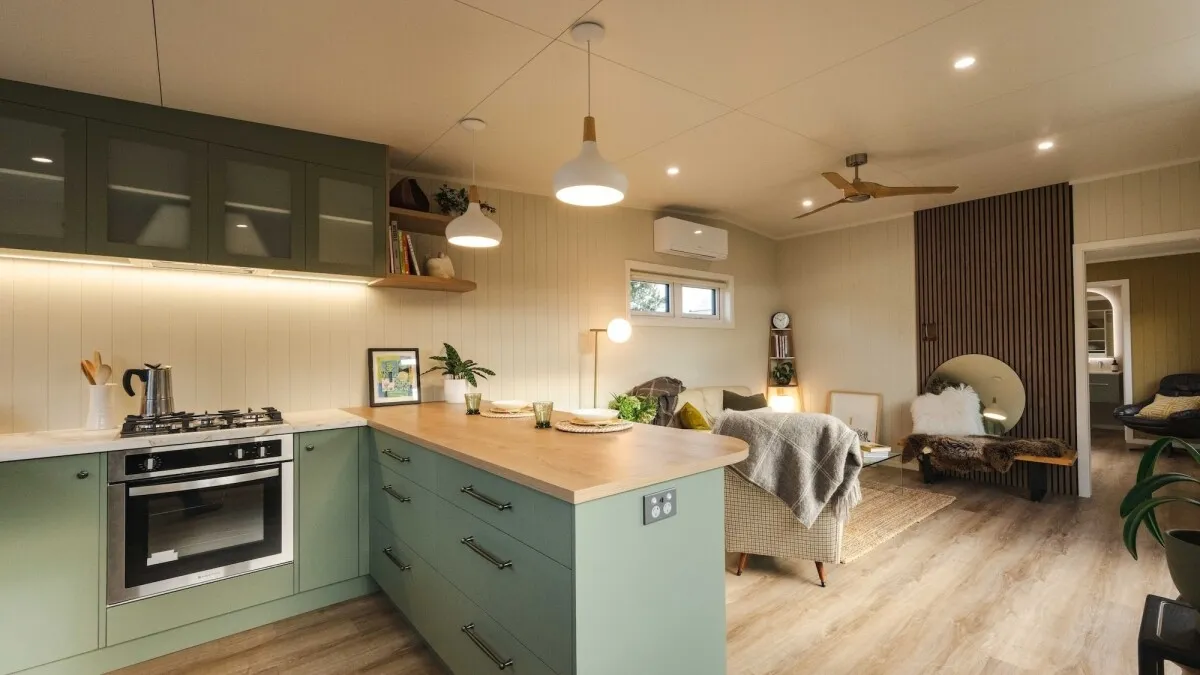
The English Garden doesn't feel like a compromise. At 39 feet long and 13 feet wide, this New Zealand-designed tiny home proves you can downsize without surrendering the basic comfort of space—a living room that actually fits a sofa and chairs, a bedroom with headroom, a kitchen where two people can stand without bumping elbows.
South Base Tiny Homes built it for owners drawn to the concept of tiny living but unwilling to accept the usual trade-offs. Inspired by the owners' English heritage, the home sits permanently on a coastal site, engineered from wood and steel with a metal roof that will weather decades of salt air.
Walk in and the first thing that strikes you is light. Double glass doors flood the central living room with natural daylight—unusual in homes this compact. The space holds a sofa, chairs, a TV, a ceiling fan, and a mini-split air conditioning unit without feeling cramped. This is the living room you'd actually want to spend time in.
We're a new kind of news feed.
Regular news is designed to drain you. We're a non-profit built to restore you. Every story we publish is scored for impact, progress, and hope.
Start Your News DetoxThe kitchen flows directly from the living area, with a breakfast bar for two, a full oven, propane cooktop, fridge, farmhouse sink, and cabinetry that actually has room for dishes. Across the living room sits the bedroom—proportioned generously enough that you can stand at the foot of the bed without your head touching the ceiling, a small luxury that matters more than it sounds.
The owners chose to tuck the bathroom at the far end, creating an en-suite arrangement accessed through the bedroom. Glass shower, vanity, flushing toilet. Functional and private.
What makes the English Garden notable isn't that it's revolutionary—it's that it asks a practical question: why should a smaller home mean smaller rooms? South Base's base model, the Abel, starts around US$137,000. The English Garden's pricing hasn't been disclosed, but it represents a growing category of tiny homes that prioritize livability over novelty. As more people reconsider what "enough space" actually means, designs like this one suggest the answer might be less about square footage and more about how thoughtfully those squares are arranged.