Someone just solved a problem

EVs aren’t just cars anymore. They can power your home slashing emissions—and bills.

26 min readAnthropocene Magazine
Texas, United States
EVs aren’t just cars anymore. They can power your home slashing emissions—and bills.
85
...
5

Why it matters: this technology can save ev owners thousands in electricity costs while significantly reducing their carbon footprint, benefiting both their wallets and the environment.

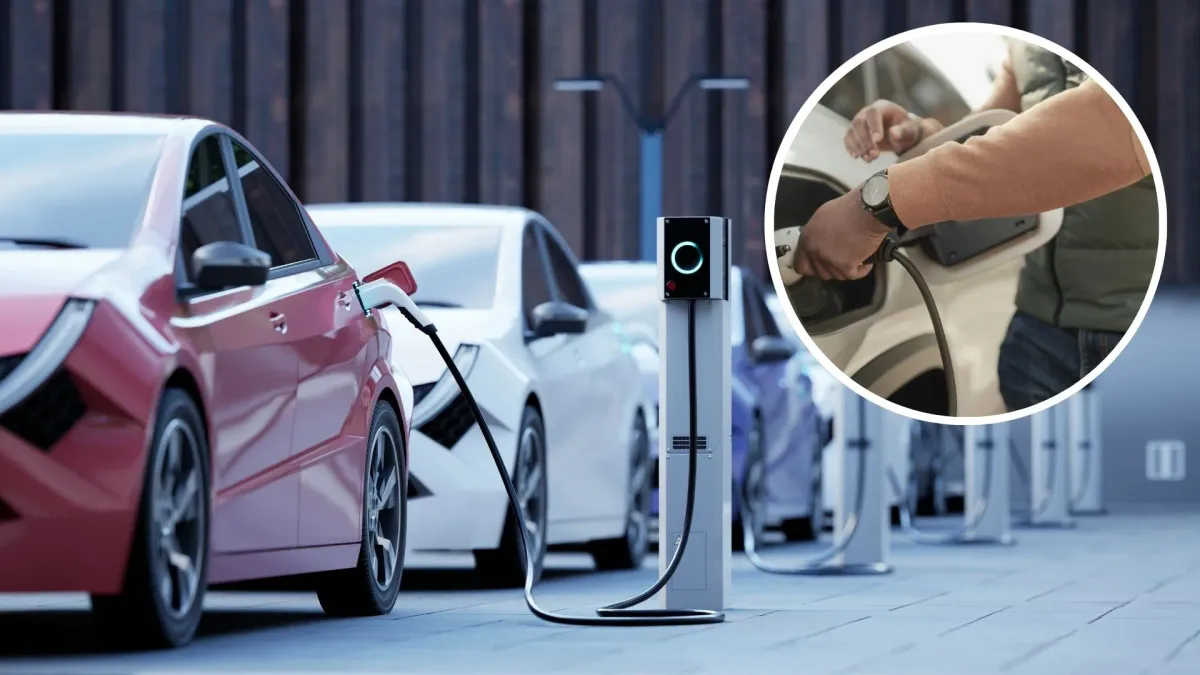
Tapping into electric vehicle (EV) batteries as a source of household power could save car owners thousands of dollars and slash carbon dioxide emissions, according to a new study. The study is the first large-scale yet detailed analysis of so-called vehicle-to-home (V2H) charging, an approach that involves charging an EV’s battery when cheap renewable energy is plentiful, then partially discharging it to run household appliances.

With V2H charging, “you can save several thousand dollars in electricity costs over the life of the car,” says study team member Parth Vaishnav, an assistant professor in the University of Michigan’s School for Environment and Sustainability. “In most of the country, you can charge effectively without emitting any extra greenhouse gases, and could even reduce your GHG emissions below your pre-EV baseline.” It s well known that smart charging—aligning EV charging times with the availability of low-cost and low-carbon electricity—can reduce the cost and climate impact of owning an EV.

But V2H charging hasn’t been as extensively studied. In the new analysis, Vaishnav and his colleagues leveraged information from existing weather, energy system, and transportation databases to model the effect of different charging strategies on the costs and emissions of EV and household energy use over time.

Over the 15-year lifetime of a vehicle, the V2H approach could save owners $2,400 to $5,600 in charging costs, or 40-90% of the total cost of charging, the researchers found. In some parts of Texas and California, the cost savings from V2H charging exceed the cost of charging the vehicle – so owning an EV could actually reduce a household’s overall electric bill.

.IRPP_ruby , .IRPP_ruby .postImageUrl , .IRPP_ruby .centered-text-area {height: auto;position: relative;}.IRPP_ruby , .IRPP_ruby:hover , .IRPP_ruby:visited , .IRPP_ruby:active {border:0!important;}.IRPP_ruby .clearfix:after {content: "";display: table;clear: both;}.IRPP_ruby {display: block;transition: background-color 250ms;webkit-transition: background-color 250ms;width: 100%;opacity: 1;transition: opacity 250ms;webkit-transition: opacity 250ms;background-color: #eaeaea;}.IRPP_ruby:active , .IRPP_ruby:hover {opacity: 1;transition: opacity 250ms;webkit-transition: opacity 250ms;background-color: inherit;}.IRPP_ruby .postImageUrl {background-position: center;background-size: cover;float: left;margin: 0;padding: 0;width: 31.59%;position: absolute;top: 0;bottom: 0;}.IRPP_ruby .centered-text-area {float: right;width: 65.65%;padding:0;margin:0;}.IRPP_ruby .centered-text {display: table;height: 130px;left: 0;top: 0;padding:0;margin:0;padding-top: 20px;padding-bottom: 20px;}.IRPP_ruby .IRPP_ruby-content {display: table-cell;margin: 0;padding: 0 74px 0 0px;position: relative;vertical-align: middle;width: 100%;}.IRPP_ruby .ctaText {border-bottom: 0 solid #fff;color: #0099cc;font-size: 14px;font-weight: bold;letter-spacing: normal;margin: 0;padding: 0;font-family:'Arial';}.IRPP_ruby .postTitle {color: #000000;font-size: 16px;font-weight: 600;letter-spacing: normal;margin: 0;padding: 0;font-family:'Arial';}.IRPP_ruby .ctaButton {background: url(https://www.anthropocenemagazine.org/wp-content/plugins/intelly-related-posts-pro/assets/images/next-arrow.png)no-repeat;background-color: #afb4b6;background-position: center;display: inline-block;height: 100%;width: 54px;margin-left: 10px;position: absolute;bottom:0;right: 0;top: 0;}.IRPP_ruby:after {content: "";display: block;clear: both;}Recommended Reading:The future holds many, many more EV batteries. And therein lies a solution to grid storage. Using V2H technology could also slash 70-250% of greenhouse gas emissions from household energy use, or 24 to 57 tons of carbon dioxide over the lifetime of the vehicle.

That means EVs have the potential to reduce not just transportation emissions but building-related emissions as well. About 60% of the US population lives in areas where V2H would reduce household greenhouse gas emissions so much that it would more than fully offset emissions from charging the EV.

The cost and emissions benefits are somewhat larger for homes in which all major appliances and systems are fully electric, the analysis shows. Not all EVs are capable of bidirectional charging, and the study doesn’t take into account the cost of the equipment that would make it possible. But it does define the break-even cost of such technology. Still to be worked out are what effects large-scale V2H charging would have on the electric grid overall, as well as whether individuals will be comfortable giving up control over when their car is charged and allowing outside entities to peek into their household and driving habits.

“There s business opportunities for everyone there, but regulation needs to make sure that homes and the grid are appropriately set up, and that EV warranties and consumer protections evolve in a way that people feel comfortable using their EVs in these ways,” Vaishnav says. Source: Chen J. “Vehicle-to-home charging can cut costs and greenhouse gas emissions across the USA.” Nature Energy 2025. Image: ©Anthropocene Magazine.

Brightcast Impact Score (BIS)

85/100Groundbreaking

This article highlights a promising new technology called vehicle-to-home (V2H) charging, which allows electric vehicle (EV) owners to use their car batteries to power their homes and save money on electricity costs while also reducing carbon emissions. The study provides detailed analysis and quantifies the potential benefits, making it a constructive solution with measurable progress and real hope for a more sustainable future.

Hope Impact30/33

Emotional uplift and inspirational potential

Reach Scale25/33

Potential audience impact and shareability

Verification30/33

Source credibility and content accuracy

Significant positive development

Comments(0)

Join the conversation and share your perspective.

Sign In to Comment
Loading comments...

Get weekly positive news in your inbox

No spam. Unsubscribe anytime. Join thousands who start their week with hope.

More stories that restore faith in humanity

Australia activates 1.6 GWh energy storage facility with 444 Tesla Megapacks
Innovation
2 wks ago
Mark Elder: Building the Future of Spacewalking for Artemis and Beyond
Innovation
3 wks ago
US engineers develop 3D chip that offers order-of-magnitude speed gains, accelerates AI
Innovation
1 wks ago