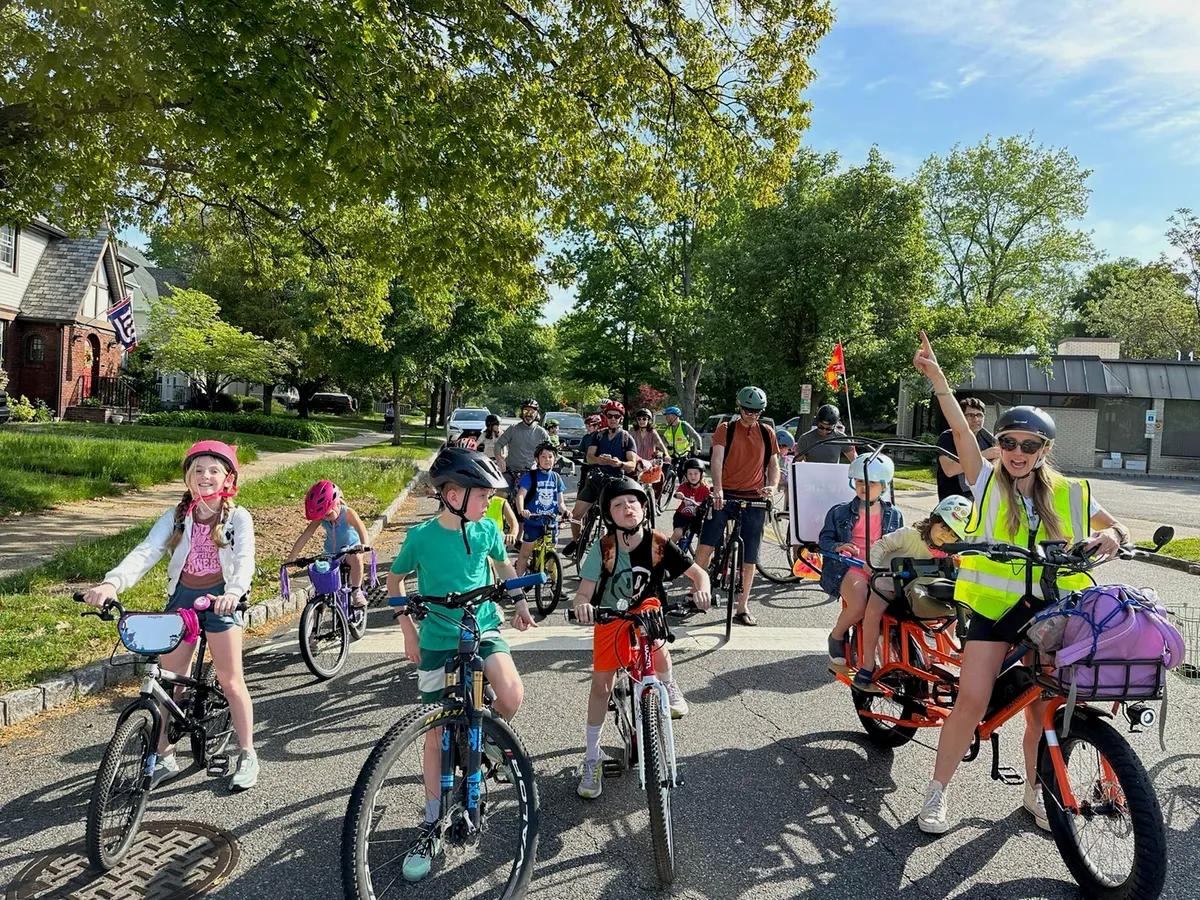
By the time the first bell rings on Fridays in Montclair, New Jersey, something has already shifted across town. Children burst out of their houses with backpacks and helmets. Neighbors wave from porches. Parents gather on sidewalks as clusters of families pedal toward shared meeting points. It feels like a parade, except everyone's going the same direction.
Three years ago, Jessica Tillyer and four other families started riding together because it felt safer than going alone. "We can have up to 400 people riding together to school," she says now. Second grader Gigi Drucker knows why she loves it: "The best way to get to school is by bike. It means more exercise and it's healthier for the Earth."
What started as one small town's experiment has quietly spread. According to Bike Bus World, which tracks these initiatives, more than 400 routes now operate globally—from Europe to Australia to India. Portland's Sam Balto, who runs one of the largest programs, watches families choose this over car lines because "children and families are craving community and physical activity and being outdoors."
We're a new kind of news feed.
Regular news is designed to drain you. We're a non-profit built to restore you. Every story we publish is scored for impact, progress, and hope.
Start Your News DetoxWhy it actually works
Montclair's organizers didn't stumble into success. They spent weeks testing different streets to find safe routes with manageable traffic. They built a chat group to share weekly updates and photos. They discovered that kids actually get out of bed faster on bike bus days. One parent, Gene Gykoff, noticed his child is "more excited to get out of bed for the bike bus than for the regular bus."
The routes cover every elementary and middle school in town, moving at about six miles per hour—intentionally slow, with no racing. Older kids sometimes split off to stretch their legs without leaving younger riders behind. In winter, when most programs might fade, Montclair's leaders monitor forecasts, secure reflective vests and bike lights, and remind families to bundle up. Balto notes that kids adapt faster than adults: "If you're going to do this in all weather, just do it consistently."
The most striking part is how simple it is to start. Jessica Tillyer's advice to newcomers echoes what she needed to hear herself: "Don't ask for permission. Find a small group of people, get on your bikes, and ride to school." Balto adds the same thing: "If you're consistent—once a week, once a month, once a season—it will grow."
What Montclair families have built isn't a tweak to the school commute. It's a weekly reminder that community shapes daily life. Children arrive more awake. Parents feel more connected. Streets fill with the quiet hum of wheels instead of idling cars. And every Friday, across town and across continents, more bike buses form.