

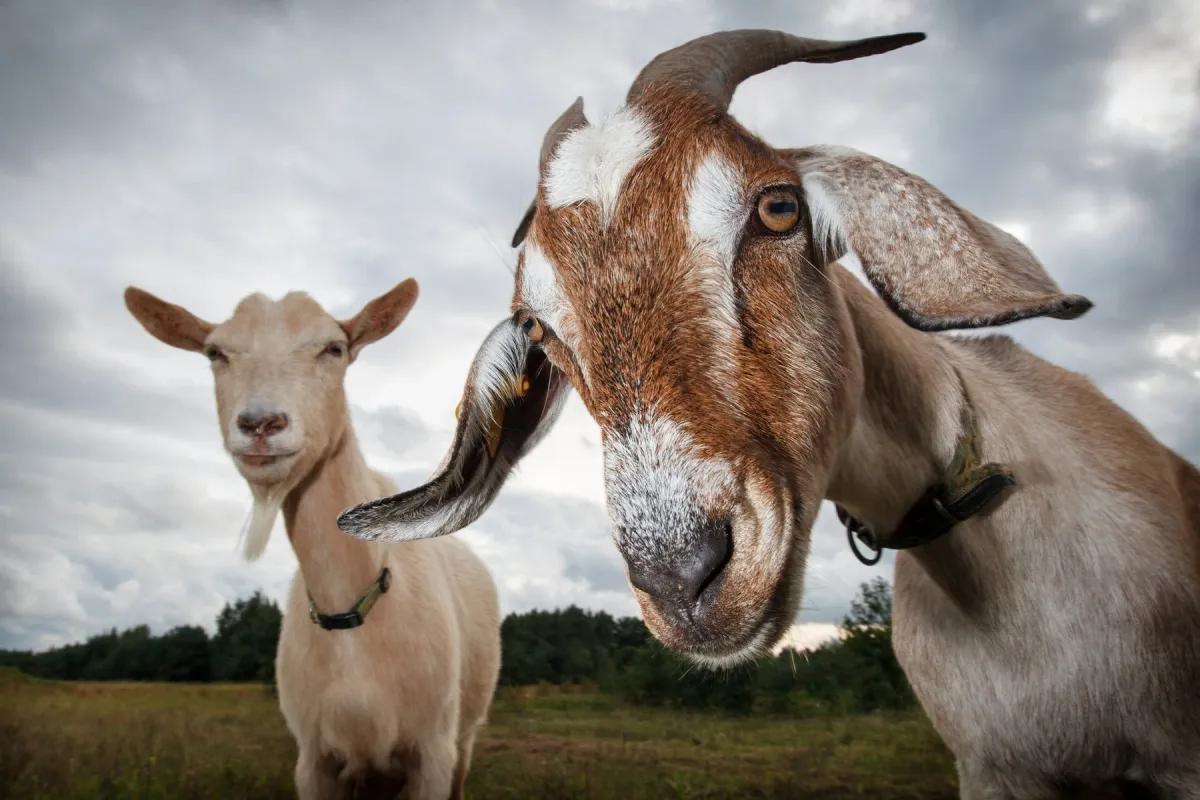
When Mount Etna rumbled in spring 2021, news outlets worldwide showed dramatic footage of lava and ash. Biologist Martin Wikelski wasn't convinced. He checked his most reliable forecasters: twelve goats grazing on the volcano's slopes, each wearing lightweight tracking tags they'd carried for over a decade.
The goats were calm. Unusually calm. In the seven major eruptions before this one, they'd signaled danger with frantic behavior — a pattern Wikelski's team had documented and learned to read. This time, the data told a different story than the headlines. When researchers dug deeper, they found the eruption had looked visually dramatic but was actually minor, causing no damage.
"The goats were right," Wikelski says from his office near Konstanz, Germany. "Therefore we still say, 'in goats we trust.'"
We're a new kind of news feed.
Regular news is designed to drain you. We're a non-profit built to restore you. Every story we publish is scored for impact, progress, and hope.
Start Your News DetoxThis isn't a cute anecdote. It's evidence of something Wikelski has been building for decades: ICARUS, the International Cooperation for Animal Research Using Space. The system equips animals — bats, birds, goats, giraffes — with lightweight smart tags that transmit data to satellites and CubeSats (shoeboxed-sized satellites) in real time. The goats of Mount Etna are part of a global network that's learning to read the planet through the behavior of its creatures.
The Internet of Animals
Most wildlife researchers work within defined geographic areas. They track migration in one region, monitor one endangered population, study one ecosystem. But the animals themselves don't respect those boundaries. A bird carrying flu flies across continents. Poachers operate across borders. Climate shifts ripple globally. The answers to the biggest conservation questions aren't local — they're planetary.
ICARUS flips the research model. Instead of humans choosing where to look, the animals become a distributed sensor network. A bat's unusual flight pattern might signal an environmental shift. A giraffe's migration timing could indicate drought conditions. A bird's behavior might flag disease spread before it reaches human populations.
The system has already tracked animals through volcanic zones, across poaching hotspots, and through regions facing climate disruption. The data flows continuously, creating a real-time picture of what's happening on the ground — or in the air — across the globe. Scientists can now ask questions they couldn't ask before: not just "where do these animals go," but "what is the world telling us through how they move."
What started as Wikelski's vision — connecting animal observation to satellite technology — is becoming infrastructure. The goats of Mount Etna proved that sometimes our best early warning system has four legs and grazes on a volcano's slope. It's a reminder that innovation doesn't always mean building something new. Sometimes it means listening to what's already there.



