On launch day at Kennedy Space Center, four astronauts will walk toward the Orion spacecraft for humanity's first crewed lunar mission since 1972. But before they can leave Earth, they'll need help getting in—and that's where Taylor Hose and his team come in.
Hose leads NASA's Artemis closeout crew, a five-person team trained to be the last hands an astronaut touches before heading to the moon. Their job sounds simple: strap people in, close the door, launch. In reality, it's meticulous work that takes about four hours and leaves no room for error.
The final countdown
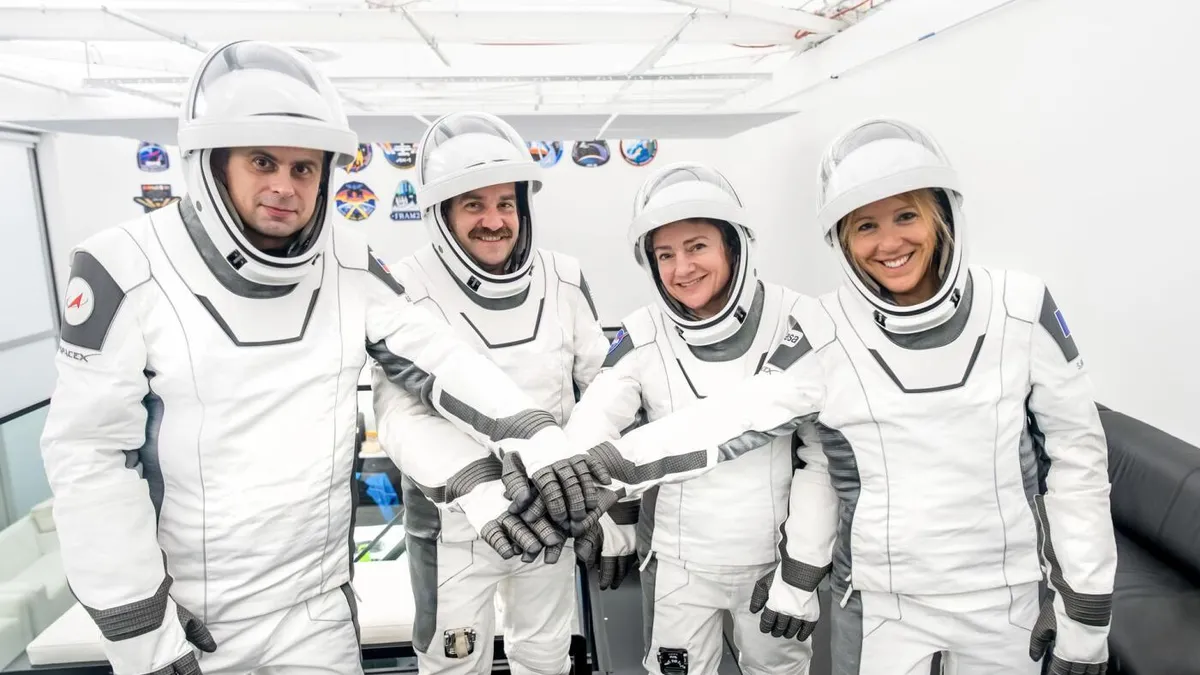
When Reid Wiseman, Victor Glover, Christina Koch, and Canadian astronaut Jeremy Hansen arrive at Launch Complex 39B, the closeout crew will already be waiting inside the Vehicle Assembly Building. First comes the gear: helmets and gloves fitted carefully into place. Then the spacecraft itself—a process that looks nothing like buckling into a car.
We're a new kind of news feed.
Regular news is designed to drain you. We're a non-profit built to restore you. Every story we publish is scored for impact, progress, and hope.
Start Your News DetoxInstead of one seatbelt, each astronaut needs five straps securing them to the crew module, plus several additional connections to the life support and communications systems. Bill Owens, the crew's spacesuit specialist, and astronaut Andre Douglas will handle these connections for each crew member, checking every attachment twice.
Once the astronauts are locked in, the real work begins. Orion's hatch isn't a door you pull shut—it's pneumatically driven, requiring air lines and ground support systems to seal properly. Christian Warriner and Ricky Ebaugh, the hatch technicians, will oversee this process with surgical precision. Even a single strand of hair caught in the seals could prevent the hatch from closing.
Closeout Crew lead Taylor Hose, second from left, talks with NASA astronaut Andre Douglas, second from right as he and closeout crewmembers Will Sattler, left, and Christian Warriner prepare for the arrival of Artemis II crewmembers NASA astronauts Reid Wiseman, commander; Victor Glover, pilot; Christina Koch, mission specialist; and CSA (Canadian Space Agency) astronaut Jeremy Hansen, mission specialist; at the 275-foot level of the mobile launcher as they prepare to board their Orion spacecraft atop NASA's Space Launch System rocket during the Artemis II countdown demonstration test, Saturday, Dec. 20, 2025, inside the Vehicle Assembly Building at NASA Kennedy. Credit: NASA / Joel Kowsky
Before the hatch seals completely, Hose and his team must grease and clean the seals, remove hatch covers, install thermal protection panels, and remove the purge barrier between the vehicle and the ogive panels that shield the crew module during launch. Then comes the launch abort system hatch—another layer of protection that must close just as carefully. Once that's done, the closeout crew leaves the pad but stays nearby, ready to return if anything needs adjustment in those final minutes before ignition.
For Hose, this isn't just a job. His childhood dream was to be an astronaut, a goal that didn't work out the way he imagined. But helping send the first crewed mission to the moon since 1972—and this time, to stay—feels like something better. "That's our first stepping stone of going to Mars and expanding into the solar system," he says.
After launch, several team members will travel to San Diego to support the crew's splashdown and recovery. But on that launch morning, for four hours, the closeout crew holds the line between Earth and the moon.