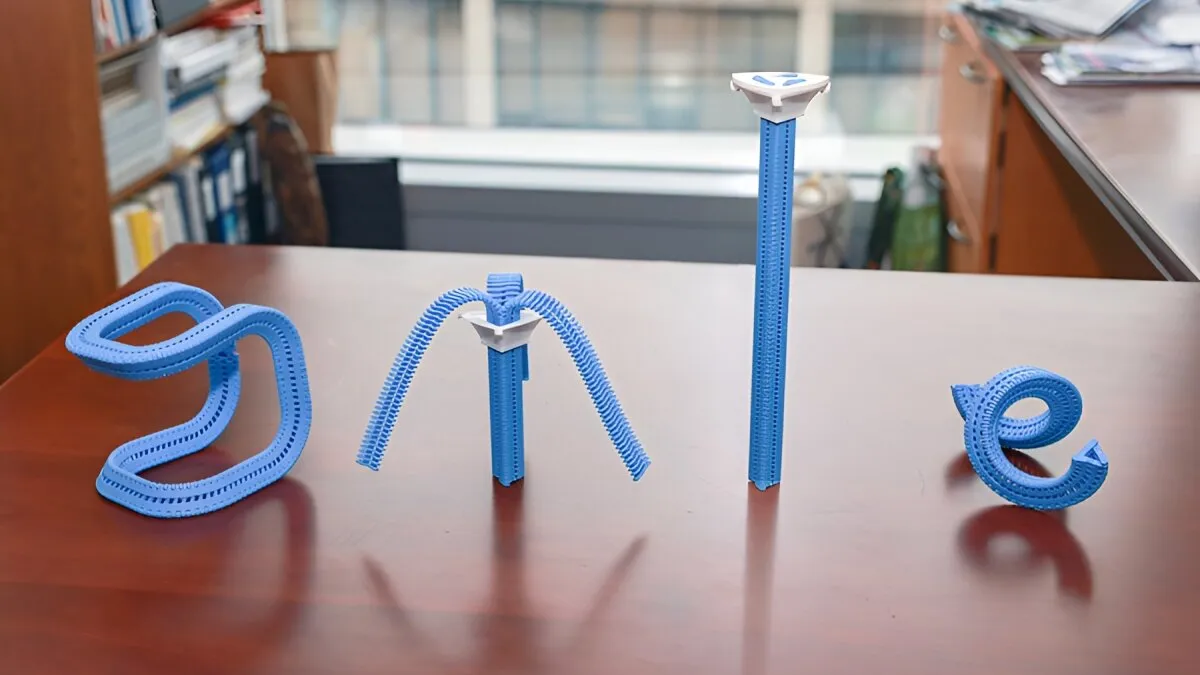
A new 3D-printed zipper, shaped like a triangle, is bringing an old idea back to life. This "Y-zipper" can quickly change items like chairs, tents, robots, and purses from soft to rigid. This makes them easier to pack and set up with just a button press.
The inspiration comes from a patent filed in 1985 by William Freeman. He was an electrical engineer at Polaroid then and is now an MIT professor. Freeman created a three-sided zipper that worked like a regular one but formed a triangular tube when zipped. This allowed items to transform from a soft shape to their full size. His idea was initially rejected, but he patented it, hoping it would be used later.
Reimagining the Zipper
Researchers at MIT's Computer Science and Artificial Intelligence Laboratory (CSAIL) have built on Freeman's idea. They developed an automated and adaptable fastener called the "Y-zipper."
We're a new kind of news feed.
Regular news is designed to drain you. We're a non-profit built to restore you. Every story we publish is scored for impact, progress, and hope.
Start Your News DetoxJiaji Li, an MIT postdoc and CSAIL researcher, explained that a regular zipper works well for flat objects. However, Freeman's design is more dynamic. Modern technology allows this mechanism to transform more complex items. Li is the lead author of an open-access paper on the project. He noted that they have created a process to build objects that can quickly shift from flexible to rigid and work reliably.
CSAIL's 3D software helps users see how the Y-zipper will look when zipped. Users can customize the length, curve direction, and angle. They can also see how it will appear when straight, bent, coiled, or twisted before 3D printing it with plastics.
The researchers tested two common 3D printing plastics: polylactic acid (PLA) and thermoplastic polyurethane (TPU). They used a machine to bend the Y-zippers. PLA handled heavier loads better, while TPU was more flexible. The team also tested the Y-zipper's durability by continuously opening and closing it. It lasted about 18,000 cycles before breaking. The 3D software showed that the elastic part was crucial for spreading stress from heavy loads.
Practical Applications
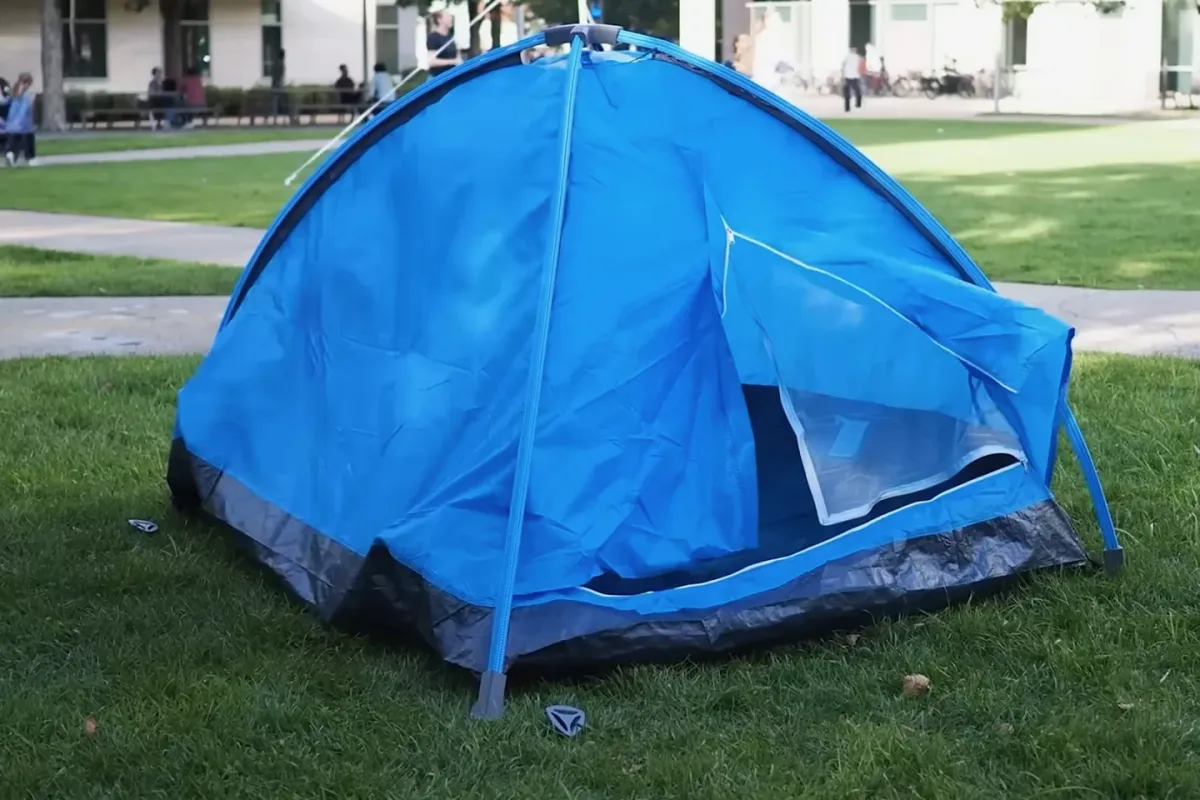
When unzipped, the Y-zipper looks like a three-tentacled squid. When zipped, it forms a rod-like structure. This could be very useful for camping gear. For example, pitching a tent that usually takes up to six minutes could be done in under two minutes with the Y-zipper.
The Y-zipper also has potential in the medical field. Researchers wrapped it around a wrist cast. This allowed a patient to adjust the normally stiff cast for more comfort during the day or night.
Other uses include robotics, like adaptive robotic quadrupeds. A robot could zip its legs for height or unzip them to lower down. This would help the robot navigate uneven areas like forests or canyons. The team even used the Y-zipper to create art installations, like a mechanical flower that "bloomed" when zipped by a motor.
Li believes the Y-zipper could also help in space exploration. A built-in arm attachment could gather rock samples. It could also be used for quickly building emergency shelters or medical tents during disasters.
Deep Dive & References
Y-Zipper: 3D Printing Flexible-Rigid Transitions in One Click - MIT