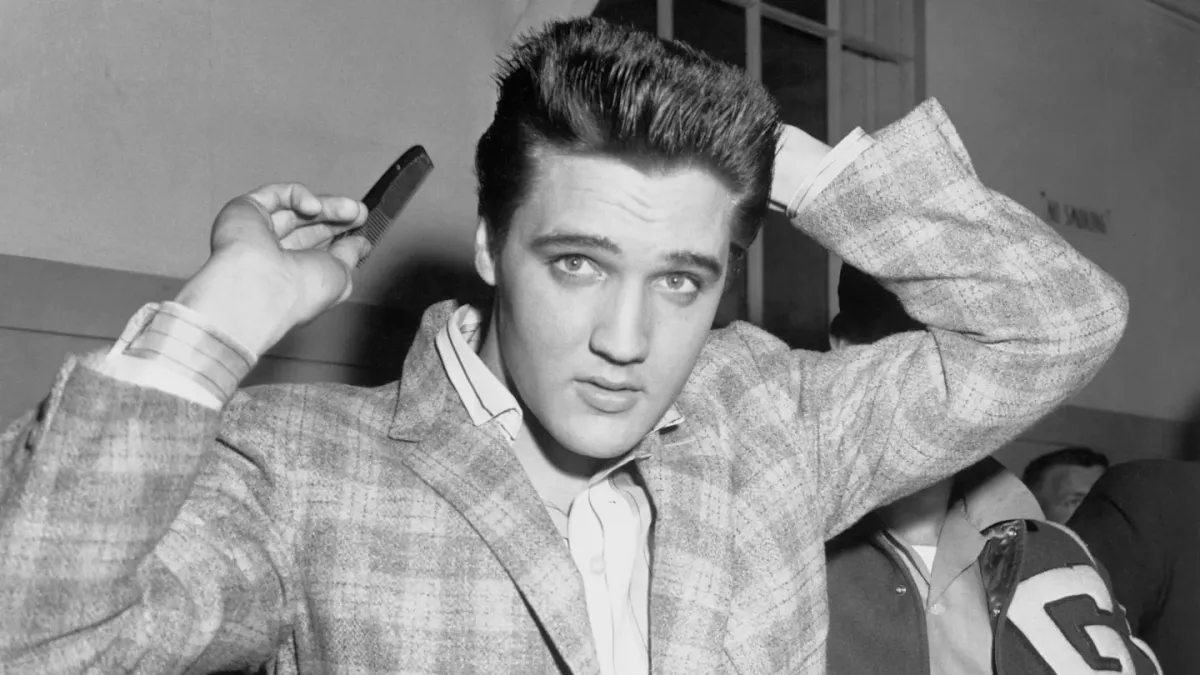
Before Elvis, music was one thing. After Elvis, it was… well, Elvis. The King of Rock and Roll didn't just sing songs; he became them. He swiveled his hips, unleashed that unique vocal style, and suddenly, country and R&B decided to elope and have a baby named rockabilly.
By 1956, Elvis was a household name, famous for tracks that felt like they were etched into his very DNA. The catch? Many of these iconic tunes weren't his to begin with. He was a master of the cover, turning other artists' work into pure Presley gold. Which, if you think about it, is both impressive and slightly terrifying for the original songwriters.
Here are five songs you probably thought were 100% Elvis, but actually started somewhere else.
We're a new kind of news feed.
Regular news is designed to drain you. We're a non-profit built to restore you. Every story we publish is scored for impact, progress, and hope.
Start Your News DetoxThe King's Covers
"That's Alright"
Picture this: 1954. A fresh-faced 19-year-old Elvis walks into Sam Phillips's Sun Records in Memphis. He lays down his first single, "That's Alright." Instant hit. The beginning of a legend. The original? A blues artist named Arthur “Big Boy” Crudup, who recorded it in 1946. Elvis, to his credit, mentioned hearing Crudup sing it and just having to try it himself. Which, fair.
"Blue Suede Shoes"
Fast forward to 1956. Elvis is blowing up, and "Blue Suede Shoes" is a huge part of it. He recorded it for his debut album, and it became synonymous with his name. Except rockabilly pioneer Carl Perkins released it first in December 1955. Johnny Cash even inspired Perkins to write it. While Perkins's version topped the charts, Elvis's star power eventually made the song his. Apparently, touring with Perkins and Cash wasn't enough to keep the association split evenly.
"Hound Dog"
Here's where it gets a little spicy. "Hound Dog" became a chart-topping, hip-swiveling sensation for Elvis. But the original blues hit? That belonged to Willie Mae "Big Mama" Thornton, an R&B powerhouse who recorded it in 1953. Elvis's version stayed at number one for 11 weeks, cementing his "Elvis the Pelvis" nickname thanks to those now-legendary stage moves. He never formally credited Thornton, though, because his inspiration came from a different cover by Freddie Bell and the Bellboys. Because apparently that's how the musical telephone game works.
"Love Me Tender"
In 1956, a 21-year-old Elvis recorded "Love Me Tender" for his first film, a Western that was originally called "The Reno Brothers." The song, an adaptation of the Civil War-era tune "Aura Lee," wasn't a direct cover — the lyrics were completely rewritten. But he kept that melody. The song sold over a million copies, and the studio, ever the pragmatists, promptly renamed the movie to match the hit single. Because, why wouldn't you?
"Always on My Mind"
"Always on My Mind" hit the airwaves in 1972, first by Gwen McCrae, then Brenda Lee. When 37-year-old Elvis released his version that October, its themes of regret and devotion hit a little differently, given his recent split from Priscilla. Many fans assumed he wrote it, because of course he did. It resonated that deeply. His cover earned Gold certification, and a decade later, Willie Nelson would also record a wildly popular version. Because some songs are just too good to stay with one artist, even if that artist is The King.