

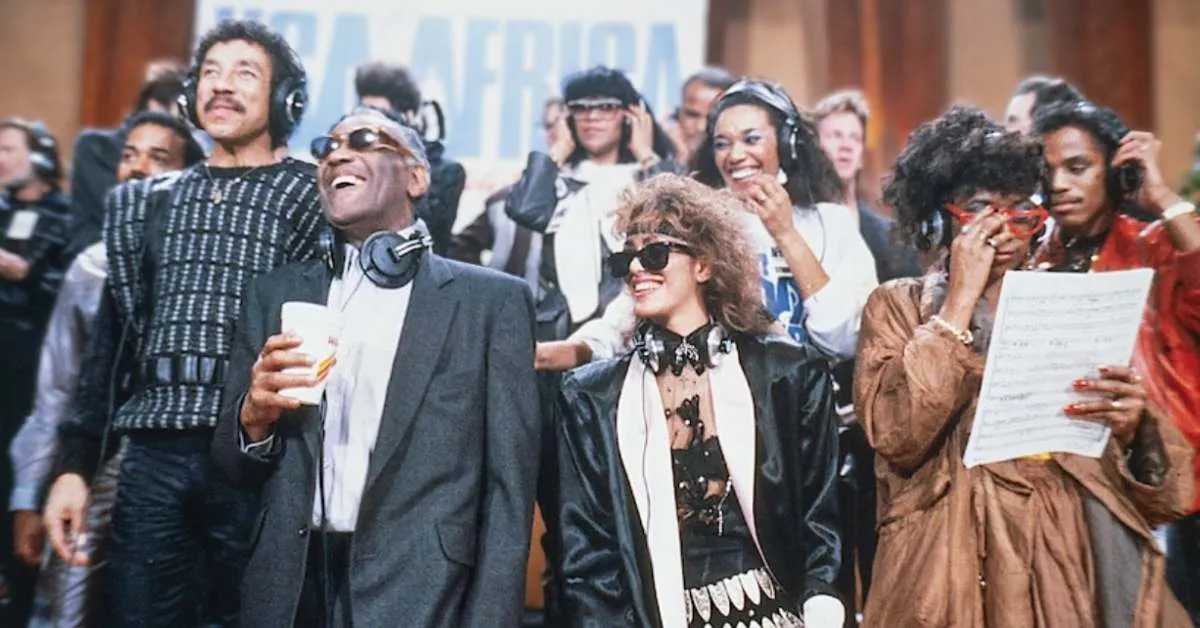
In January 1985, Quincy Jones taped a sign to the studio door: "Leave your egos at the door." Inside, more than three dozen musicians—Paul Simon, Billy Joel, Diana Ross, Bruce Springsteen, Cyndi Lauper, and others whose names alone spanned decades of pop history—had gathered to record a song. Michael Jackson and Lionel Richie had written it. The goal was straightforward: raise money for famine relief in Ethiopia.
The song debuted at number one on the Billboard Hot 100. It sold 1 million copies in its first weekend. But the real measure wasn't chart position or sales velocity. It was what happened next, and what's still happening now.
"We Are the World" has raised over $80 million since its release—roughly $160 million adjusted for inflation—and it continues to generate funds for humanitarian causes in Africa. Four decades later, the track still moves people to contribute.
We're a new kind of news feed.
Regular news is designed to drain you. We're a non-profit built to restore you. Every story we publish is scored for impact, progress, and hope.
Start Your News DetoxDiana Ross, speaking in an archival clip from the Netflix documentary "The Greatest Night in Pop," captured something essential about why the song mattered. "I think every individual in the world wants to contribute and they don't know how," she said. "I got a feeling that we're creating a shift in what's going on in the world today, about helping other people. It's about compassion."
That insight—that people want to help but need a way in—turned out to be durable. The song became a template: music as a bridge between desire and action. It showed that when artists step away from individual ambition and toward a shared purpose, something resonates beyond the moment. The recording itself was a statement. These were competitors, peers, sometimes rivals. The fact that they showed up, in the same room, at the same time, for something larger than themselves—that was the story the song carried.
What's remarkable isn't just that "We Are the World" raised money. It's that it never stopped. In an era of viral moments and forgotten causes, this song has aged differently. It continues to be licensed, performed, and shared. New generations discover it. And each time someone hears it, the mechanism Jones and the artists set in motion still works: compassion translates into contribution.
As new global challenges emerge, the song stands as a reminder that music can do more than entertain. It can organize human generosity. It can make helping feel less like obligation and more like belonging.


