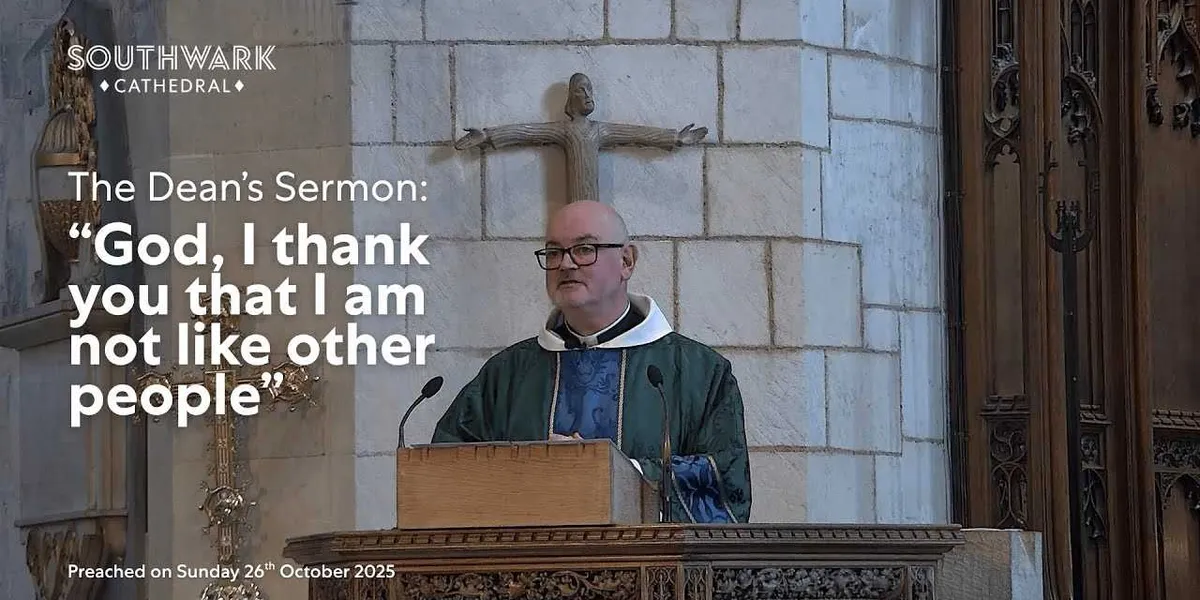
When the Church of England paused blessing services for same-sex couples in October 2023, it felt like a door closing. But inside Southwark Cathedral, The Very Reverend Dr. Mark Oakley opened a different one.
Oakley, a gay priest, stood before his congregation and made an argument that cuts through years of theological debate: God's love doesn't shrink when you're honest about who you are. It overflows.
The sermon that wouldn't let it rest
The Church of England had been fractured for years over same-sex marriage. In 2014, it became legal in England, but the church held back. By 2023, it offered a compromise—blessings and prayers for same-sex couples, but not official weddings. Then even that was paused. Clergy couldn't marry their partners. It read as a retreat.
We're a new kind of news feed.
Regular news is designed to drain you. We're a non-profit built to restore you. Every story we publish is scored for impact, progress, and hope.
Start Your News DetoxOakley's response wasn't angry. It was precise.
He talked about coming out to his grandmother at 18. She didn't condemn him. She said she'd been worried he'd never feel safe enough to tell her. "I came to see that my grandmother's response was the response of love, and therefore it is also the response of God," Oakley said. "God wants us to share with him who we really are, and to know that God's love only overflows and never diminishes when we dare to do this."
Then he addressed the church's reliance on the apostle Paul's ancient writings to justify its stance. Oakley pointed out the obvious: Paul lived nearly 2,000 years ago. He never witnessed what modern same-sex couples actually do—build homes together, cook together, age together, grieve together. "He would never meet men or women who set home up together... caring for each other, growing old together, being there for better or worse, and feeling a painful absence in their life when death separated them."
The logic is simple: if Paul had seen that, his theology might have shifted too.
Oakley closed with a statement that landed hard: "Because of God, love wins. No matter what can be said or done to control or stop it, no matter how fancy the theology is to disguise a prejudice. Love comes in many shapes and many sizes, and for that and for all the diversity of all the people in the church and beyond, thanks be to God."
The congregation stood and applauded.
What happens when doctrine meets conscience
The institutional pause hasn't stopped the movement. Some priests have decided their ordination vows matter more than the House of Bishops' restrictions. Rev. Simon Butler, for one, has continued offering blessings to same-sex couples. "The pastoral task laid upon me by my ordination vows and the mission of God in this community is more important than allowing an illegitimate request from the House of Bishops to get in the way," he said.
It's a quiet form of resistance—not rebellion for its own sake, but clergy choosing their actual calling over institutional gatekeeping. The formal position of the Church of England hasn't changed. But the ground beneath it is shifting, one sermon and one blessing at a time.