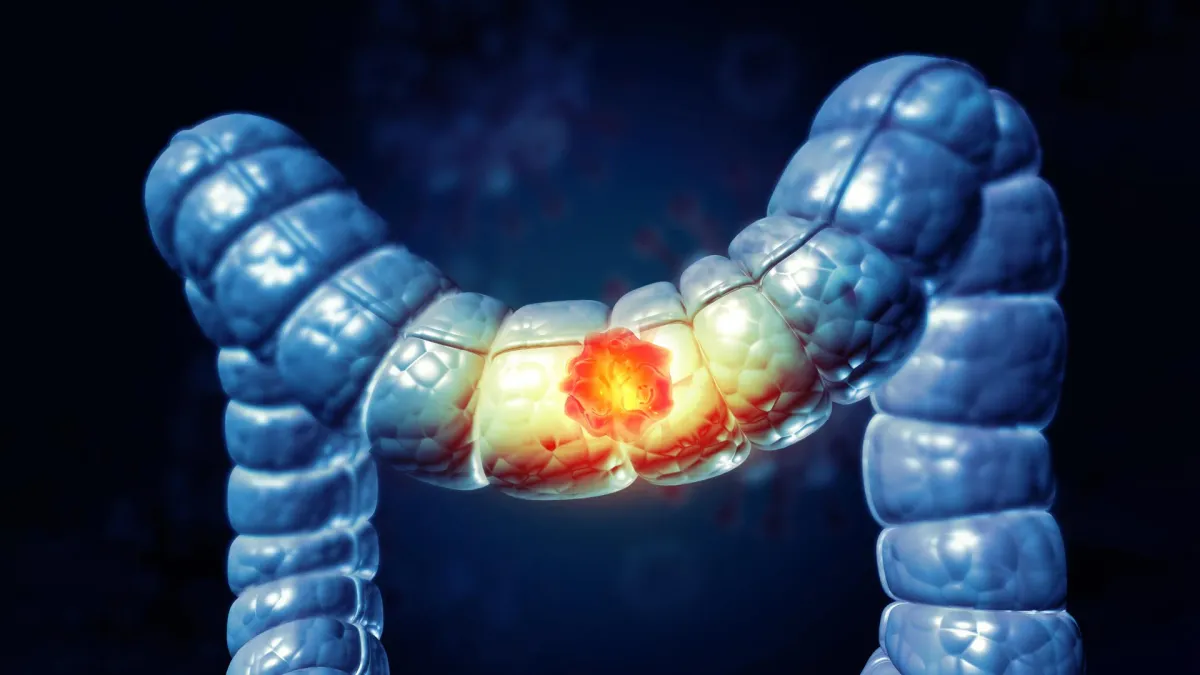
Imagine being told you have colon cancer, undergoing a brief, nine-week treatment, and then having your doctors tell you the cancer has “melted away.” That’s the reality for patients in a new clinical trial, where a short burst of immunotherapy before surgery has kept some colorectal cancer patients cancer-free for almost three years. Let that satisfying number sink in.
Researchers at UCL and UCLH essentially flipped the script. Instead of the usual surgery-then-chemo routine, they gave patients with specific types of stage two or three colorectal cancer a nine-week course of pembrolizumab. The result? No cancer return after 33 months. None. For anyone.
This is a rather big deal, considering that with standard treatment, about 25% of patients see their cancer return within three years. These new findings suggest that leading with immunotherapy might just offer a much longer, more robust shield against recurrence.
We're a new kind of news feed.
Regular news is designed to drain you. We're a non-profit built to restore you. Every story we publish is scored for impact, progress, and hope.
Start Your News DetoxPersonalized Blood Tests That Predict the Future
Beyond the impressive headline, the team also figured out how to predict who would benefit most. They developed personalized blood tests that can detect tiny traces of cancer DNA in the bloodstream. If that DNA vanished, patients were far more likely to remain cancer-free. Which, if you think about it, is both impressive and slightly terrifying in its precision.
Dr. Kai-Keen Shiu, the trial's Chief Investigator, noted that these tools could allow doctors to tailor treatments: less therapy for those doing well, more for those still at higher risk. Because apparently, that’s where we are now — predicting the future with a blood test. Christopher Burston, 73, from Portland, Dorset, was one of the lucky participants.
Diagnosed with stage three colorectal cancer in February 2023, he joined the trial, received three immunotherapy doses over nine weeks, and had surgery in May 2023. His recovery was smooth, with minimal side effects. He’s now nearly three years cancer-free, back to his normal life, and reportedly feels "very lucky that his main problem now is age, not cancer or illness."
Colorectal cancer is the fourth most common cancer in the UK, affecting about 44,000 people annually. While it mostly impacts older adults, diagnoses in those under 50 are on the rise. Early detection dramatically improves outcomes, but certain tumor types are notoriously stubborn. This trial focused on a specific genetic subtype (MMR deficient/MSI-high bowel cancer), which accounts for 10-15% of cases.
The latest results were shared at the American Association for Cancer Research (AACR) Annual Meeting 2026. This trial didn't just show that immunotherapy works; it gave researchers crucial biological insights into why it works so effectively in this context. Turns out, getting rid of tumor DNA in the blood is a pretty good indicator of long-term success. Who knew?