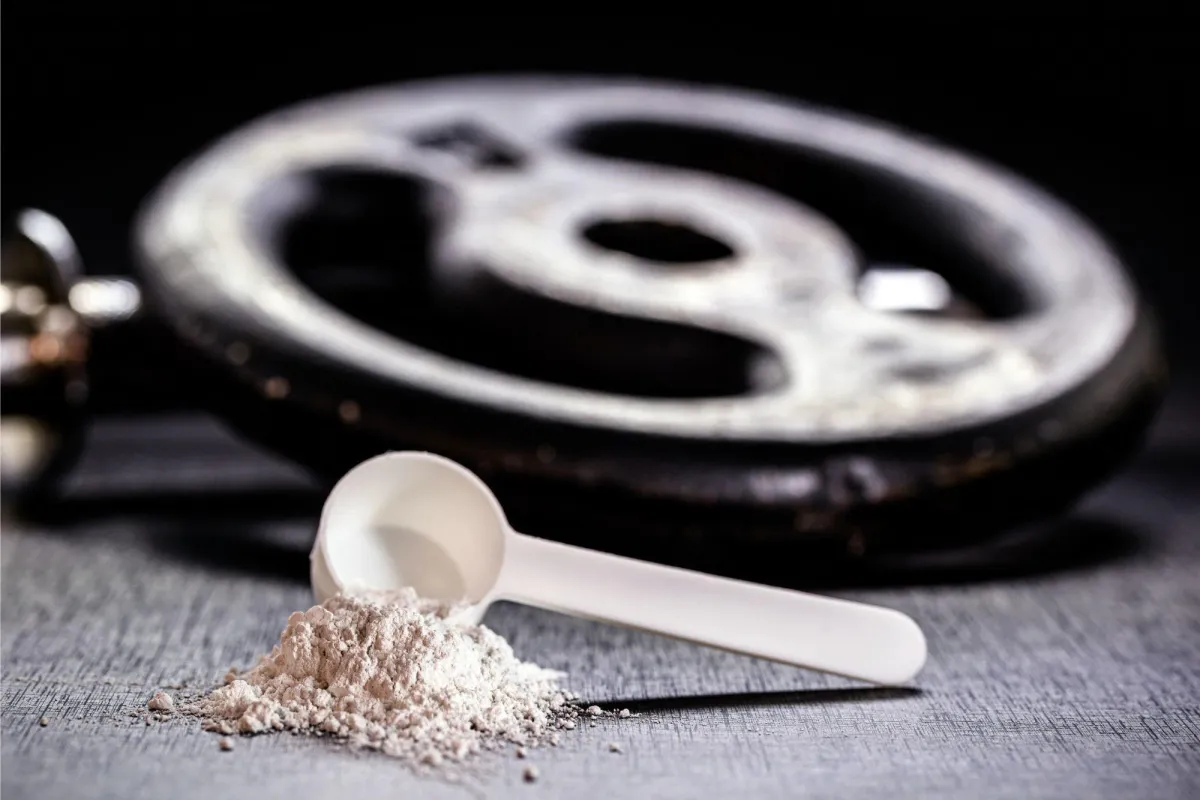
Creatine is a popular supplement known for boosting athletic performance. Now, scientists are looking into whether it could also help treat depression.
Muscles aren't the only body parts that need creatine for energy. The brain also uses the same energy system. This has led researchers to wonder if creatine could offer benefits beyond physical fitness.
Looking at the Evidence for Depression
A new review in the journal Brain Medicine explored creatine's role in treating depression. While some studies showed promising results, the overall evidence is mixed. Researchers say it's too early to recommend creatine as a standard treatment.
We're a new kind of news feed.
Regular news is designed to drain you. We're a non-profit built to restore you. Every story we publish is scored for impact, progress, and hope.
Start Your News DetoxScientists from the University of Ottawa, led by Bassam Jeryous Fares, analyzed existing studies. They found six reports from five randomized controlled trials. In these trials, neither participants nor researchers knew who received creatine and who received a placebo.
These studies took place in South Korea, the United States, Brazil, Israel, and India. They included 238 participants, with 126 getting creatine and 112 getting a placebo. The average age was 36, and most participants were women. Two studies only included women.
Four trials focused on people with major depressive disorder. One trial looked at people with depressive episodes from bipolar disorder. Because the studies varied a lot, the researchers looked at each one individually instead of combining the results.
Mixed Results from Studies
The findings were not all the same.
Two trials, both from the same study of women with major depressive disorder, showed significant improvements. In one trial, women who took five grams of creatine daily along with the antidepressant escitalopram saw a greater drop in depressive symptoms after eight weeks. This was compared to those who received a placebo.
This improvement was considered large, and more participants achieved remission. Another study found that combining creatine with cognitive behavioral therapy led to a greater reduction in depression scores than therapy plus a placebo.
However, the other three trials found no measurable benefit. One study tested five-gram and ten-gram daily doses in people whose depression hadn't improved with medication, finding no advantage over placebo. Another study with adolescent girls using different doses also showed no meaningful difference. A third study on people with bipolar disorder experiencing depressive episodes also found no improvement.
Researchers also noted a safety concern: two participants with bipolar disorder who took creatine developed hypomania or mania. This suggests creatine might affect people differently depending on their underlying condition.
Why Creatine Might Help the Brain
Scientists believe there are biological reasons why creatine could be a depression treatment.
The brain uses a lot of energy. Creatine helps brain cells make adenosine triphosphate (ATP), which powers many cell processes. Past studies have shown changes in brain creatine metabolism in people with mood disorders. This suggests that problems with energy production might contribute to depression.
Creatine might also affect dopamine and serotonin, which are neurotransmitters targeted by antidepressant medications.
However, researchers stress that these connections are still theoretical. Current evidence shows a link between brain creatine levels and mood, but it doesn't prove that one causes the other. Depression is a complex condition influenced by many factors.
Bassam Jeryous Fares noted that the findings are "interesting, but it is not a verdict." He explained that two trials pointed one way, and three pointed another. This means more research is needed before changing clinical practice.
Nicholas Fabiano, a psychiatry resident and corresponding author, added that creatine seems safe, with only mild stomach discomfort reported. However, he said they can't yet confirm if creatine helps with depressive symptoms or if the findings apply to everyone.
More Research is Needed
The current evidence has some limitations. The trials were small, and most participants were women. The quality of the studies also varied.
Researchers recommend larger and longer clinical trials, lasting more than eight weeks. They also suggest studying creatine with exercise and exploring different doses. Higher doses might not always be more effective.
Animal studies also offer clues. Research suggests creatine affects depression-like behavior differently in male and female rodents. This could help explain why human studies with more women showed greater benefits.
For now, creatine is an interesting possibility, not a proven therapy. While known for muscle building, it may have untapped potential for the brain. More research is needed before doctors can decide if it should be part of depression treatment.
Deep Dive & References
Creatine as a treatment for depression - Brain Medicine, 2026