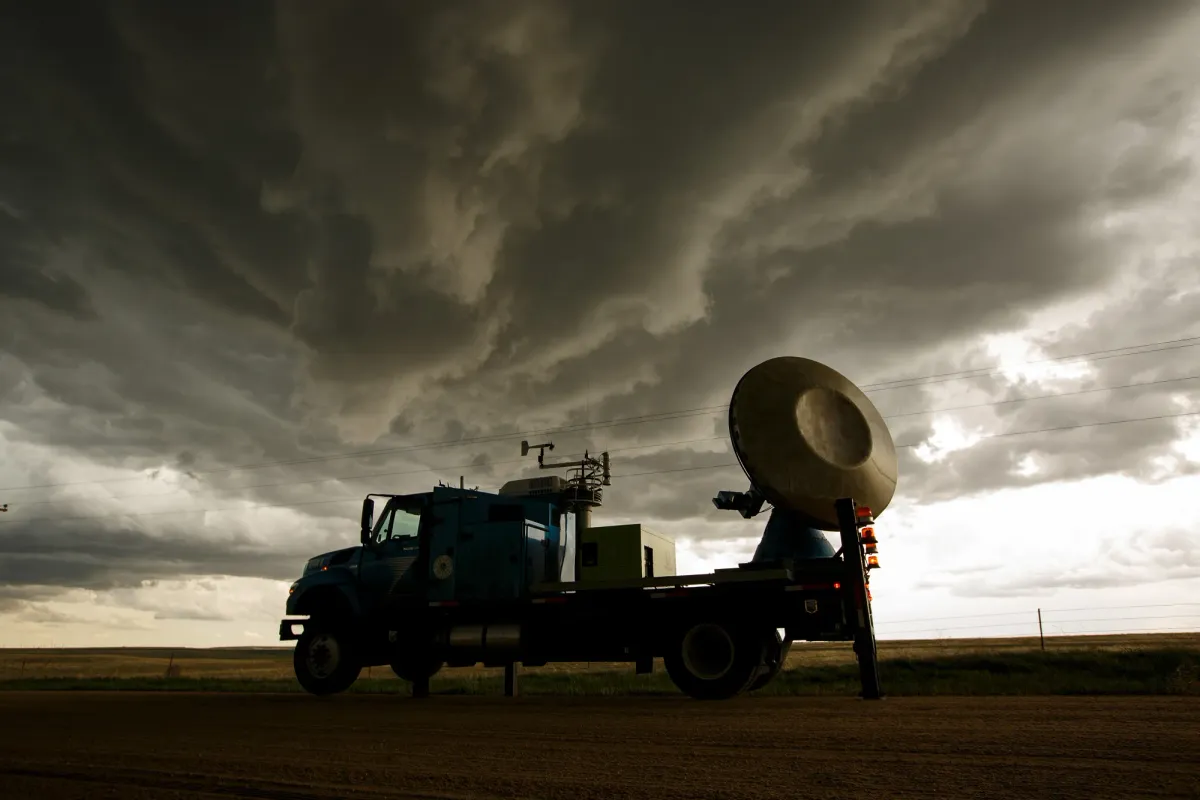
The National Weather Museum in Norman, Oklahoma, is running on fumes. A funding dispute with the local economic development coalition has left the nonprofit scrambling to raise $13,200 just to keep the doors open through spring. It's a precarious position for an institution that holds some of the rarest weather artifacts in the country — including an early Doppler Radar, a T-28 aircraft that was built to fly directly into storms, and wreckage from a devastating 2023 tornado.
The museum opened in the early 2000s with a straightforward mission: teach people how we learned to predict and understand weather. Director Ross Forsyth describes it as a bridge between history and today's forecasts. "We curate the artifacts and these are one-of-a-kind, can't be found anywhere else," he told the Norman Transcript. "Then we combine that with the new technology."
For years, the Cleveland County Economic Development Coalition provided roughly $5,000 annually — modest funding, but enough to keep operations steady. That support came with an unspoken agreement: the museum would eventually move from its current temporary home to a purpose-built facility. When that transition stalled, the coalition withdrew its support, citing a contract dispute with Norman City Council.
We're a new kind of news feed.
Regular news is designed to drain you. We're a non-profit built to restore you. Every story we publish is scored for impact, progress, and hope.
Start Your News DetoxNow the museum is fundraising on its own website. As of late last month, they'd raised $11,000 of the $13,200 needed to survive the next few months. No federal funding backs the operation. No state grants. Just donations and partnerships.
Forsyth seems both frustrated and determined. "We're the only weather museum in the country," he said. "Norman is the weather capital of the country, if not the world. We thought we'd get more support." It's a fair point — Norman is home to the National Weather Center and the Storm Prediction Center, making it genuinely central to American meteorology. The museum's collection documents the evolution of that expertise: how radar changed everything, how aircraft reconnaissance became possible, how we moved from guessing to knowing.
The immediate crisis is real, but it's also a moment that reveals something about how specialized institutions survive in America. Museums dedicated to weather science don't fit neatly into arts funding or natural history budgets. They're too technical for some funders, too local for others. The National Weather Museum exists in that gap — essential to a community that understands its value, invisible to everyone else.
The team has until spring to close that gap. Whether Norman's weather museum makes it past this year will depend on whether enough people believe that understanding how we forecast the future is worth preserving.