Kelsey Boone used to post about teaching—how to keep a classroom engaged, how to make learning feel alive. Then Boston was born, and everything shifted. The diagnosis came quickly: Coffin-Siris Syndrome, a rare genetic condition that brought multiple challenges, including total hearing loss. Kelsey left her job to become Boston's full-time medical needs mom.
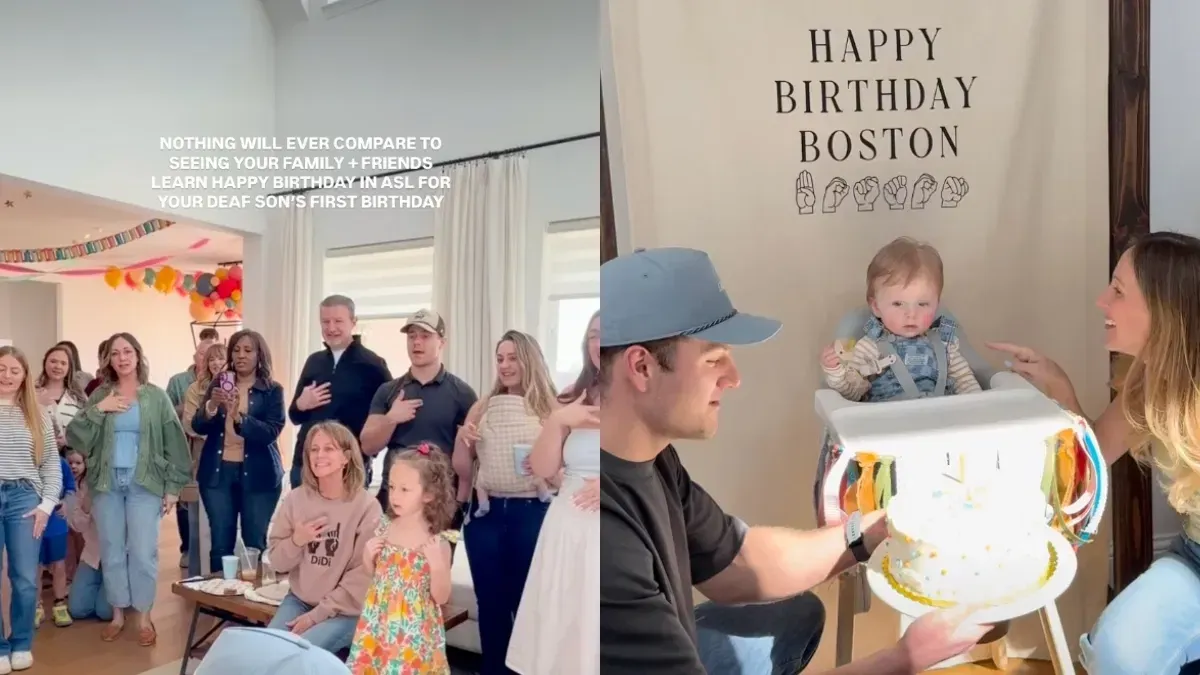
When his first birthday arrived, the family faced a small but real question: how do you sing "Happy Birthday" to a child who can't hear it?
They didn't skip it. They learned.
When Everyone Shows Up
On the day of the party, Kelsey stood in front of the room and led everyone—family, friends, whoever was there—through American Sign Language. The whole group signed and performed "Happy Birthday" together. No one stood silent. No one half-participated. Boston watched the room move in unison, every hand telling him he was loved.
We're a new kind of news feed.
Regular news is designed to drain you. We're a non-profit built to restore you. Every story we publish is scored for impact, progress, and hope.
Start Your News Detox"Our people are truly one of a kind and I'll never be over this core memory," Kelsey wrote on Instagram afterward.
What happened in that room wasn't complicated, but it was rare enough to matter. It was the opposite of accommodation-as-afterthought. This wasn't a special interpreter brought in for the moment. This was a room of people deciding that if they wanted to celebrate Boston, they'd meet him where he was.
The moment landed differently with different people. Parents of children with special needs saw it as a blueprint. One mother described how her family had learned to whisper during birthday singing after discovering her son's sensory sensitivities made him scream from the sound waves of normal voices. "Watching everyone sing quietly without a question was the most loving thing I could experience as a parent," she wrote.
Someone else saw something deeper. They'd lost their son to meningitis—a son who, had he survived, would likely have been deaf. "My husband said 'you know everyone who loves him will learn sign language,'" they wrote. "And this was what I envisioned. Boston is so SO loved."
There's something about watching a community shift, even in small ways, that suggests what's possible. Not inspiration porn, not a feel-good story to make us feel better about systemic failures. Just people deciding that inclusion isn't something you add on—it's something you build from the start.
Boston's village showed up. They learned. They stayed.