
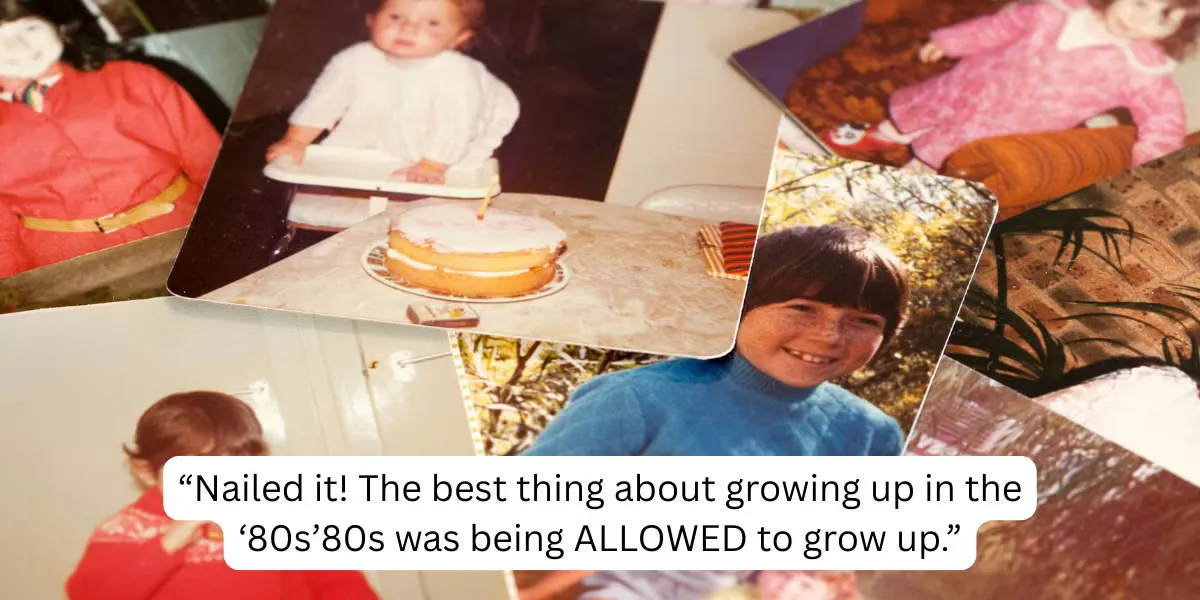
Elizabeth Stevens unlocks her front door, pulls a house key from around her neck, and steps into a kitchen that millions of Gen X kids would recognize instantly. The Care Bears t-shirt, the handwritten note in cursive on the back of an envelope, the cinnamon-sugar-and-butter sandwich on white bread—all of it lands with the precision of someone who lived it.
The note reads: "Working late—make your own dinner, watch your brother and the dishes better be done when I get home from bowling. – Mom."
In one minute, Stevens' YouTube video captured something that's become increasingly rare: a childhood where kids came home to an empty house, let themselves in, and figured things out. The latchkey era of the 1980s was less a parenting philosophy and more a practical necessity—both parents working, daycare expensive or unavailable, and a cultural shrug about whether kids needed constant supervision. Gen X grew up in that gap.
We're a new kind of news feed.
Regular news is designed to drain you. We're a non-profit built to restore you. Every story we publish is scored for impact, progress, and hope.
Start Your News DetoxThe response to Stevens' video was immediate and nostalgic. Commenters flooded in with their own memories: the independence, the self-sufficiency, the strange pride in being trusted to handle things. Many framed it as formative, the kind of responsibility that built resilience.
There's truth in that. Latchkey kids did learn to problem-solve, to be resourceful, to not panic when things went wrong. But the nostalgia also glosses over what got lost in that benign neglect. Some kids felt the absence sharply—the loneliness of an empty house, the weight of responsibility too early, the unspoken message that their parents' lives mattered more than their presence. The independence came with a cost for many, even if they don't always name it that way.
Parenting has swung hard in the other direction since then. Today's kids are shuttled between structured activities, monitored closely, rarely left unsupervised. The pendulum shift is so visible that it's become its own source of anxiety—are we overprotecting them? Are we raising kids who can't handle anything?
Stevens' video works because it doesn't pretend the 80s were perfect. It just shows what they were: a particular moment in time, with its own texture and rules. The humor comes from recognition, not from claiming those days were better. Gen X kids turned out okay, mostly. But they also grew up differently than their parents' generation and nothing like the kids growing up now. That difference is worth noticing, even if we're not entirely sure what to do with it.
The video has resonated because it gives people permission to feel two things at once: genuine nostalgia for a particular kind of childhood, and honest acknowledgment that parenting—like everything else—keeps changing.