
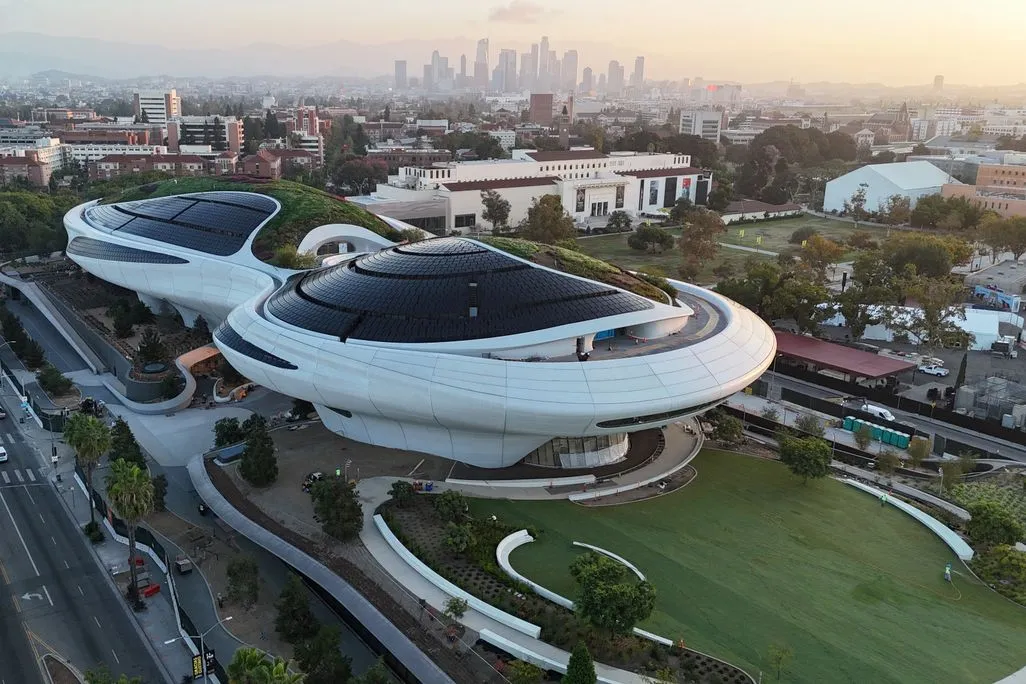
After more than a decade of planning and pandemic delays, George Lucas's sprawling museum dedicated to illustrated storytelling finally has a date: September 22, 2026. The Lucas Museum of Narrative Art will open its doors in Los Angeles' Exposition Park, housing over 40,000 artworks across 35 galleries.
The collection reads like a love letter to visual storytelling. You'll find Frida Kahlo's intimate paintings alongside Dorothea Lange's documentary photographs, Norman Rockwell's Americana, and Maxfield Parrish's dreamscapes. But the museum also holds pieces most people have never seen—Alex Raymond's original 1934 character sketch that launched Flash Gordon, Charles Schulz's early Peanuts sketches from the 1950s, and production paintings from Star Wars by Ralph McQuarrie that shaped how an entire generation imagined space.
Why This Matters
Lucas articulated the mission clearly at Comic-Con: "I've worked with hundreds of illustrators in my life, and they're all brilliant; they're all great. But they don't get recognized for anything. So, [the Lucas Museum] is sort of a temple to the people's art." For decades, the illustrators who shaped our visual culture—the concept artists, storyboard painters, and character designers—worked in the shadows of the directors and franchises they built. This museum is an explicit corrective to that erasure.
We're a new kind of news feed.
Regular news is designed to drain you. We're a non-profit built to restore you. Every story we publish is scored for impact, progress, and hope.
Start Your News DetoxThe 11-acre campus sits alongside the Natural History Museum and Memorial Coliseum, designed by architect Ma Yansong with gardens by landscape architect Mia Lehrer. It positions illustrated storytelling not as fan art or commercial illustration, but as a legitimate, universal language for understanding the human experience.
When the museum opens in 2026, it will be one of the few institutions in the world dedicated entirely to the craft of visual narrative—the work that happens before the camera rolls, before the printing press, in the moment an artist decides how to show us something we've never quite seen before.