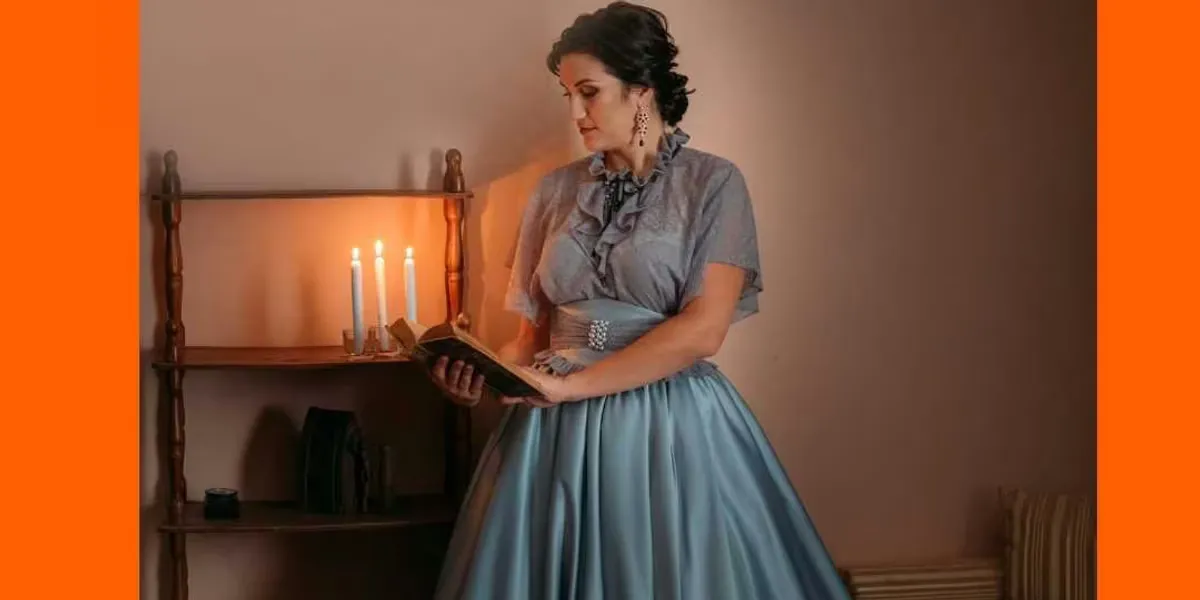
Ron and Justine Rayfield have turned their Missouri homestead into a living history project. In silent videos that have quietly accumulated millions of views, they recreate the rhythms of 1820s farm life with the kind of detail that stops you mid-scroll: baking peach pie over a wood stove, trying on period wedding dresses, now including their newborn son in the reenactments.
There's something magnetic about watching someone churn butter or tend a garden without narration or music. No performance layer. Just the work itself—the repetition, the mess, the sheer time it consumed.
What the 1800s actually demanded
Historian Allen J. Weiner notes that early 19th-century farm life revolved almost entirely around food: growing it, harvesting it, preparing it. Beyond feeding their own families, farmers harvested seasonally and sold or bartered their crops. Land ownership determined your financial stability—those who could afford to buy property had options others didn't. But even landowners faced property taxes that could spiral into debt.
We're a new kind of news feed.
Regular news is designed to drain you. We're a non-profit built to restore you. Every story we publish is scored for impact, progress, and hope.
Start Your News DetoxThe Rayfields have woven these realities into their videos, including fictional scenarios about falling in love and financial strain. They're not performing the "quaint" version of history. They're showing the constraints, the labor, the precarity.
What's striking is how the format—silent, unhurried, patient—mirrors the pace of the life itself. You can't speed up making bread. You can't edit out the waiting. The videos have resonated with audiences hungry for something that feels less mediated, less curated. There's an honesty in showing what took up someone's entire day two centuries ago, especially now when our own days feel fractured across a dozen apps.
With baby Ronald Richard Rayfield VI now part of the reenactments, the Rayfields are expanding the project into generational territory. What happens when you raise a child partly in this reconstructed world, partly in the present one.