Mo Riles had been driving the same beat-up Chevrolet pickup through South Bend, Indiana for years—the kind of truck that seemed held together more by hope than metal. He'd worked hard his whole life, weathered rough patches, kept moving forward. The truck was all he had, and it showed.
People noticed. On social media, locals made a point of posting whenever they spotted Mo's truck rolling through town. Some posts were gentle ribbing. Others weren't. What nobody seemed to ask was why a grown man was still driving a vehicle that looked like it might not make the next trip to the grocery store.
Colin Crowel, who runs a detail shop in town, asked that question.
"I just thought, there's got to be something more to why this truck looks like this," Crowel told CBS News. "I just put two and two together that this is the person's only means of transition."
We're a new kind of news feed.
Regular news is designed to drain you. We're a non-profit built to restore you. Every story we publish is scored for impact, progress, and hope.
Start Your News DetoxInstead of joining in the jokes, Crowel did something simpler and harder: he decided to help. He created a GoFundMe page. He didn't ask for much—just enough to get Mo into something reliable, something that would actually get him to his appointments without breaking down on the highway.
About 500 people donated. The total came to $22,000.
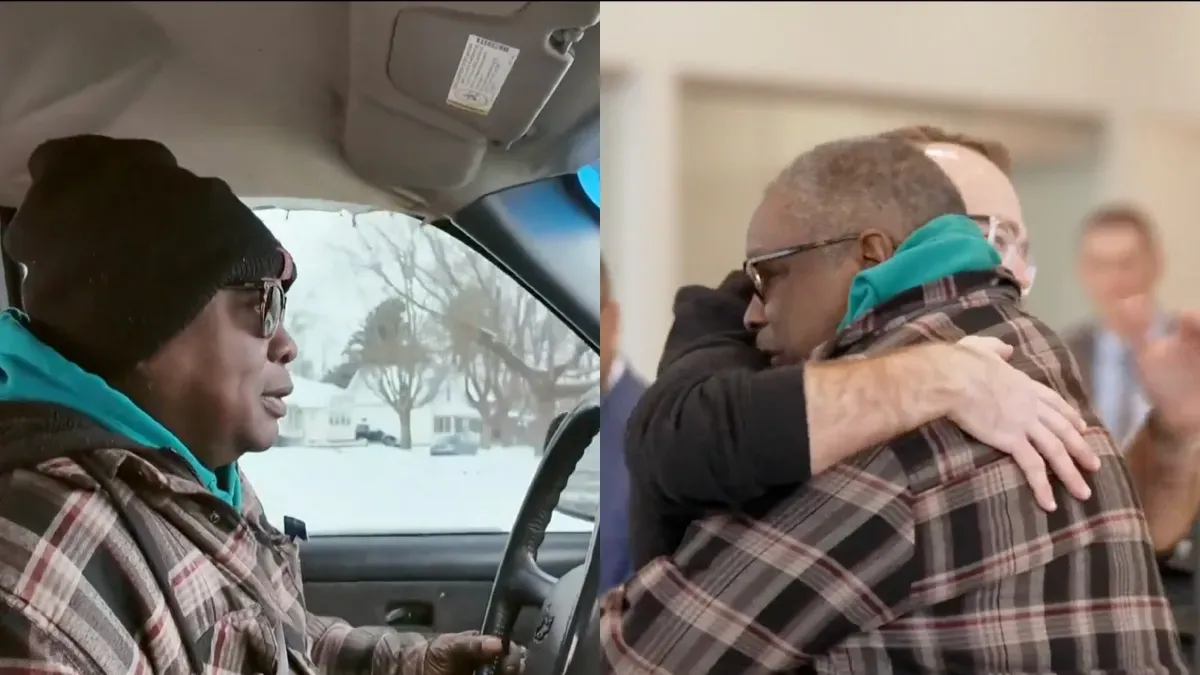
"That's the part that knocked me over, man," Mo said when he found out. "Here's a human being seeing another human being struggle. And I'm like, wow, what did I do to deserve this?"
Mo took his old truck to a local Chevrolet dealer for one last drive. He left that day in a 2019 Silverado—clean, reliable, a vehicle that would actually get him where he needed to go.
When Mo talked about what happened, he didn't focus on himself. "This whole thing is not about me," he told CBS News. "It's about this community bonding together."
That's the part worth noting. Crowel didn't solve poverty or fix the systems that leave people driving trucks held together with duct tape. But he did something that mattered in Mo's actual life—he saw someone struggling and asked what he could do. Then he asked his community. And they showed up.