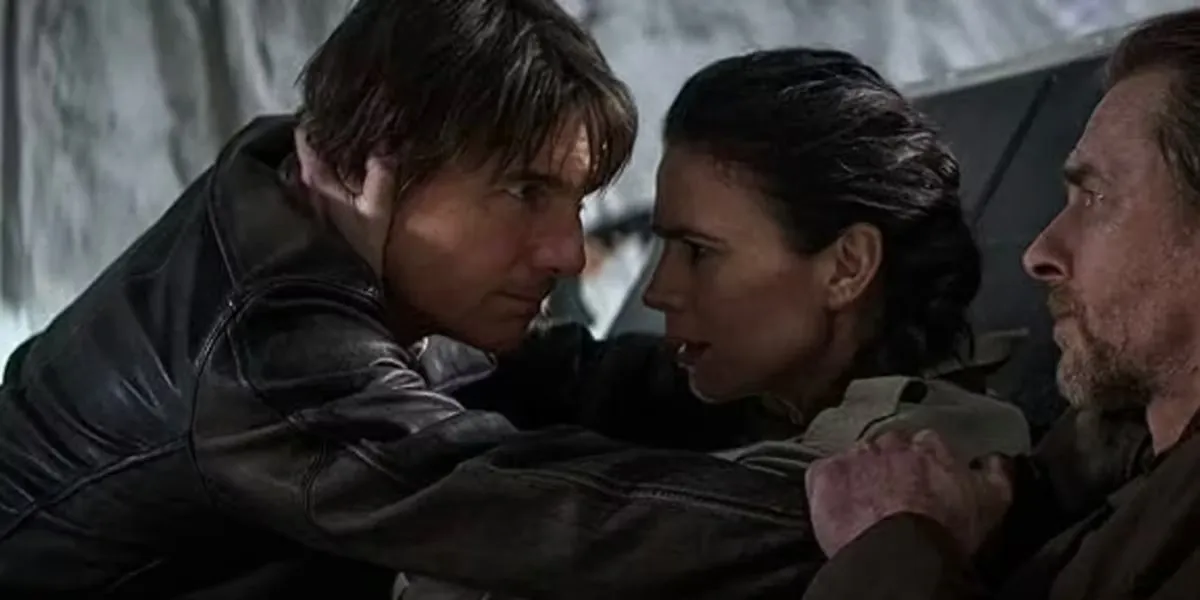
Haley Atwell, Tom Cruise's co-star on Mission: Impossible, has spent years managing social anxiety — that particular flavor of dread where you walk into a room and your brain immediately catalogs everything that could go wrong. "I start to retreat into myself and overthink," she explained in a recent interview. "'Do I look weird? Do I seem awkward?' I'm not speaking, I'm just muffling my words, or I need something to numb me from this."
Cruise's response wasn't a pep talk or a distraction. It was something simpler and harder: look at it.
"If you walk into a room and feel the anxieties coming, try doing the opposite," Cruise told her. "Try to look OUT, look around the room, and go, 'Where is it?' Where is the thing I have attached to my insecurity?"
We're a new kind of news feed.
Regular news is designed to drain you. We're a non-profit built to restore you. Every story we publish is scored for impact, progress, and hope.
Start Your News DetoxThe logic here cuts through the fog. When anxiety free-floats — when it's just a shapeless dread filling your chest — it controls the room. But the moment you name it, locate it, pin it to something specific, it becomes containable. Atwell discovered this herself: "If I look at it for long enough, the anxiety then can have a name. It can have a label and be contained, instead of free-floating, where I'm just in a total struggle internally with my own anxiety."
This isn't Cruise being a life coach. It's him describing something that therapists have long recommended: exposure and naming. When you avoid what makes you anxious, avoidance becomes the habit. Your nervous system learns that the thing is dangerous because you keep running from it. But when you turn toward it — when you look directly at the person you're nervous around, or the moment that triggered the spiral, or the thought that won't quiet down — your brain gets new information. The feared thing doesn't disappear, but it stops being a ghost.
"If you're scared of something, just keep looking at it," Cruise said. "Try not to look away, and it will often give you information about how to overcome it."
The advice aligns with what clinical research supports: identifying triggers, sitting with discomfort rather than numbing it, and gradually building tolerance through exposure. It's not revolutionary. It's just the hard, unglamorous work of learning that the thing you're afraid of won't destroy you if you don't look away.
For anyone who knows what it feels like to mute themselves in a crowded room, that's worth remembering the next time the anxiety starts to rise.