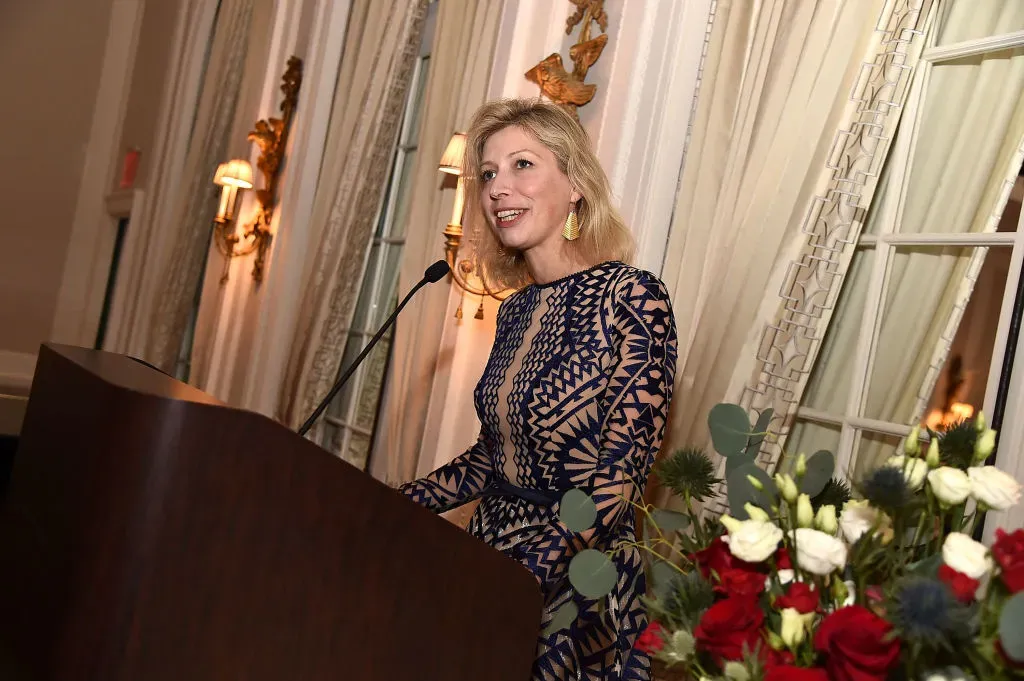
Anne-Claire Legendre, a senior French diplomat who shaped her country's approach to North Africa and the Middle East, has been chosen to lead the Institut du Monde Arabe in Paris. The appointment marks a reset for an institution that's spent the last few weeks in crisis after its previous director resigned amid scrutiny over past associations.
Legendre, 46, was selected by the institute's board this week. If confirmed, she becomes the first woman to lead the 40-year-old institution. She arrives after Jack Lang stepped down earlier this month, leaving the organization facing both a leadership vacuum and deeper structural questions about its purpose.
A Diplomat's Arc
Legendre's career reads like a map of French engagement with the Arab world. She graduated from INALCO, France's national institute for Oriental languages, and spent years building relationships across the region. From 2016 to 2020, she served as France's consul general in New York, then briefly headed the embassy in Kuwait. She joined President Macron's diplomatic team in late 2023 after spending just over two years as spokesperson for France's foreign ministry.
We're a new kind of news feed.
Regular news is designed to drain you. We're a non-profit built to restore you. Every story we publish is scored for impact, progress, and hope.
Start Your News DetoxAt Macron's side, she played a quiet but significant role in France's recognition of Palestine, coordinating with Arab governments and Western partners during discussions at the UN General Assembly in September 2025. That kind of bridge-building—between different political interests, different cultures—is precisely what the Arab World Institute was founded to do. Whether she can rebuild that function is her central challenge.
An Institution at a Crossroads
The institute has struggled in recent years with something more fundamental than leadership turnover. It faces a structural deficit, partly because member states fund it unevenly. A planned expansion in Tourcoing never materialized due to lack of money. Meanwhile, other Paris cultural institutions have expanded their own programs on Islamic art and the Arab world, fragmenting the institute's influence.
But the real problem is identity. The institute was created to be both a cultural center and a diplomatic bridge—a place where art, politics, and dialogue could meet. Over time, that balance has blurred. France's Court of Auditors issued a report in 2024 suggesting the institution needed to rethink what it actually stands for and align itself with current priorities.
Legendre inherits a place with real credentials. It has hosted serious discussions on Syria, Sudan, Gaza, and Franco-Moroccan relations. Yet it's often been sidelined when major cultural partnerships were negotiated—the Louvre Abu Dhabi, France's collaboration with Saudi Arabia in Al-Ula. For an institution supposed to be at the center of Franco-Arab cultural exchange, that's a telling gap.
Her appointment signals that France wants the institute to matter again. Whether her diplomatic skills can translate into institutional renewal—and whether the financial and political support will follow—remains to be seen.