
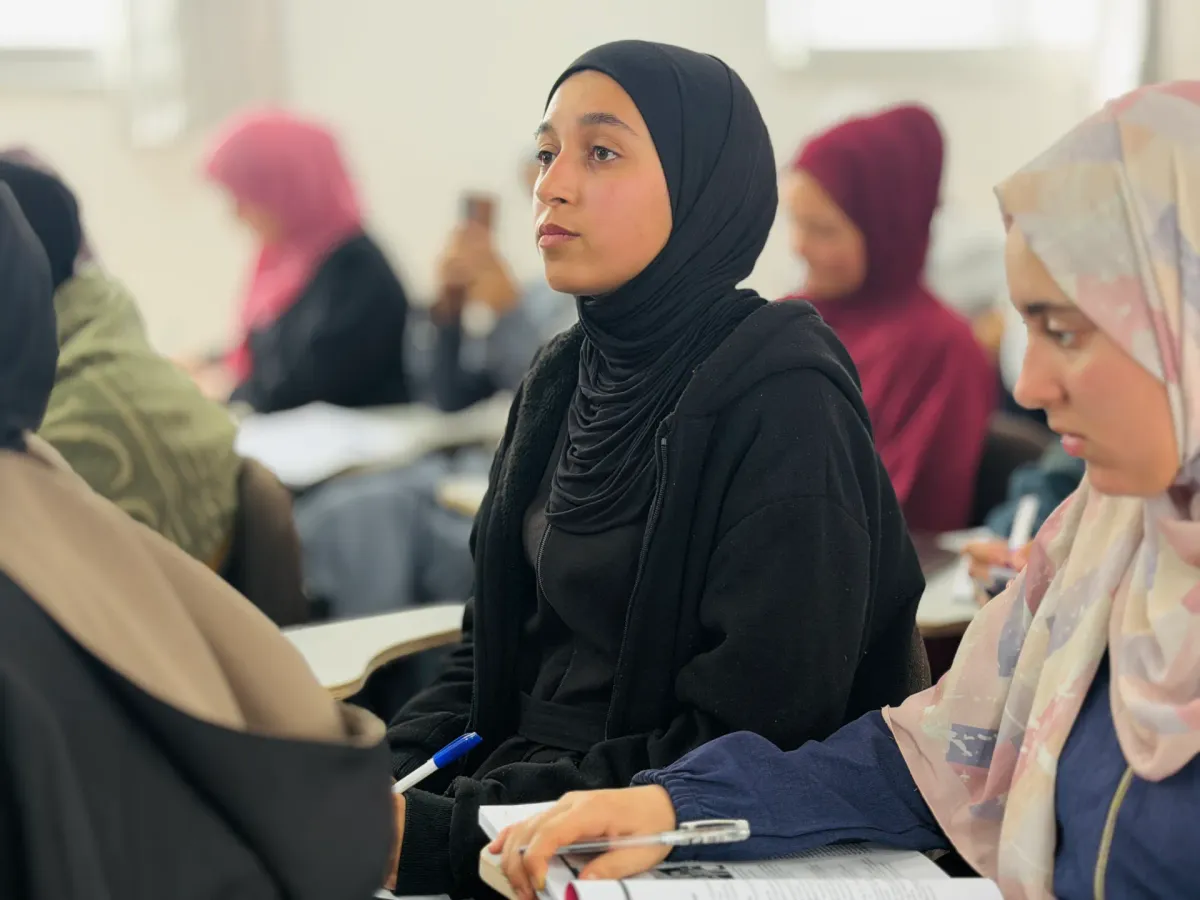
The new academic semester in Gaza began in late March, but the usual lively scene of students heading to universities is gone. Instead, displacement and hardship have taken over.
Israel's destructive campaign has turned Gaza's academic buildings into rubble. Many are now crowded shelters for displaced families. With campuses destroyed, in-person education has mostly stopped. Universities have tried online learning, but for students living in tents with limited food, water, electricity, and internet, even an online lecture is a luxury.
A New Hope for Education
Amid this difficult situation, a new initiative offers hope. In al-Mawasi, a crowded area in southern Gaza's Khan Younis, Scholars Without Borders, a US non-governmental organization, has created "University City." This makeshift academic space aims to bring students back to classrooms.
We're a new kind of news feed.
Regular news is designed to drain you. We're a non-profit built to restore you. Every story we publish is scored for impact, progress, and hope.
Start Your News DetoxBuilt from wood, metal sheets, and local materials, University City looks like a simpler version of Gaza's past academic life. Hamza Abu Daqqa, the organization's representative in Gaza, explained their mission. He said they want to bring education closer to students in a better environment.
The space has six halls and can host up to 600 students daily. It includes internet powered by solar panels, small green areas, and a business incubator to help students with their future plans.
University City uses a rotating weekly schedule, with different academic institutions using the space each day. This allows many universities to share the limited facilities. Universities prioritize courses that need in-person teaching, like practical and discussion-based classes.
Major Gaza universities, such as the Islamic University and Al-Azhar University, along with colleges like the Palestine College of Nursing, are now using the site.
The Impact of Loss
Universities across Gaza have been damaged or destroyed since October 2023. In the south, all institutions are unusable. A few campuses in northern Gaza have been partly restored, but they have very limited capacity.
The Palestine College of Nursing, for example, is surrounded by ruins. It is in an area where the Israeli military is still based, cutting students off from their classrooms. For many students, university life has not existed; they have been focused on survival.
Each academic year usually brings new beginnings, especially for first-year students. But for two years, thousands of Gaza's students have missed this experience. Now, at University City, they are getting their first taste of it.
"It Feels Like a Real University"
Mariam Nasr, a 20-year-old first-year nursing student displaced from Rafah, shared her thoughts. She said that before the war, everything needed for studying was available: homes, electricity, materials, and safety. For more than two years, her life has been completely disrupted.
Mariam started her final year of high school when the war began. It took over a year to finish her exams under difficult conditions before she could enroll in university. She had always dreamed of studying medicine, but the circumstances affected her results. Her grandfather told her that healing people isn't limited to one path, so she chose nursing.
Her degree requires in-person courses, which she had never experienced until now. Mariam was amazed when she saw University City. She said it was the first time she attended classes in a space that felt like a real university. She and other students are excited because it feels different and real.
Many students like Mariam spent their first year learning behind screens, if they were lucky enough to have a device in their tents. They felt disconnected from the academic environment they hoped for.
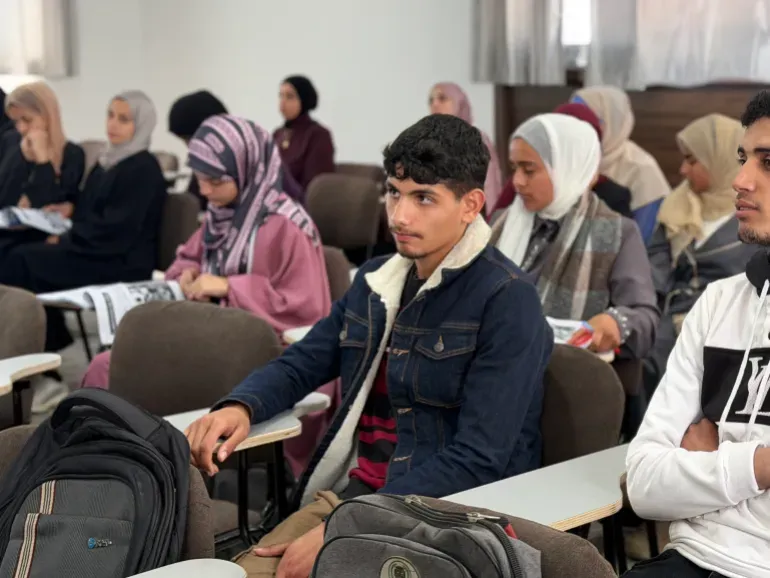
Amr Muhammad, a 20-year-old first-year nursing student from al-Magahzi Camp, had a similar reaction. He expected something much simpler, like just tents. But being at University City with other students, discussing and engaging in class, makes a huge difference.
Challenges Remain
The students' experience at University City highlights a larger tragedy. UN experts have called Israel's destruction of Gaza's academic sector "scholasticide." This means the systematic dismantling of education by targeting institutions, students, and academic life.
More than 7,000 university students and academics have been killed or injured. Over 60 university buildings were completely destroyed. This has cut off hundreds of thousands of students from formal education.
Even initiatives like University City face huge difficulties. Abu Daqqa explained that all materials for the site were sourced from inside Gaza. They had to work with what was available, despite rising costs and scarcity.
Under the October ceasefire, Israel is supposed to allow reconstruction materials for shelter and essential services. However, Israel has not followed this and continues to impose restrictions and carry out attacks.
For many students, just reaching University City is a challenge. Mariam, who is displaced in al-Mawasi, said her classes start at 9am, but she wakes up at 5am to find transportation. Roads are damaged, and fuel is scarce. Taxis and carts only accept coins, which are hard to get. Mariam often walks nearly four kilometers with her friends.
Amr's journey is even longer. He leaves at 6am and waits two hours to find a crowded vehicle. Once the day ends, the challenges return. The space is only for a few hours. The rest of the week, students struggle with electricity, internet, and basic needs. They cannot even print materials or access online lectures properly.
Students rely on shared or damaged devices, unstable connections, and limited resources, making consistent learning difficult. Mariam uses her father's old phone to follow lectures when she can. Most days, there is no stable internet or power. She wishes for a steady power source and a better device like an iPad to study properly.
Holding Onto Education
Despite these challenges, students show great resilience. Inside the halls, discussions continue, notes are taken, and a sense of academic life slowly returns.
Dr. Essam Mughari, a professor at the Palestine College of Nursing, emphasized that in-person learning is essential for medical education. He described the emotional importance of meeting students again. He said that being able to gather, interact, and learn together restores something vital. He believes they have a responsibility to support students because they will be the future.
For Mariam, her determination is deeply personal. She wants to continue her studies. Her cousin, a nurse, was killed in an Israeli air strike that destroyed her family's home. Mariam remembers her cousin to remind herself why she wants to heal others and serve her people.
University City now serves hundreds of students daily, but thousands more still lack access to similar spaces. Scholars Without Borders says this initiative is just the beginning. Abu Daqqa noted that they have built dozens of makeshift schools and this university city, but the need is far greater. He said this is what they could build under blockade, and imagined what could be done if the truly needed resources were allowed.