President Calvin Coolidge was, by all accounts, a man who collected pets like other people collect stamps. We're not talking about a couple of poodles and a parakeet here. His White House menagerie included a raccoon named Rebecca (originally slated for Thanksgiving dinner, because why not?), two lion cubs dubbed "Tax Reduction" and "Budget Bureau" (a bold naming choice), and a bear from Mexico named Bruno.
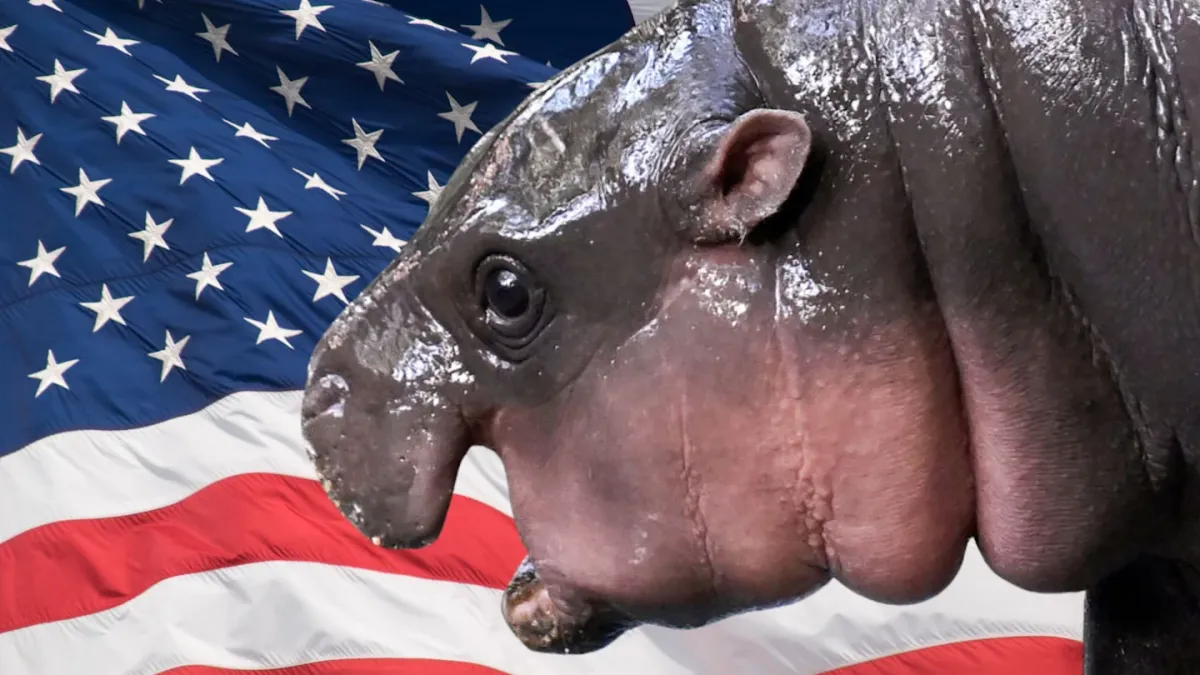
But perhaps the most absurdly charming of his animal acquaintances was William Johnson Hippopotamus, or "Billy" for short. A pygmy hippo, no less. And the best part? Billy never even stepped foot in the White House. Because apparently, a six-foot-long, three-foot-tall hippo is where a president draws the line.
The Hippo Who Came to Dinner (But Didn't Stay)
Billy arrived in America in 1927, a gift from the Firestone Tire and Rubber Company. He was plucked from land in Liberia that had been cleared for a rubber plantation, which sounds like the setup to a very specific children's book. The Coolidges, bless their eccentric hearts, welcomed him with open arms — and then promptly shipped him off to the Rock Creek Zoo (now the National Zoo) in Washington, D.C. Because even for a family with a pet raccoon, a full-grown pygmy hippo might be a bit much for the East Room.
We're a new kind of news feed.
Regular news is designed to drain you. We're a non-profit built to restore you. Every story we publish is scored for impact, progress, and hope.
Start Your News DetoxBilly became an instant sensation. The New York Times, ever the arbiter of important national news, reported on his popularity, noting, "Even the antics of the monkeys go unobserved when the keeper opens the tiny hippo's cage and cuts up with him." Let that image sink in: a tiny hippo, cutting up with his keeper, stealing the show from monkeys.
A Legacy of Gumdrops
In 1929, the zoo found Billy a mate, a lovely pygmy hippo named Hannah. Their first viable offspring, Gumdrop, was born in 1938. (Two previous babies were stillborn, and another was accidentally trampled, because nature is both beautiful and brutal.) A young visitor, apparently delighted by the sight of a baby hippo, declared it looked like a "black licorice gumdrop." And thus, a naming convention was born.
Billy went on to father 18 hippos in total, even taking on a second mate, Matilda, in 1940. Each and every one of his offspring was named Gumdrop, followed by a Roman numeral. Most of these miniature Gumdrops were then traded to other zoos, effectively populating America's zoos with Billy's progeny. Because when you have a good thing, you share it.
Billy the hippo passed away in 1955, but his genetic legacy lives on. While the National Zoo no longer has a pygmy hippo exhibit, most pygmy hippos in U.S. zoos can trace their lineage back to this one presidential almost-pet. So, the next time you see a pygmy hippo looking particularly charming, remember Billy. The hippo who was too big for the White House, but just right for American zoo history.