In a quiet Hamburg neighborhood, a small square bears the name Roman Zeller. It’s a tribute to a 12-year-old boy from Poland, one of 20 Jewish children murdered by SS officers in the final, frantic days of World War II. Because even as the Third Reich crumbled, their capacity for cruelty remained chillingly intact.
These children, rounded up from across Europe – Poland, France, the Netherlands, Italy, Czechoslovakia – were first subjected to horrific medical experiments at the Neuengamme concentration camp. Then, in April 1945, with Allied forces closing in, their killers tried to erase their monstrous crime.
The Faces of Bullenhuser Damm
The children were taken to the basement of the former Bullenhuser Damm School and murdered. A desperate attempt to bury the evidence of their existence, and the unspeakable acts committed against them.
We're a new kind of news feed.
Regular news is designed to drain you. We're a non-profit built to restore you. Every story we publish is scored for impact, progress, and hope.
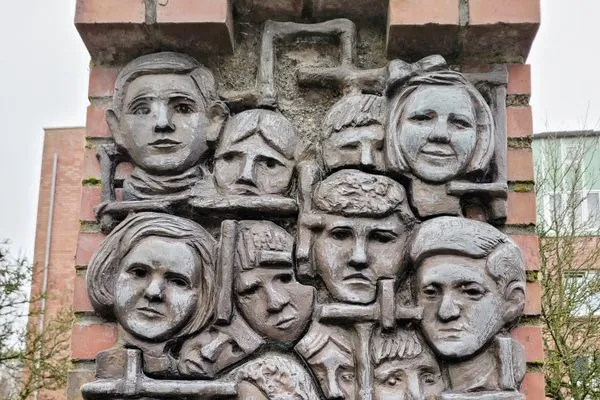
Start Your News DetoxBut some stories refuse to be buried. In 2001, local residents decided these children would not be forgotten. They commissioned Russian artist Leonid Mogilevski to create a memorial for Roman-Zeller-Platz. It’s a bronze relief on a brick pillar, featuring the individual faces of the twenty victims, their names etched below.
This isn't a grand, sweeping national monument. It’s a local, deeply personal memorial, tucked into a suburban square. It doesn't rely on abstract art to convey horror; it shows you their faces. It forces you to look at the individuals, not just the numbers, and remember the bright lives that were stolen.
Every year on April 20th, the anniversary of their deaths, students, community groups, and church congregations gather in the square. They hold a public ceremony, ensuring that the memory of Roman Zeller and the 19 other children continues to echo, a quiet but insistent defiance against the silence their murderers had hoped for.